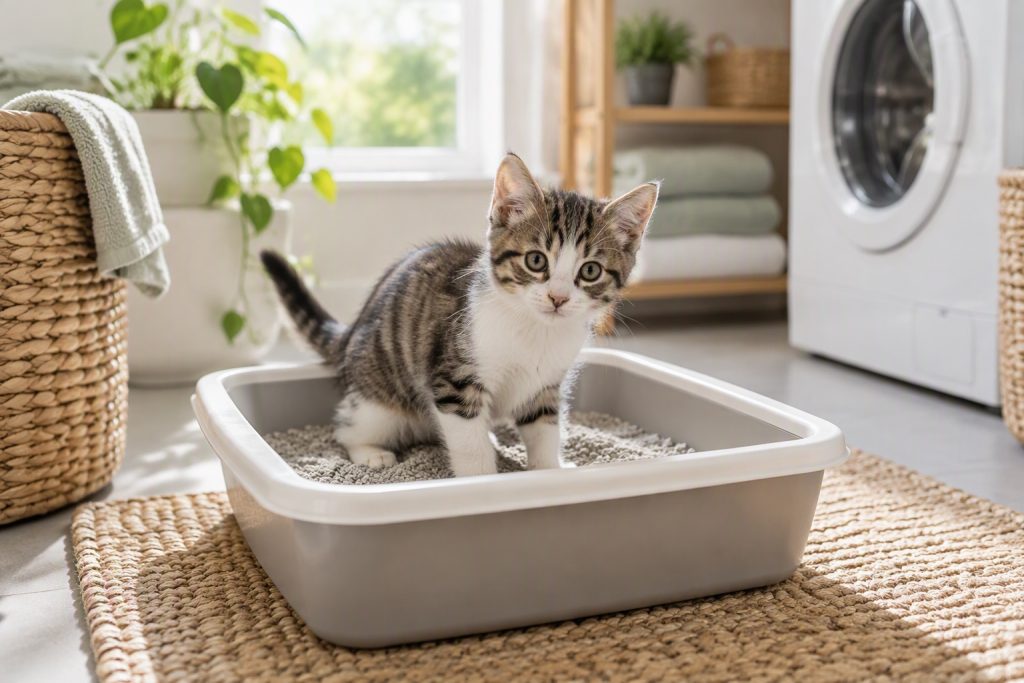
Litter training a kitten is usually straightforward, because the urge to dig and bury is instinctive. Most kittens get the idea within one to three weeks when you give them a small, low-sided box in a quiet spot and keep it clean. The goal is simple: make the box the easiest, most obvious choice every time your kitten needs to go, and remove every reason she might look elsewhere for a spot to relieve herself.
- Start with a low-sided box in a quiet corner.
- Choose unscented, fine-grain litter.
- Set the kitten in the box after meals and naps.
- Never punish accidents; clean with an enzyme cleaner.
How do you start litter training a kitten?
Begin by confining your kitten to a small, safe space such as a bathroom or a playpen, with the box, food, water, and a bed inside it. A small space makes the box impossible to miss and prevents accidents in distant rooms where you cannot supervise. Place her gently in the box after every meal, nap, and play session, and praise quietly whenever she uses it. Young kittens need to toilet often, so offer the box frequently rather than waiting for a clear sign that she needs to go. If you have just brought a rescue home, our guide to the first 30 days with a rescue cat follows the same calm settle-in routine and is worth reading before you begin. Expect a few misses in the first days, because a young kitten’s bladder control is still developing and she cannot always hold on until she reaches the box. Patience and repetition are what build the habit, not correction, and a calm, unhurried start sets the tone for everything that follows.
Tray, scoop, anti-splash mat and clumping litter. The whole litter corner, one box. Keeps the litter area contained,…
What litter box and litter work best for a kitten?
Pick a box with low sides so a small kitten can climb in without a struggle, and keep it uncovered at first so she never feels trapped. A shallow pan also lets you see what she is producing, which is genuinely useful for spotting health changes early. For litter, choose an unscented, fine-grain product, because heavy perfumes and large pellets put many kittens off and can even make the box unpleasant to stand in. Avoid clumping litter for very young kittens who might sample it, since it can clump inside a tiny digestive tract. As she grows, you can move up to a larger box with higher sides and a deeper layer of litter to dig in. The ideal setup is boring and predictable, which is exactly what a young cat needs to feel secure. Do not chase novelty in the first weeks; keep everything familiar, easy to reach, and consistent from one day to the next.
How often should you clean the box while training?
Scoop at least twice a day during training, and do a full litter change weekly. Kittens are fastidious, and a dirty box is the single most common reason a kitten suddenly stops using it. If the box smells of ammonia, it is well overdue. Wash the pan with mild soap and warm water, skip harsh disinfectants that leave strong fumes, and let it dry fully before refilling with fresh litter. Keeping a spare pan in rotation makes cleaning quick and means your kitten is never without a box, even for a few minutes while you scrub. Our advice on litter box placement explains why a clean box in a calm, low-traffic spot works far better than a spotless box in a noisy hallway where she feels exposed. Cleanliness and location together do most of the work, and both are entirely within your control every single day.
What should you do when your kitten has an accident?
Stay calm and never scold her, rub her nose in it, or use a loud voice. Punishment teaches a kitten to toilet where you cannot see her, which makes the problem harder to solve and damages the trust you are building. Clean the spot with an enzymatic cleaner that breaks down the scent, because ordinary soap leaves residue that keeps drawing her back to the same place. If you catch her mid-accident, gently move her to the box and let her finish there, then praise her warmly. Afterwards, ask why it happened: was the box dirty, too far away, or in a spot she finds frightening? Address the cause rather than the symptom, and repeated accidents in one place usually point to something specific in the setup that needs changing before the habit becomes fixed and harder to undo.

This litter scoop makes the daily clean-out quicker — the job is daily, so the tool matters. Made…
How do you train a kitten in a home with other pets?
Give the kitten her own box that adult cats cannot monopolise, and add an extra box for every cat in the home. A kitten blocked from a box by a resident cat will simply find another corner, so access matters more than you might think. Place boxes so the kitten never has to pass a dog or a territorial cat to reach one, and consider a baby gate that adults can hop over but the kitten cannot. Feed her separately so she is not rushed away from her food and water, and give her a quiet room to retreat to when she needs rest. Supervision during the first weeks prevents both bullying and accidents. As everyone settles you can relax the separation, but keep the extra boxes in place for the long term, since they prevent conflict before it ever starts.
When should litter trouble prompt a vet visit?
See a vet promptly if a previously reliable kitten suddenly stops using the box, cries while toileting, strains, produces very little urine, or has blood or diarrhoea in the litter. These can signal a urinary blockage, an infection, or parasites, and a blockage in a male kitten is a genuine emergency that can become life-threatening within hours. Also check in if accidents continue despite a clean box, a sensible location, and patient training, or if the kitten seems painful, hides, or stops eating. Litter avoidance is often the first sign that a cat feels unwell, so take any change seriously rather than waiting to see if it passes on its own. For anything persistent, a veterinary exam is the right next step rather than more training tweaks or guesswork.
Frequently asked questions
- How long does it take to litter train a kitten? Most kittens learn within one to three weeks, though younger ones need more frequent reminders and a little more patience.
- Should I use clumping litter for a kitten? Wait until she is older. Very young kittens may swallow it, so a non-clumping litter is the safer choice at first.
- Can I use a covered box right away? Start uncovered so she does not feel trapped, then introduce a cover once she is reliably using the box.
- Why does my kitten go right next to the box? The box is likely dirty, too high-sided, or in a spot she finds scary, so fix the setup before assuming anything else.
- Is it normal for a kitten to play in the litter? Some digging and batting is normal early on and usually fades as she learns what the box is actually for.