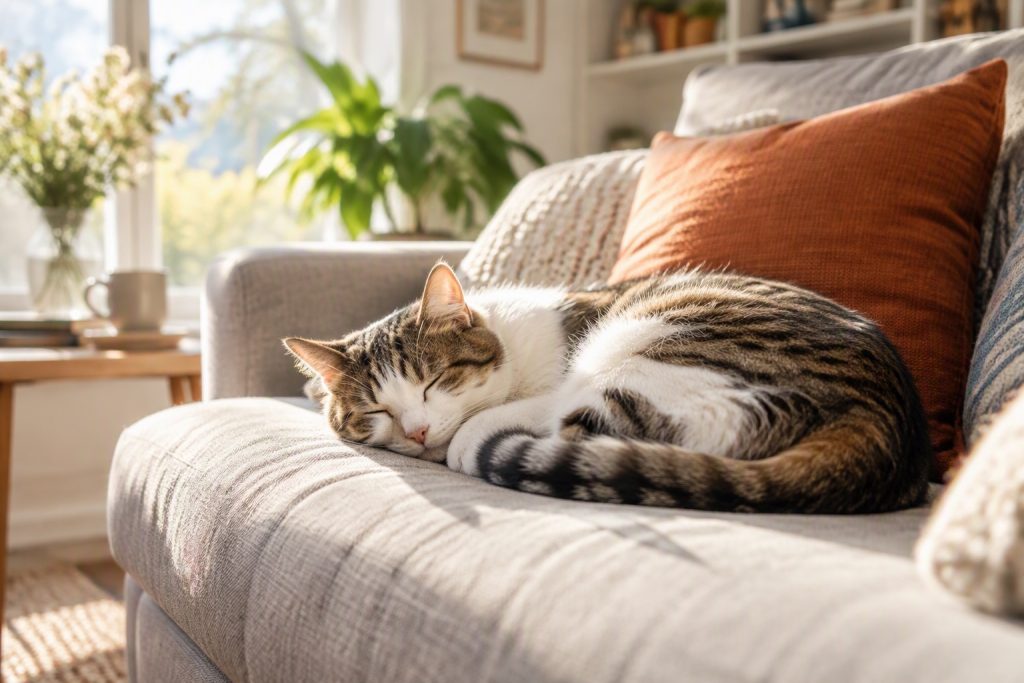
Cats sleep a lot because they are built for short bursts of intense activity followed by long recovery, a pattern inherited from their hunting ancestors. A healthy adult cat typically sleeps twelve to sixteen hours a day, and kittens and older cats sleep even more. Sleeping a great deal is normal; the question is whether the pattern has changed.
- Adult cats normally sleep twelve to sixteen hours.
- Kittens and seniors sleep even more.
- Cats sleep in many short bursts, not one long stretch.
- Sudden changes in sleep can signal illness.
Why do cats sleep so much?
A cat’s sleep pattern is shaped by her evolutionary role as a predator of small prey, which requires short, explosive bursts of energy rather than sustained effort. To be ready to pounce at any moment, she conserves energy by resting for much of the day, then becomes active in the crepuscular hours around dawn and dusk when prey is most active. Domestic cats have kept this rhythm even though their food now comes from a bowl, so they still sleep heavily through the middle of the day and perk up in the early morning and evening. Sleep also serves real physical functions, supporting memory, immune health, and recovery from activity. On top of that, cats are masters of the light doze, and much of their rest is a shallow sleep from which they wake instantly. So the long hours are not laziness; they are a deeply wired survival strategy that persists in a comfortable home. Indoor life removes the need to hunt, but it does not remove the biology that makes her rest for most of the day.

Cervical pillow, plush hammock, floor mat and paw cushion — four places to nap. Gives a cat a…
How many hours a day should a cat sleep?
Most healthy adult cats sleep somewhere between twelve and sixteen hours in a twenty-four-hour period, and some individuals fall slightly outside that range without anything being wrong. Kittens sleep considerably more, often eighteen to twenty hours, because growth and development demand it, and senior cats also tend to sleep longer as their activity levels drop. The total is made up of many short naps rather than one long night, so you may see your cat dozing on and off throughout the day. Weather, boredom, and how much play she gets all shift the number, and a cat with little to do will often sleep more simply because there is nothing else to occupy her. What matters most is not the raw total but the pattern: a cat who has always slept a lot is likely fine, while a cat who suddenly sleeps far more than usual is worth watching.
Is my cat sleeping too much?
It is hard to sleep “too much” in the abstract, because the normal range is so wide, so the more useful question is whether her sleep has changed. If your cat has always been a champion napper and remains bright, alert, and interested in food and play when awake, the long hours are simply her baseline. Trouble tends to show up as a shift: a previously active cat who now sleeps constantly, or one who sleeps heavily but seems dull, withdrawn, or reluctant to move when roused. Also watch for sleep that comes with other signs, such as eating less, hiding more, or seeming stiff or sore. A cat who sleeps more because she is bored is easy to help with more play and enrichment, but a cat whose sleep has increased alongside other changes needs a veterinary opinion rather than more toys.
Why do cats sleep in short bursts?
Cats are polyphasic sleepers, meaning they cycle through many short periods of sleep rather than consolidating it into one long block. This pattern keeps them ready to respond to opportunities and threats at any time, which is exactly what a small predator needs. Much of a cat’s rest is light sleep, and she can go from deeply relaxed to fully alert in a fraction of a second, which is why she may seem asleep and then suddenly spring up. Cats also experience REM sleep, and you may see twitching paws, whiskers, and eyes moving under closed lids, which is normal dreaming. This burst pattern means your cat is not being difficult when she wakes you at dawn; her body clock genuinely expects activity then. Providing play and food around those natural peak times helps align her rhythm with yours.

A thickened cloth bed is stepped into rather than climbed over. Try it near the window first, then…
Do indoor cats sleep more than outdoor cats?
Indoor cats often sleep more than cats with outdoor access, largely because they expend less energy and have fewer things to occupy them. An outdoor cat patrols territory, hunts, climbs, and investigates, all of which burn energy and generate the need for recovery, while an indoor cat in a quiet home may have far less to do. That does not mean indoor cats are unhappy, but it does mean enrichment matters, because a bored indoor cat will sleep out of a lack of alternatives. Adding vertical space, puzzle feeders, window perches, and daily interactive play gives her reasons to be active and can naturally reduce the amount of time she spends dozing. A good bed still matters for the hours she does rest, and our article on whether cats need beds explains how to give her comfortable, secure sleeping spots.
When is excessive sleeping a sign of illness?
See your vet if your cat’s sleeping has increased suddenly, if she is hard to rouse, or if the extra sleep comes with other changes. Lethargy that accompanies reduced appetite, weight loss, vomiting, diarrhoea, hiding, or a dull coat can point to a range of conditions, from pain and dental disease to thyroid problems, diabetes, or infection. In older cats, sleeping more is often dismissed as normal ageing, but it can also mask arthritis or other treatable issues, so it is worth a check. A cat who sleeps in unusual places, seems disoriented, or cries at night may also be unwell. The rule of thumb is to compare against her own normal rather than an average, and to seek advice whenever the change is marked or persistent. Our guide to why cats sleep on your head covers one common sleeping habit that is usually harmless. If the change is sudden, or comes with other symptoms, a vet visit is the safest way to rule out a medical cause.
Frequently asked questions
- Is it normal for my cat to sleep all day? Many cats sleep twelve to sixteen hours and much of it during the day, so a sleepy cat can be perfectly healthy if her behaviour is otherwise normal.
- Should I wake my cat to play? You can gently encourage activity in the evening, but never force it, and let her sleep if she is clearly resting.
- Why does my cat sleep more in winter? Colder weather and shorter days often increase sleeping, and many cats become less active in the colder months.
- Do cats dream? Yes. You may see twitching, whisker movement, and rapid eye movements during REM sleep, which is normal.
- Can boredom make my cat sleep more? Yes. An under-stimulated cat often sleeps out of having nothing to do, so more play and enrichment can help.