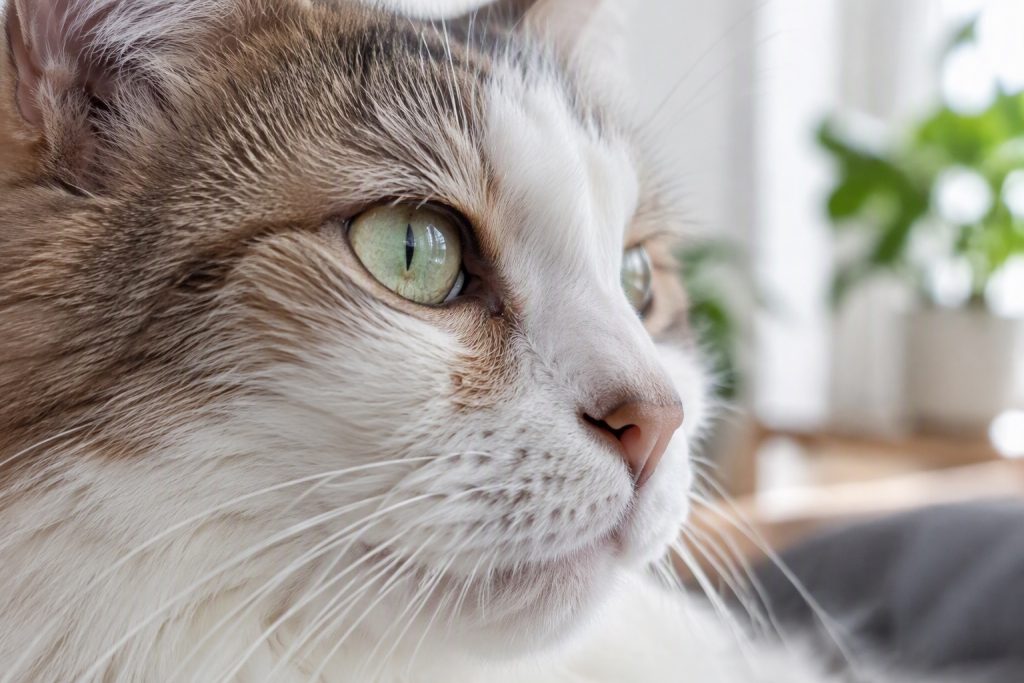
Cat eye discharge is a clear, watery tear stain in mild cases, or a thick, coloured discharge when something is wrong. Clear discharge with no other signs is often harmless, but yellow or green discharge, squinting, swelling, or a painful eye needs a vet promptly. Never ignore a cat who is holding an eye closed.
- Clear discharge alone is often harmless.
- Yellow or green discharge means see a vet.
- Squinting or a closed eye is urgent.
- Never use human eye drops on a cat.
What does cat eye discharge mean?
Eye discharge is a symptom rather than a diagnosis, and its meaning depends on how it looks and what comes with it. A small amount of clear, watery discharge can be normal, especially in flat-faced breeds or after a nap, and it often just means the eye is doing its job of flushing away dust and debris. A little crusty material in the inner corner, particularly in the morning, can also be routine. The picture changes when the discharge is thick, coloured, or accompanied by redness, swelling, squinting, or pawing at the eye. Those signs suggest irritation, infection, or injury, and they need veterinary attention. Because eye problems can worsen quickly and some are painful, it is always better to have an unusual eye checked than to wait and see. Discharge is your clue that something has changed, and the colour and accompanying signs tell you how urgent it is.
Nail scissors, bath brush, de-shedding glove and a drying towel — the full groom in one box. Cuts…
What does the colour of the discharge tell me?
Colour is one of the most useful clues. Clear or slightly cloudy discharge is usually mild and often linked to allergies, irritation, or a blocked tear duct, and it may need no treatment beyond keeping the area clean. Yellow or green discharge is more concerning, because it typically signals a bacterial infection that may need veterinary treatment. A thick, pus-like discharge with redness and swelling suggests conjunctivitis or another infection, and it is contagious between cats, so keep an affected cat away from others until a vet advises otherwise. Dark or bloody discharge is a sign to seek care quickly. Watery discharge that comes with sneezing and a runny nose may point to an upper respiratory infection, which is common in kittens and newly adopted cats. Whatever the colour, if the discharge is persistent or comes with squinting, treat it as a reason to see your vet rather than to self-treat.
When is eye discharge an emergency?
Treat eye problems as urgent when the eye is held closed or partially closed, when the eye looks cloudy, or when the third eyelid is visible across the eye. These signs can indicate a corneal ulcer, injury, or serious infection, all of which are painful and can threaten vision if left untreated. See a vet immediately if the eye is swollen, if there is bleeding, if your cat is pawing at her face, or if she seems to be in pain, which cats often show by hiding, squinting, or being reluctant to be touched near the head. A sudden, copious discharge with a swollen eye is also an emergency. Because a cat’s eye can deteriorate within hours, do not wait to see whether it improves on its own. Our guide to how to tell if a cat is in pain explains the subtle signs to watch for.
How do I clean my cat’s eyes at home?
For mild, clear discharge, you can gently clean the area with a clean, damp cotton pad or soft gauze soaked in warm water or a vet-approved eye wipe. Wipe from the inner corner outward, using a fresh pad for each eye so you do not spread any infection from one eye to the other. Be very gentle, and never press on the eyeball itself. Do not use human eye drops or home remedies unless your vet has specifically recommended them, because some products are harmful to cats. If the discharge is thick, coloured, or keeps returning, cleaning is not the solution, and you should have the eye examined. For a newly adopted cat, mild discharge during the settling-in period is common, and our guide to the first 30 days with a rescue cat covers what to expect and when to seek help.

A breathable plastic grooming tool takes the undercoat first, which is where matting starts. Try it after a…
What causes eye discharge in cats?
There are many possible causes, ranging from harmless to serious. Common culprits include allergies, dust and irritants, a blocked tear duct, and upper respiratory infections, which are especially frequent in kittens and cats from crowded environments. Conjunctivitis, whether viral, bacterial, or caused by irritants, is a frequent reason for coloured discharge. Corneal ulcers, scratches from another cat, and foreign objects such as a grass seed can all cause discharge along with pain. In some cats, anatomical features such as flat faces or rolled eyelids lead to chronic tearing. Entropion, where the eyelid turns inward and rubs the eye, is another cause. Because several of these conditions look similar but need different treatment, the cause matters, and a vet can examine the eye properly. Do not assume every case is a simple infection, since treating the wrong cause can delay real relief.
Can I prevent eye problems in my cat?
You cannot prevent every eye issue, but you can reduce the risk. Keep your cat’s environment clean and free of dust and strong irritants, and keep her vaccinations up to date, since some infectious causes of eye problems are preventable. Core vaccinations protect against some of the infectious causes of eye problems, so keeping them up to date is worthwhile. If your cat is prone to tear staining, gently wiping the eyes daily with a clean damp pad helps keep the area clear. For flat-faced breeds, routine eye care and regular vet checks are especially important. Avoid letting your cat ride with her head out of a car window, which can let debris into the eyes, and keep her away from smoky or heavily scented environments. If she has recurring eye discharge, ask your vet whether an underlying condition needs ongoing management rather than treating each episode as a one-off.
Frequently asked questions
- Is clear eye discharge normal in cats? A small amount can be normal, especially after sleep, but persistent or increasing clear discharge is worth a vet check.
- Can I use human eye drops on my cat? No. Many human products are unsuitable for cats, so use only what your vet recommends.
- Why does my cat have one watery eye? A single watery eye can point to a blocked tear duct, an irritant, or a mild injury, so have it examined if it persists.
- Is eye discharge contagious between cats? Some infectious causes are contagious, so keep an affected cat separate from others until your vet advises.
- My kitten has eye discharge. Should I worry? Kittens often get respiratory-related eye discharge, but it should still be checked promptly by a vet, because young cats can become unwell very quickly.