

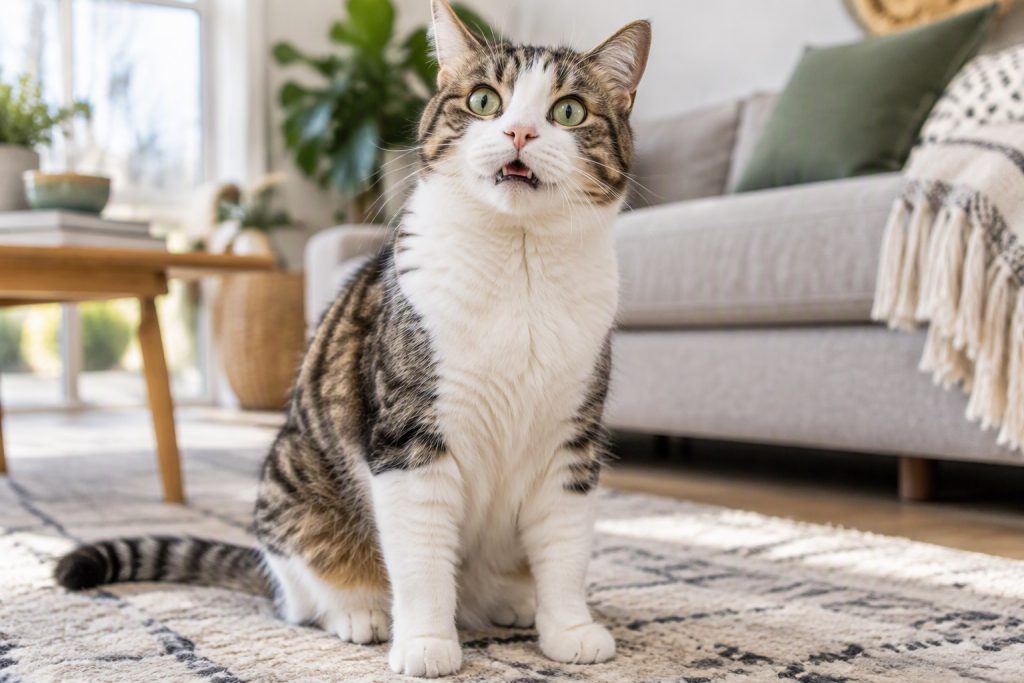
Cats hiccup when the diaphragm, the sheet of muscle beneath the lungs, contracts in a quick series of spasms that pull air inward and snap the vocal folds shut, producing that small “hup” sound. In cats, hiccups are usually brief and harmless, most often tied to eating or drinking too quickly, swallowing air, or mild indigestion. Most episodes last only a few minutes and stop on their own with no treatment. It becomes worth a vet visit when hiccups are frequent, violent, or come alongside other signs like vomiting or trouble breathing.
- Hiccups are diaphragm spasms, not a disease.
- They usually follow fast eating or drinking.
- Typical bouts last a few minutes and pass.
- Frequent, violent, or prolonged hiccups need a vet.
Why does my cat get hiccups?
A hiccup is an involuntary spasm of the diaphragm, the dome-shaped muscle that separates the chest from the abdomen and does most of the work of breathing. When that muscle jerks suddenly, air is pulled into the lungs, and the flap of tissue at the top of the airway snaps shut a fraction of a second later, which is what creates the sound. Cats get hiccups for much the same reasons people do, though far less often. Kittens hiccup more than adults because their feeding habits are less controlled and their diaphragm is still maturing. The trigger is usually mechanical rather than medical: a stomach that fills quickly, a bit of swallowed air, or a sudden change in breathing rhythm. Because the cause is so ordinary, a short bout of hiccups in an otherwise healthy cat is nothing to worry about. It is simply the diaphragm doing an unplanned little jolt.
Rainbow-striped plush cylinder. Keeps a bored indoor cat busy and burns off restless energy. Made from fleece and…
Are hiccups in cats normal?
Yes, occasional hiccups are a completely normal part of life for many cats. A healthy cat who hiccups for a minute or two after a meal and then carries on as usual is showing ordinary behaviour, not a symptom. Kittens hiccup more often than adults, and some cats are simply more prone to it than others. What matters is the pattern. A cat who hiccups a few times a week, always briefly and always around eating, is fine. A cat who hiccups for long stretches, several times a day, or whose whole body seems to jerk with each spasm is showing something different. Just as with the gentle rumble described in our guide to why cats purr, a small, familiar sound can be perfectly normal or can occasionally point to something more, so it is the frequency and the company it keeps that tell you which is which.
What causes hiccups after eating?
Mealtime is the most common trigger, and the reason is simple mechanics. When a cat eats or drinks quickly, she swallows air along with her food, and that extra air distends the stomach and nudges the diaphragm, which sets off spasms. Dry food eaten in a hurry, a sudden switch to a new food, or competition from another cat can all encourage fast eating. Very cold water, or drinking a large amount in one go, can have the same effect. Some cats gulp when they are anxious or when food is scarce, and that gulping is what produces the hiccups. If your cat hiccups almost every time she eats, slow feeding is the practical fix. Spreading food across a wide plate, using a puzzle feeder, or offering smaller, more frequent meals all reduce how much air she takes in, and that often ends the hiccups entirely.
Can hiccups be a sign of something serious?
On their own, hiccups are rarely a sign of illness, but they can appear alongside conditions that do need attention. If the spasms are frequent, prolonged, or violent, or if they come with vomiting, retching, coughing, wheezing, weight loss, or a drop in appetite, the picture changes. Repeated forceful contractions of the diaphragm can also be confused with other problems: a cat with a hairball, an upset stomach, or a respiratory issue may make sounds that look like hiccups but are not. That is why it helps to know what a normal, harmless bout looks like so you can spot the difference. Our article on cat vomiting and when to worry walks through the signs that separate a one-off from something that needs a vet, and the same principle applies here: persistent or changing symptoms deserve a professional look rather than a wait-and-see approach.
Made from cloth Key features 【Name】 : cat simulation animal sound shell toy[Fill]: No fill, 2 built-in BB…
How do I stop my cat’s hiccups?
In most cases you do not need to do anything, because the bout ends on its own within minutes. What you can do is remove the trigger so it happens less often. Slow down mealtime by offering food on a flat plate rather than a deep bowl, so she cannot scoop and gulp, and consider splitting her daily ration into several smaller meals. A puzzle feeder turns a two-minute bolt into a ten-minute hunt and cuts down on swallowed air. Keep water fresh and at room temperature rather than ice cold, and avoid sudden food changes that can unsettle her stomach. If another cat in the house crowds her bowl, feed them in separate rooms so she does not bolt her food. Gently stroking your cat or letting her settle quietly can help her relax, but never hold her upside down or try to “scare” hiccups away, since those old tricks only cause stress and can be unsafe.
When should I call the vet about hiccups?
Call your vet if the hiccups last more than a few minutes at a time, happen many times a day, or seem to be getting worse rather than settling. You should also seek advice if they come with vomiting, diarrhoea, coughing, noisy breathing, drooling, weight loss, lethargy, or any change in appetite or behaviour. Hiccups that appear in a very young kitten, or in an older cat who has never had them before, are worth mentioning at your next visit. A vet can listen to the chest, check the abdomen, and rule out problems with the diaphragm, stomach, or airway that might be mimicking hiccups. Most of the time the answer will be reassuring, and you will simply be told to slow her eating. But because persistent hiccups can occasionally signal something that is easier to treat early, it is always reasonable to ask rather than to keep watching.
Frequently asked questions
- Are hiccups in cats dangerous? Almost never on their own. Brief bouts around eating are normal and harmless, and only frequent or prolonged episodes need a vet.
- Why does my kitten hiccup so much? Kittens eat fast and their diaphragm is still maturing, so short, frequent bouts are common and usually fade with age.
- Can hiccups mean my cat has a hairball? Sometimes the retching of a hairball looks like hiccups. If it repeats and she brings nothing up, have her checked.
- Does drinking water cause hiccups in cats? Cold water or drinking a large amount quickly can trigger them, so offer fresh water at room temperature.
- Should I stop my cat’s hiccups? No, they usually stop on their own. Just slow her eating and let the bout pass quietly.





