The best flea treatment for cats is a cat-safe product that your vet recommends, usually a monthly spot-on or oral medication containing an ingredient proven to kill fleas at every life stage. It only works as part of a plan: treat every pet in the home on the same schedule, wash bedding, and vacuum regularly to clear eggs and larvae from the environment. Never use a dog flea product on a cat, because several common dog ingredients are toxic, and sometimes fatal, to cats.
- Choose a cat-safe spot-on or oral from your vet.
- Never use dog flea products on a cat.
- Treat every pet in the home at the same time.
- Wash bedding and vacuum to clear the environment.
What is the best flea treatment for cats?
There is no single best product for every cat, but there is a clear best approach: use a veterinary-recommended treatment that suits your cat’s age, weight, and lifestyle. Modern spot-on and oral products fall into a few families. Some contain an adulticide that kills fleas quickly, while others also include an insect growth regulator that stops eggs and larvae from developing, which breaks the flea life cycle rather than just knocking down the adults you can see. Prescription options are generally more effective and longer-lasting than many over-the-counter products, and your vet can match one to your cat’s health. If your cat also has a flea allergy, the choice matters even more, since a single bite can trigger intense itching. Our article on treating fleas on cats covers how to build a plan that tackles both the cat and the home together.
Nail scissors, bath brush, de-shedding glove and a drying towel — the full groom in one box. Cuts…
Why are dog flea products dangerous for cats?
Many dog flea treatments contain permethrin or similar synthetic pyrethroids at concentrations that are safe for dogs but highly toxic to cats. Cats lack the liver enzymes needed to break these chemicals down, so a product that barely affects a dog can cause tremors, drooling, twitching, seizures, and even death in a cat within hours. The risk is not only from applying a dog product directly. A cat can be poisoned by grooming a dog that was treated days earlier, by sleeping on the same bedding, or by touching a treated surface. This is why you should never “split” a dog dose for a cat or guess at a smaller amount. If you suspect your cat has been exposed to a dog flea product, treat it as an emergency and contact your vet or a pet poison line immediately, even if she seems fine at first, because signs can appear quickly.
How do I apply a spot-on treatment correctly?
Spot-on treatments work best when they are applied properly, and small mistakes reduce their effect or cause problems. Part the fur at the base of the neck, between the shoulder blades, where your cat cannot easily lick, and place the pipette directly against the skin rather than on top of the coat. Squeeze the full dose onto the skin in one or two spots, then keep your cat from grooming the area until it dries, which usually takes a few minutes. Do not bathe her for a couple of days before or after application, since shampoo can strip the product away. If you have more than one cat, separate them until the treatment dries so they do not groom it off each other. Wash your hands afterwards, and never double up on doses or combine products without asking your vet, because some ingredients can interact.
How do I treat the home as well as the cat?
Fleas spend only a small part of their lives on your cat. The adults you see are roughly five per cent of the population; the rest are eggs, larvae, and pupae hidden in carpets, bedding, and cracks. That is why treating the cat alone often fails. On the same day you treat your pets, wash all bedding, throws, and pet blankets in hot water, and vacuum thoroughly, paying attention to skirting boards, under furniture, and the cat’s favourite spots. Dispose of the vacuum bag or empty the canister outside straight away. Repeat vacuuming every few days for a few weeks to catch newly hatched fleas. If the infestation is heavy, an insect growth regulator spray or a professional treatment may be needed. Consistency over a month or two is what finally clears an infestation, not a single strong dose. Our guide to how often to brush your cat also helps, since regular grooming lets you spot fleas and flea dirt early.
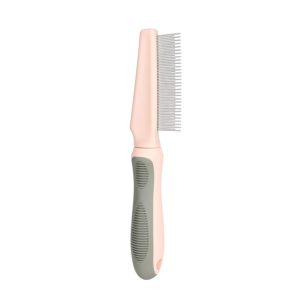
Brush designed to lift loose hair out of a cat's coat — the hair has to go somewhere…
How do I know if the treatment is working?
After a correct treatment, you should see fewer live fleas within a day or two, though you may still spot some for a short while as newly emerged adults hatch from the environment and are killed on contact. Check for flea dirt, the small dark specks that are actually digested blood. Comb a little onto a damp paper towel: if the specks turn reddish-brown, fleas are still feeding on your cat. Some itching can continue for a while even after the fleas are gone, especially in a cat with a flea allergy, because the skin reacts to saliva. If you still see live fleas weeks after starting a proper plan, the product may not be effective for your situation, the application may have failed, or the environment may still be reinfesting her. At that point, go back to your vet rather than simply buying a different product at random.
When should I see a vet about fleas?
See your vet if your cat is scratching so much that her skin is red, scabby, or losing fur, because that suggests a flea allergy or a secondary skin infection that needs treatment beyond flea control. You should also book a visit if you have treated consistently for several weeks and still see live fleas, if your cat is very young or unwell, or if you are unsure which product is safe for her. A vet can confirm the diagnosis, prescribe a more effective product, and treat any skin damage. Fleas can also carry tapeworm, so a cat with a heavy infestation may need worming as well. Because flea problems are so common and so often mishandled, a short conversation with your vet usually saves weeks of trial and error and gets your cat comfortable far sooner.
Frequently asked questions
- Can I use my dog’s flea treatment on my cat? No. Many dog products contain permethrin, which is toxic to cats. Always use a cat-specific product.
- How often should I treat my cat for fleas? Most monthly products are applied every four weeks year-round, but follow your vet’s advice for your climate.
- Do indoor cats need flea treatment? Often yes. Fleas can hitch a ride indoors on shoes, clothing, or other pets, so many vets recommend year-round cover.
- Why do fleas keep coming back? Usually because the home was not treated. Most fleas live as eggs and larvae in bedding and carpets.
- Is flea treatment safe for kittens? Only products labelled for the kitten’s age and weight. Ask your vet before treating a young kitten.