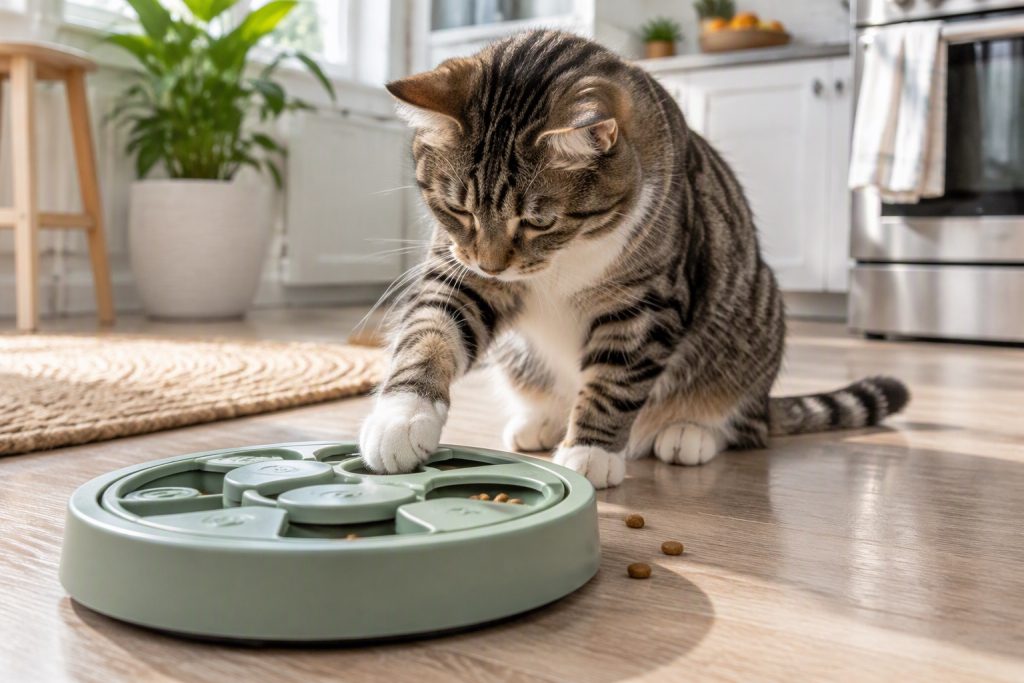
The best puzzle feeder for a cat is one that matches her skill level and the food she eats, slows her eating, and is easy to clean. Start with an easy design, such as a simple maze or a rolling ball, and increase the difficulty as she learns. Puzzle feeders reduce boredom, slow fast eating, and give indoor cats a healthy outlet for the hunting instincts they would otherwise have nowhere to use.
- Match the feeder to her skill and food type.
- Start easy, then increase the challenge.
- Choose a design you can wash easily.
- Use part of her daily food, not extra.
What is the best puzzle feeder for cats?
There is no single best feeder, but there is a best starting point. A simple food maze, a rolling treat ball, or a shallow dish with obstacles suits most cats because they can see and smell the food and work out quickly how to get it. As your cat gains confidence, move to feeders with sliding lids, drawers, or compartments she has to open with a paw. Look for a feeder with a wide, stable base so it does not slide across the floor, and one that is easy to take apart and wash, because food residue grows bacteria and a feeder that is awkward to clean will not get used. Material matters too: stainless steel and sturdy plastic are easy to clean, while soft plastic can hold odours. Match the design to your cat’s personality. A bold, curious cat enjoys a challenge, while a cautious cat needs a feeder she can solve in seconds, at least at first.
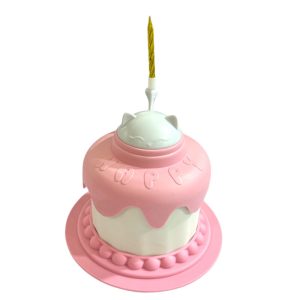
A cake-shaped silicone and TPE bowl lifts the eating surface off the floor. Measure the day's portion once…
Why should I use a puzzle feeder?
Puzzle feeders work on several problems at once. First, they slow eating, which matters for cats who bolt their food and then vomit or gulp air. Second, they provide mental stimulation, which indoor cats often lack. A cat who would spend hours hunting in the wild gets a fraction of that activity from a bowl of food she can eat in two minutes, and that gap shows up as boredom, over-grooming, or demands for attention. A puzzle feeder turns a meal into a short, satisfying task that uses her nose, paws, and brain. Third, they can help with weight management by making food last longer and making eating a more conscious activity. Fourth, they give a cat a sense of control and accomplishment, which reduces stress. Vets and behaviourists often recommend them for cats who eat too fast, are overweight, or show signs of boredom. Our article on puzzle feeders for cats covers the wider benefits.
How do I introduce a puzzle feeder?
Introduce it gradually, or your cat may simply walk away. Start by putting the feeder on the floor with a few treats or a little of her regular food sitting in the open, easy to reach, so she learns that the object means food. Let her eat from it without any challenge for a day or two. Then add a small obstacle, such as food under a lip she can nudge out, and praise her when she gets it. Increase the difficulty only when she is solving the current level easily. Always use a food she genuinely likes, and keep sessions short. Do not use the puzzle feeder for her entire meal at first; use it for part of the meal or for treats, so she does not go hungry if she struggles. If she ignores it, make it easier rather than pushing her. Some cats take to puzzles in minutes, while others need a week. Patience pays off, and once she is hooked, she will ask for it. Our guide to the best toys for bored cats pairs well with puzzle feeding.
Which puzzle feeder suits a beginner?
For a first feeder, choose something with a low barrier to entry. A rolling ball that dispenses kibble as it is batted around is ideal, because the cat only has to touch it and food appears. A simple maze bowl, where food sits in shallow channels and the cat scoops it out with a paw or tongue, is also very accessible. Avoid starting with multi-step puzzle boxes that require lifting lids, sliding panels, and opening drawers, because a cat who fails will lose interest fast. Once she has mastered an easy feeder, a level-two puzzle with a few compartments keeps her engaged. If your cat is a flat-faced breed, choose a feeder she can reach with her tongue rather than one that requires deep paw work. If she is older or has arthritis, avoid feeders that demand a lot of reaching or pushing, and pick one that is gentle on her joints. Match the challenge to the cat, not the other way around.
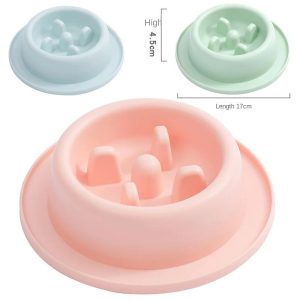
Round bowl with a removable flower insert. Made from PP. Made for daily feeding and fresh water. Keeps…
Can a puzzle feeder help with weight or fast eating?
Yes, and this is one of the clearest reasons to use one. A cat who bolts her food swallows a lot of air and may vomit soon after eating, and eating fast also makes it easy to overeat because the body does not register fullness quickly. A puzzle feeder slows the pace, giving the brain time to catch up with the stomach, which helps with both digestion and appetite control. For overweight cats, a puzzle feeder makes a smaller portion take longer to eat, so the meal feels more satisfying without adding calories. You still need to measure the food, because a puzzle feeder does not change the amount, only the speed. Combined with regular play and measured portions, puzzle feeding supports a steady, healthy weight loss. If your cat needs to lose weight, ask your vet for a target and a plan, and never cut her food drastically, because rapid weight loss is dangerous for cats.
What if my cat gives up on the puzzle?
If your cat walks away, the puzzle is probably too hard, the food is not motivating enough, or she is not hungry. Check the obvious first: use a food she loves, and offer the feeder when she is genuinely peckish rather than after a full meal. Then make the puzzle easier by removing obstacles, spreading food in the open, or switching to a simpler design. Some cats need to see you demonstrate; drop a piece of food into the feeder and let it fall out, so she connects the object with reward. Never leave her with an unsolvable puzzle and no other food, because that is stressful and unfair. If she simply prefers her bowl, try using the puzzle feeder for a small part of each meal while keeping the bowl for the rest, and increase the puzzle portion as she gains confidence. Some cats never take to puzzles, and that is fine, but most come around with a gentler design and a little patience.
Frequently asked questions
- What is the easiest puzzle feeder for a cat? A rolling treat ball or a shallow maze bowl, since the cat only has to nudge it to release food.
- Can I feed my cat only from a puzzle feeder? Yes, once she is confident with it, but build up gradually so she does not go hungry while learning.
- Are puzzle feeders good for kittens? Yes, with an easy design. They build problem-solving skills and slow fast eating.
- How do I clean a puzzle feeder? Rinse it after each use and wash it thoroughly every few days, following the maker’s instructions.
- My cat ignores the puzzle feeder. What now? Make it easier, use tastier food, and offer it when she is hungry. Build up slowly.