

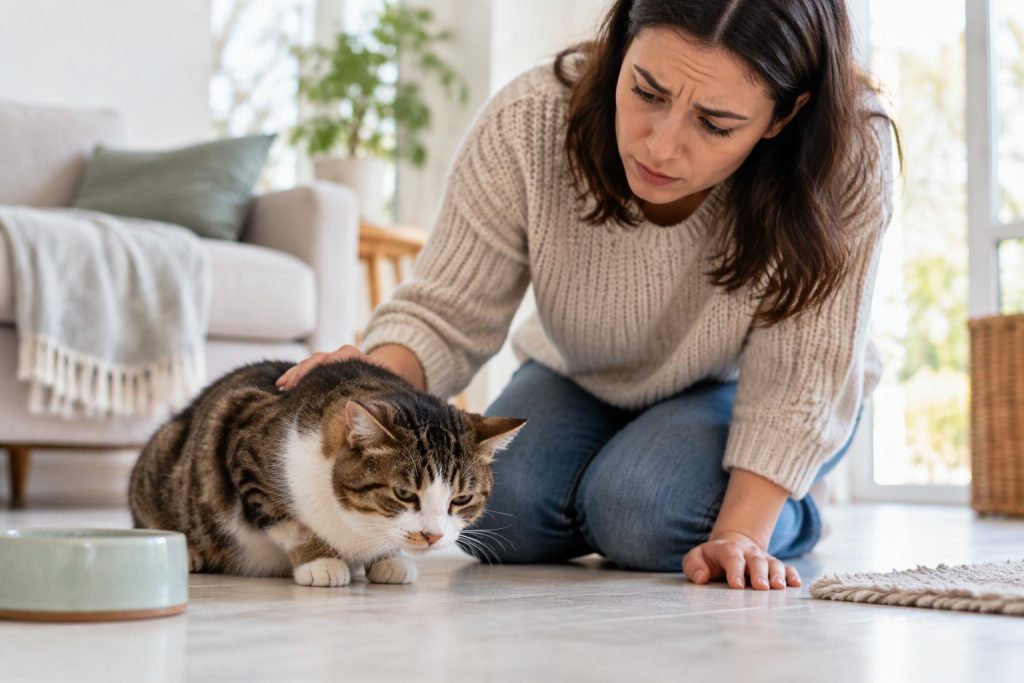
Occasional vomiting in a cat can be harmless, especially if it is a one-off hairball or a reaction to eating too fast. It is time to worry when vomiting is repeated, projectile, contains blood, or comes with lethargy, weight loss, or refusal to eat. Persistent vomiting can signal a blockage, poisoning, or an underlying illness, and a cat who vomits repeatedly needs a vet rather than home remedies.
- A one-off vomit is often harmless.
- Repeated vomiting needs a vet.
- Blood, or vomiting with lethargy, is urgent.
- Never give human medication to a vomiting cat.
When should I worry about my cat vomiting?
A single episode in an otherwise bright, playful cat is usually nothing to panic about. It may be a hairball, a reaction to a new food, or the result of eating too quickly. What changes the picture is frequency and context. Worry when your cat vomits more than once or twice in a day, when it happens repeatedly over several days, or when it becomes a habit rather than an occasional event. Worry if the vomit contains blood, looks like coffee grounds, or is projectile, shooting some distance rather than dribbling out. Worry if she is also lethargic, off her food, losing weight, or showing pain. And worry if she is a kitten, a senior cat, or has a known condition, since they have less reserve. When in doubt, err on the side of caution. A cat who is vomiting and also unwell is a cat who needs to be seen, and early treatment is far easier than a late diagnosis.

Clear glass bowl holding dry food. Made from plastic. Made for daily feeding and fresh water. Keeps food…
What causes vomiting in cats?
The causes range from minor to serious. On the mild end are hairballs, eating too fast, a sudden diet change, food intolerance, and eating something that disagrees with her, such as a plant or table scraps. More serious causes include gastrointestinal infections, parasites, inflammatory bowel disease, pancreatitis, and liver or kidney disease. A swallowed foreign object, such as a string, hair tie, or toy part, can cause a partial or complete blockage, which is a surgical emergency. Poisoning from household plants, human food such as onions or chocolate, or chemicals can also cause vomiting. In older cats, vomiting is sometimes the first sign of hyperthyroidism or kidney disease. Because the same symptom can mean anything from a mild upset to a life-threatening blockage, the pattern, frequency, and any other signs are what tell you how urgent it is. If vomiting is persistent and you cannot identify an obvious cause, let your vet investigate. Our article on hairballs in cats covers one of the most common benign reasons.
How do I tell vomiting from a hairball?
A hairball is a tube-shaped clump of fur, often with some food or fluid, and a cat who brings one up usually does so after a period of retching and coughing that can last a minute or more. Vomiting of food or bile is different: it tends to come up more quickly, often without the long retching phase, and the contents are recognisable as food, froth, or yellow bile. A cat who produces hairballs now and then is common, especially long-haired cats and those who groom heavily. However, frequent hairball-like episodes are not normal, and they are sometimes mistaken for vomiting caused by an underlying problem. If your cat brings up hairball-like material often, seems uncomfortable, or is losing weight, that is worth a vet visit rather than more hairball paste. Our article on why cats hiccup covers another harmless sound that owners sometimes confuse with vomiting or retching.
When is vomiting an emergency?
Treat vomiting as an emergency if your cat cannot keep water down, if she vomits repeatedly in a short period, or if the vomit contains blood or looks like coffee grounds. It is also an emergency if she is weak, collapsed, or unresponsive, if her abdomen looks swollen or feels painful, or if you suspect she has swallowed something she should not have, such as string, a toy, or medication. Vomiting after possible exposure to a toxin, such as lilies, antifreeze, or human medication, is urgent and needs immediate treatment. In any of these situations, do not wait to see if she improves, and do not try to treat her at home. Call your vet or an emergency clinic straight away and describe what happened. Cats deteriorate quickly, especially when dehydrated, and a blockage or poisoning can become fatal within hours. It is always better to be told you came in unnecessarily than to wait too long.

Round bowl with a removable flower insert. Made from PP. Made for daily feeding and fresh water. Keeps…
What should I do if my cat vomits repeatedly?
First, remove any food that has been down, so she is not tempted to eat and vomit again, but keep fresh water available unless she cannot hold it down. Note the time, the appearance of the vomit, and anything she may have eaten, because this information helps your vet. Do not give her human medication, and do not try old remedies such as forcing her to fast for a long period without veterinary advice, since cats who go without food can develop serious liver problems. If she vomits once and then seems completely normal, you can offer a small amount of bland food after a short rest, but if she vomits again, or if she seems unwell at all, call your vet. Repeated vomiting leads to dehydration and electrolyte loss quickly, and it may be the only outward sign of a blockage or illness. Your vet can examine her, run tests, and give treatment such as fluids and anti-nausea medication. Trust your instincts: if something feels wrong, get her seen.
Can I treat cat vomiting at home?
There is very little you should do at home beyond supportive care for a mild, one-off episode. You can keep her warm and quiet, make sure water is available, and offer a small, bland meal once she has settled, but you should not give any medication, including human anti-nausea drugs, painkillers, or antacids, because many are toxic to cats and the correct dose is not something you can guess. Do not withhold food for more than a short period, and never force her to eat or drink, which risks choking. Home treatment has a place only when the cause is clearly benign, such as a single hairball or a known fast-eating habit that has happened before. Even then, if it happens again, it stops being a home-treatment situation. Vomiting is a symptom, not a diagnosis, and the underlying cause is what needs attention. If your cat vomits more than once, seems unwell, or the behaviour is new, let a vet look rather than experimenting at home.
Frequently asked questions
- Is it normal for cats to vomit sometimes? An occasional one-off can be normal, but repeated vomiting is not and should be checked.
- Should I feed my cat after she vomits? If she seems well, offer a small bland meal after a short rest. If she vomits again, call your vet.
- What does yellow vomit mean in cats? It is usually bile, often from an empty stomach, but repeated bile vomiting needs a vet.
- Can hairballs cause vomiting? Yes, but frequent hairball-like episodes are not normal and may signal another problem.
- Is vomiting a sign of poisoning in cats? It can be. If you suspect poison or a swallowed object, treat it as an emergency.





