The early signs of hyperthyroidism in cats are weight loss despite a good or increased appetite, restlessness, and increased drinking and urination. The condition, caused by an overactive thyroid gland, is one of the most common hormonal disorders in older cats and is very treatable. Because the signs are easy to mistake for ordinary ageing, any unexplained weight loss in a cat over eight years old should prompt a vet visit and a blood test.
- Weight loss with a normal or increased appetite.
- Restlessness, pacing, and night vocalising.
- Increased thirst and urination.
- A blood test confirms the diagnosis.
What are the early signs of hyperthyroidism in cats?
The classic early sign is a cat who eats well, or even more than usual, but still loses weight. Owners often describe a cat who is always hungry, always asking for food, and yet getting thinner, which is the opposite of what you would expect. Alongside that, many cats become restless and more active, pacing around the house, jumping up at night, and vocalising loudly, especially in the early hours. Increased drinking and urination are common, and you may notice a bigger litter box output. Some cats develop a poor, greasy coat, vomiting, or diarrhoea, and some become irritable or anxious. A fast heart rate and, in some cases, a heart murmur may be found by your vet. The signs build gradually, which is why they are so often put down to old age. Our guide to checking your cat’s weight at home helps you catch the weight loss early.

A breathable plastic grooming tool takes the undercoat first, which is where matting starts. Try it after a…
Why does my cat eat more but lose weight?
When the thyroid gland produces too much hormone, the cat’s metabolism speeds up dramatically, burning calories far faster than normal. The body essentially runs at high speed, using energy faster than the cat can take it in, even when she is eating more than usual. That is why a hyperthyroid cat can have an excellent appetite and still lose weight and muscle. The excess hormone also increases the heart rate and can put a strain on the heart over time. This is a key difference from many other causes of weight loss, where the appetite usually drops. If your cat is eating normally or more and still losing weight, hyperthyroidism is one of the first things your vet will consider, along with diabetes and intestinal problems. Weight loss with a good appetite is a specific and important pattern that should never be dismissed as fussiness or ageing. Our article on cat vomiting covers another sign that can appear with this condition.
Is hyperthyroidism common in older cats?
Yes, it is one of the most common conditions diagnosed in older cats, and it becomes more likely as cats age. It typically appears in cats over eight years old and is most common in those over ten. Middle-aged and senior cats of any breed can develop it, and there is no strong breed predisposition, though some studies suggest certain breeds may be slightly more affected. Because the signs come on slowly and can look like normal ageing, many cases go unnoticed for a long time. This is exactly why regular senior check-ups with blood tests matter so much. A simple blood test measuring thyroid hormone levels can identify the condition, often before the outward signs become obvious. If your cat is over eight and has lost weight, seems restless, or is drinking more, ask your vet to include a thyroid check in her next blood panel, because catching it early makes treatment easier and prevents the heart and kidneys from being affected.
How is hyperthyroidism diagnosed?
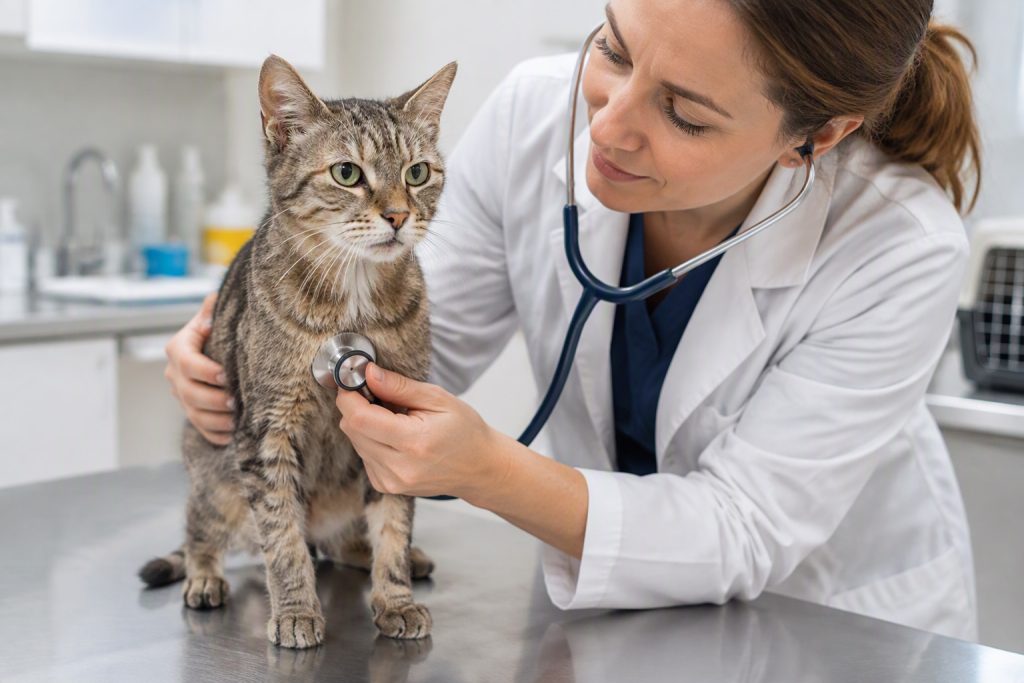
Diagnosis starts with a physical examination, during which your vet may feel an enlarged thyroid gland in the neck, listen for a heart murmur or fast heart rate, and note any weight loss or muscle wasting. The key test is a blood test measuring the level of thyroid hormone, specifically T4. In most cases, a high T4 level confirms the diagnosis. Sometimes the level is only mildly elevated or falls within the normal range despite the condition, and in those cases your vet may repeat the test or run additional ones. A full blood panel and urine test are usually done at the same time, because hyperthyroidism can mask or mimic kidney disease, and treating the thyroid can affect kidney function. Blood pressure is often checked too, since high blood pressure is a common complication. It sounds like a lot of testing, but it gives a complete picture of your cat’s health and helps your vet choose the safest treatment.
Nail scissors, bath brush, de-shedding glove and a drying towel — the full groom in one box. Cuts…
How is hyperthyroidism treated?
There are several effective treatment options, and the right one depends on your cat’s age, overall health, and any other conditions. Medication, usually a daily tablet or a transdermal gel applied to the ear, controls the condition by reducing hormone production, and it is the most common starting point because it is easy to adjust and reversible. It does require daily dosing and regular blood tests to monitor levels and kidney function. Radioactive iodine treatment is a cure in many cases, given as a single injection that destroys the overactive thyroid tissue without harming the rest of the body, though it requires a short hospital stay and is not available everywhere. Surgery to remove the affected gland is another option but is less common now. A prescription diet low in iodine can also control the condition in some cats, if they will eat it exclusively. Whichever route you choose, treatment usually improves quality of life quickly, and many cats put weight back on and settle within weeks.
Can hyperthyroidism be prevented?
There is no proven way to prevent hyperthyroidism, and the exact cause is not fully understood. Because the cause is unclear, there is no specific diet or lifestyle change that is known to stop it from developing. What you can do is catch it early through regular veterinary care, especially in cats over eight, when twice-yearly check-ups with blood work become the standard. Weighing your cat monthly at home is a simple habit that can flag the weight loss before it becomes obvious, since the scale often shows a problem before behaviour does. Watching for the other early signs, such as increased appetite, restlessness, and increased drinking, gives you useful information to bring to your vet. If your cat has been diagnosed, keeping up with treatment and follow-up tests prevents complications such as heart disease and high blood pressure. Early detection and consistent management are what make the biggest difference to how well a hyperthyroid cat does long term.
Frequently asked questions
- What are the first signs of hyperthyroidism in cats? Weight loss with a good appetite, restlessness, and increased drinking and urination are the classic early signs.
- Can a cat with hyperthyroidism be cured? Radioactive iodine treatment often cures it. Medication and diet control it long term rather than curing it.
- Is hyperthyroidism painful for cats? The condition itself is not painful, but it strains the heart and can make a cat feel restless and unwell if untreated.
- How is hyperthyroidism treated in older cats? Usually with daily medication, a prescription diet, or radioactive iodine, depending on the cat’s health.
- Can hyperthyroidism hide kidney disease? Yes. Treating the thyroid can reveal kidney problems, which is why vets monitor both together.