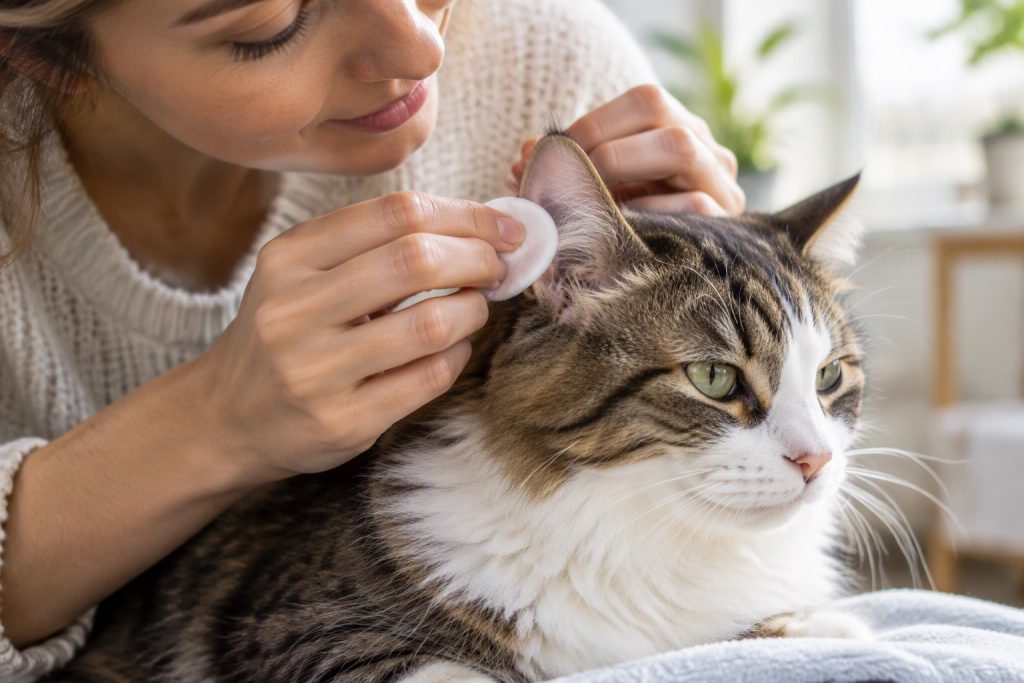
Ear mites are tiny parasites that live in the ear canal and cause intense itching, dark crumbly debris, and frequent head shaking. Treatment means a vet-recommended ear medication applied into the ear canal, plus treating any other pets in the home, because mites spread easily between animals. Never use home remedies such as olive oil, alcohol, or hydrogen peroxide, and see a vet if the ears are painful, smelly, or the problem keeps coming back after treatment.
- Signs are scratching, head shaking, and dark debris.
- A vet confirms mites under the microscope.
- Treat all pets, since mites spread between them.
- Never put oil, alcohol, or peroxide in the ear.
What do ear mites look like in cats?
Ear mites are very small, roughly the size of a pinhead, and they are usually too tiny to see with the naked eye. What owners notice is their waste: a dark, crumbly, coffee-ground-like debris that builds up in the ear canal, often looking like dirt that will not wipe away cleanly. The ear may also look red and inflamed, and the cat will scratch at it constantly, shake her head, and sometimes hold the ear at an odd angle. In heavy infestations, the debris can look almost black and waxy. Mites themselves are white and move, and a vet can see them under a microscope by taking a sample of the debris. It is worth knowing that not all dark ear debris is mites; yeast infections and bacteria can produce similar material, which is why a proper diagnosis matters before you treat.

A stainless ABS plastic and metal comb clears the loose hair before it lands on the furniture. Keep…
How do I know if my cat has ear mites?
The strongest clues are intense itching, head shaking, and dark debris in the ear canal, often in both ears. Your cat may scratch until the ear is raw, and you may notice hair loss around the ear or scabs from scratching. She may also rub her head against furniture or the floor. A vet confirms the diagnosis by examining a sample of the ear debris under a microscope and looking for the mites or their eggs. This step is important, because ear infections, allergies, and other problems can produce very similar signs, and treating the wrong condition wastes time and can irritate the ear further. If you have other pets, especially dogs or other cats, they may also be affected, since mites pass easily between animals through close contact. A vet check is quick and gives you a definite answer, which is far better than guessing from appearance alone. Our guide on how to clean your cat’s ears explains safe handling.
How are ear mites treated?
Treatment usually involves a prescription ear medication that kills the mites and their eggs, applied into the ear canal according to your vet’s instructions. Some products are applied directly to the ear, while others are spot-on treatments applied to the skin, and some treat mites along with fleas and other parasites. Because the mite life cycle takes a few weeks, treatment must continue for the full course even if the cat seems better, or the infestation will return. Your vet may also clean the ears to remove debris so the medication can reach the canal. If the ears are infected or inflamed, additional treatment for infection or inflammation may be needed. Every pet in the household should be treated at the same time, because mites move between animals and an untreated pet will reinfest the others. Follow the vet’s schedule exactly, and keep the follow-up appointment to confirm the mites are gone.
Can I treat ear mites at home?
Home remedies for ear mites are risky and often ineffective. Olive oil, coconut oil, vinegar, alcohol, and hydrogen peroxide are commonly suggested online, but none reliably kills mites, and some cause real harm. Alcohol and peroxide can irritate or damage the delicate ear canal, especially if the eardrum is not intact, and oil can trap debris and worsen the problem. The most serious risk is that you treat the wrong condition; if the actual problem is a bacterial or yeast infection, or a foreign body, home treatment delays proper care and lets the problem worsen. Even if mites are present, over-the-counter products vary in effectiveness, and the wrong dose or method can injure the ear. The safe approach is a vet diagnosis followed by prescription treatment. Cleaning the outer ear gently with a vet-approved cleaner is fine and can be part of the routine, but never push anything deep into the canal. Our article on cat eye discharge covers another common problem that can appear alongside ear issues.
A plastic dematting comb clears the loose hair before it lands on the furniture. Use it before the…
Why do ear mites keep coming back?
If mites return after treatment, there are usually a few explanations. The most common is that treatment stopped too early, before the full life cycle was broken, allowing eggs to hatch and restart the infestation. Another is that other pets in the home were not treated, so mites simply moved back. Occasionally, the product used was not effective against mites, or it was not applied correctly. It is also possible that the original diagnosis was wrong and the recurring problem is actually a yeast or bacterial infection, an allergy, or another condition that keeps irritating the ear. If the ears do not clear up, or if they clear and then flare again, go back to your vet rather than repeating the same treatment. A fresh examination and a new sample can identify what is really going on. Chronic ear problems can lead to permanent damage to the ear canal if they are not resolved, so persistence and proper follow-up are worth it.
When should I see a vet for ear problems?
See your vet whenever your cat has ear signs that do not settle quickly. Book an appointment if she is scratching her ears intensely, shaking her head repeatedly, or holding an ear down or to the side. You should also go if the ear smells unpleasant, looks red and swollen, or has discharge, or if there is any swelling or a lump on the ear flap, which can indicate a haematoma from vigorous scratching. See a vet urgently if your cat seems in pain, is off her food, has a head tilt, loses her balance, or develops a drooping face, since those can signal a deeper or more serious problem. Persistent ear issues can damage the canal and, in some cases, affect hearing. Because ear problems are often uncomfortable and sometimes painful, and because the causes vary, professional diagnosis and treatment are always the kindest route. Do not wait for a minor ear problem to become a major one.
Frequently asked questions
- How do I know if my cat has ear mites or an infection? You cannot tell reliably by looking. A vet needs to examine a sample of the debris.
- Can I use olive oil for ear mites? No. It does not reliably kill mites and can trap debris. Use a vet-prescribed treatment.
- Are ear mites contagious to other pets? Yes. They spread easily between cats and dogs, so treat every pet in the home.
- How long does ear mite treatment take? Usually several weeks, to cover the full mite life cycle. Follow your vet’s schedule exactly.
- Can humans catch ear mites from cats? Rarely, and they do not usually cause lasting problems in people, but keep up hand hygiene.