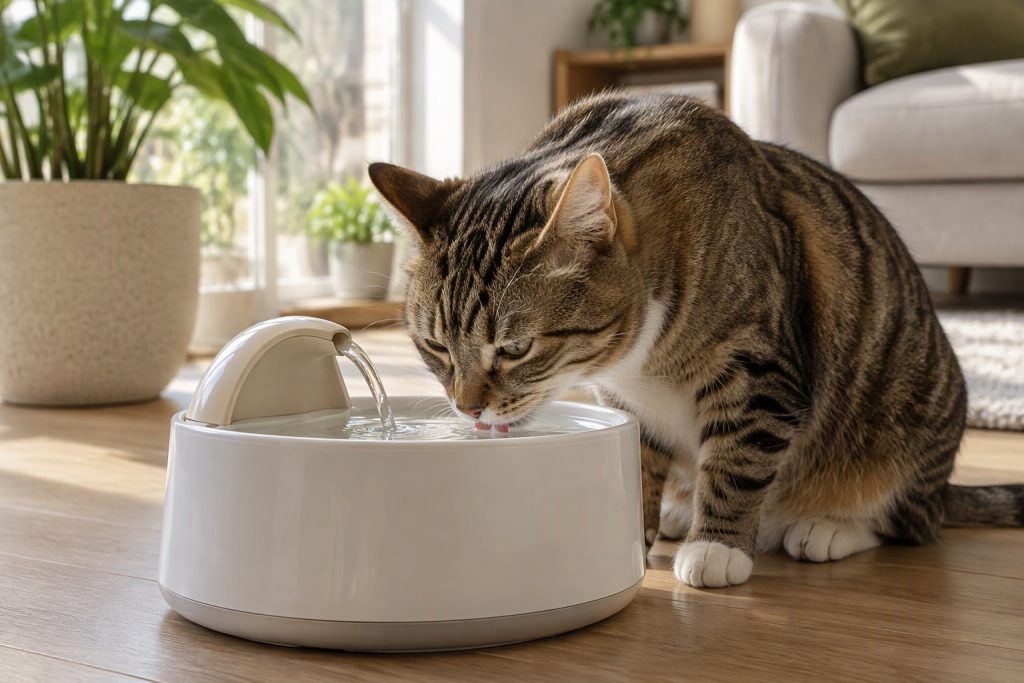
The best quiet cat water fountain is one with a low-decibel pump, a simple design that is easy to take apart and clean, and a filter you can replace regularly. A fountain’s job is to keep water moving, cool, and fresh, which encourages cats to drink more. A quiet pump matters because a loud hum can put a cat off entirely, and easy cleaning matters because a dirty fountain is worse than a clean bowl.
- Look for a fountain with a quiet pump.
- Choose one that is easy to clean.
- Replace filters regularly, as instructed.
- A fountain encourages cats to drink more.
What is the best quiet water fountain for cats?
The quietest fountains share a few features. They use a submerged pump with rubber feet and a soft mount, which stops vibration from transferring to the bowl and resonating through the floor. They have a simple water path with few narrow channels where water can gurgle, and they run at a low flow rate, since a gentle trickle is quieter than a splashing cascade. Ceramic fountains tend to be quieter than thin plastic ones, because the heavier material absorbs vibration, and they are also easier to keep clean. Look for a design that holds enough water to run for a day or two without the pump running dry, since a pump that sucks air becomes noisy and can be damaged. A fountain with adjustable flow lets you turn it down if your cat prefers a gentle stream. If you can, read reviews specifically about noise, because decibel claims vary. Our guide to the best water fountains for cats compares the main styles.
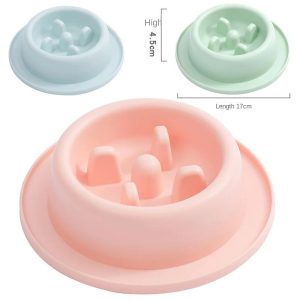
Round bowl with a removable flower insert. Made from PP. Made for daily feeding and fresh water. Keeps…
Do cats really drink more from a fountain?
Many cats do drink more from a fountain, though not every cat will. The reason comes down to instinct: cats are drawn to moving water because in the wild, still water can be contaminated, while a stream is more likely to be fresh. A fountain keeps the water circulating and oxygenated, which keeps it cooler and better tasting than water that has sat in a bowl all day. For cats with a low thirst drive, this extra appeal can meaningfully increase how much they drink, which supports kidney and urinary health. It is not a guarantee, though. Some cats ignore fountains entirely and prefer a wide, still bowl, and a few are frightened by the sound or the movement. If your goal is to raise your cat’s water intake, a fountain is worth trying, but pair it with wet food, which delivers moisture directly and reliably. Our article on fountain versus bowl helps you decide which suits your cat.
How do I choose a fountain for a nervous cat?
For a timid cat, start with the quietest option you can find and introduce it slowly. Place the fountain in a familiar spot, not in a corner where she feels trapped, and run it on the lowest flow setting at first. Some nervous cats are startled by the sound of water or by the pump starting up, so let her investigate at her own pace and never force her near it. A ceramic fountain with a gentle stream is often a good choice, since it is quiet and stable. Keep a familiar bowl of water nearby as well, so she always has a fallback and does not feel pressured. If she avoids the fountain entirely, try a different location, a lower flow, or a model that mimics a dripping tap rather than a splashing fall. Some cats simply prefer still water, and that is fine. The goal is to make drinking easy and appealing, not to insist on one particular product.
How do I keep a fountain quiet and clean?
Keeping a fountain quiet is mostly about maintenance. Top up the water regularly, because a low level lets the pump draw air, which creates noise and can damage it. Clean the pump and the impeller every week or two, since a build-up of hair and mineral deposits makes the pump strain and hum. Soak the bowl and parts in warm water with a pet-safe cleaner, and rinse thoroughly, avoiding harsh chemicals that could leave residue. Replace the filter as the maker recommends, usually every two to four weeks depending on use and the number of cats, because a clogged filter reduces flow and makes the pump work harder. Place the fountain on a stable, level surface, ideally on a mat, so vibration does not amplify through the floor. If it starts making new noises, check the water level and clean the pump before assuming the fountain is broken. A well-maintained fountain runs quietly for years, and a little routine care is all it takes.
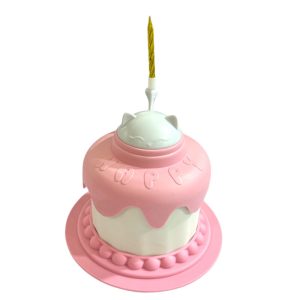
A cake-shaped silicone and TPE bowl lifts the eating surface off the floor. Measure the day's portion once…
Is a fountain better than a bowl?
It depends on your cat. A fountain is better for cats who like moving water, who ignore their bowl, or who need encouragement to drink more, because it keeps water fresh and appealing. It is also useful in a multi-cat home, where a large reservoir means water is always available. A bowl, on the other hand, is simpler, cheaper, and easier to clean, and some cats genuinely prefer still water. A bowl also never breaks down, never makes noise, and never needs filters. Many owners find the best solution is both: a fountain as the main water source, plus a wide ceramic bowl in another location, so the cat can choose. If you have a cat with kidney or urinary issues, a fountain is often recommended, but it works best alongside wet food rather than as the only change. Whichever you choose, keep the water clean, since a dirty bowl or fountain will put a cat off drinking, which defeats the purpose. Both work well, as long as the water stays genuinely clean.
How often should I change fountain water and filters?
Change the water in a fountain every day or two, just as you would with a bowl, because even circulating water collects dust, hair, and saliva, and it can develop a film over time. A full clean of the fountain, including the bowl, the pump housing, and the impeller, should be done weekly, and more often in a multi-cat home or if you notice slime. Filters should be replaced according to the manufacturer’s guidance, typically every two to four weeks, or sooner if the flow slows noticeably or the water smells stale. Keep a spare filter on hand so you are never tempted to stretch one too far. If the fountain is used by more than one cat, clean it more frequently, since shared water sources can spread bacteria between cats. If a cat is unwell or has a contagious condition, clean the fountain daily. Regular maintenance keeps the water genuinely fresh, which is the whole point of having a fountain, and it keeps the pump quiet and long-lasting.
Frequently asked questions
- Are water fountains good for cats? For many cats, yes. Moving water is more appealing and can increase how much they drink.
- What is the quietest cat fountain? Ceramic fountains with a submerged, rubber-mounted pump and a low flow setting are usually quietest.
- How often should I clean a cat fountain? Change the water daily or every other day, and do a full clean weekly, more often in multi-cat homes.
- My cat ignores the fountain. What should I do? Try a quieter model, a lower flow, and a different location, and keep a bowl as a fallback.
- Do fountains help cats with kidney disease drink more? They can help, and they work best alongside wet food and veterinary advice.