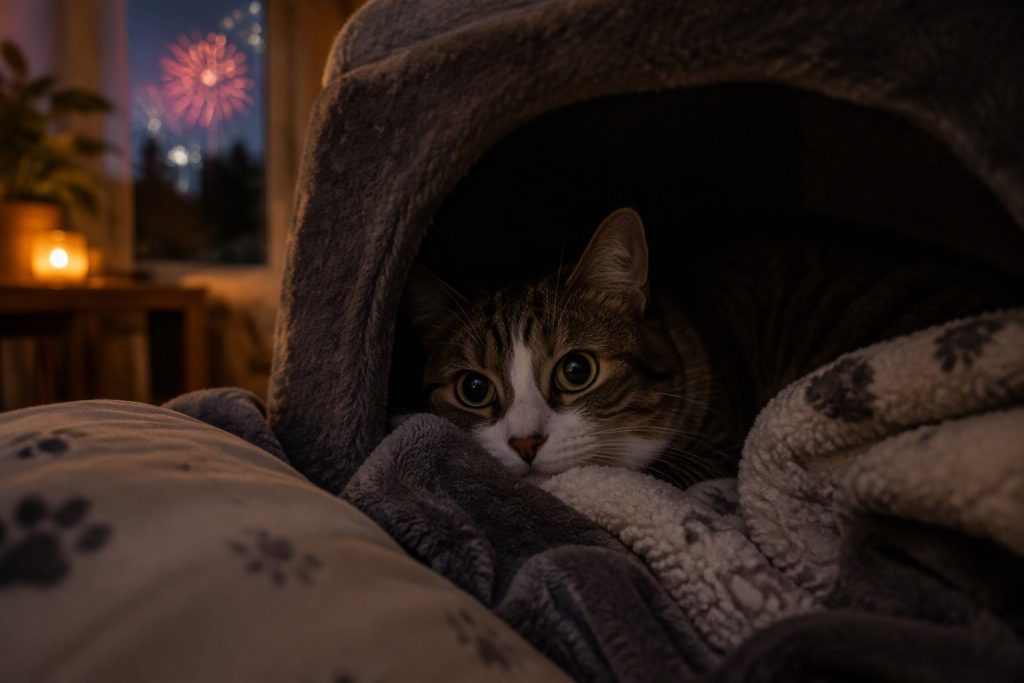
To calm a cat during fireworks, set up a safe, soundproofed hiding spot in advance, close windows and draw the curtains to muffle sound, play calm music or white noise, and stay relaxed yourself. Never take her outside to watch, and never punish her for hiding. If she is very distressed, ask your vet well in advance about short-term calming options, since some cats need more than a quiet room.
- Create a safe hiding spot before the event.
- Close windows and draw curtains.
- Play calm music or white noise.
- Never take her outside during fireworks.
How do I calm my cat during fireworks?
Preparation is everything, because once the bangs start, it is too late to teach her a new routine. Set up a quiet room in advance, with curtains closed, a radio or white noise machine playing softly, and her favourite bed and hiding places available. On the night, keep windows and doors closed to reduce noise, and put on some background sound to mask the booms. Let your cat hide wherever she feels safest, whether that is under the bed, in a wardrobe, or inside a covered box, and do not drag her out. Stay calm yourself, because cats pick up on tension. Offer her a normal meal and access to her litter box, and keep the room dim. If she comes to you for comfort, comfort her gently, but if she prefers to be alone, respect that. A calm, predictable environment is the single most effective thing you can provide. Our article on cat hiding spots helps you set one up well in advance.

Cervical pillow, plush hammock, floor mat and paw cushion — four places to nap. Gives a cat a…
Why is my cat so scared of fireworks?
Cats have far more sensitive hearing than people, so a firework that sounds loud to you is overwhelming to her. Fireworks are also unpredictable, sudden, and accompanied by flashes of light and the smell of smoke, all of which can trigger a fear response. Cats are naturally wary of sudden loud noises because, in the wild, a loud bang could mean danger, and their instinct is to hide. Some cats are more sensitive than others, and a cat who has had a frightening experience with a loud noise may become more reactive over time. Because fireworks happen rarely and unpredictably, cats have little chance to get used to them, which makes the fear worse. The good news is that a well-prepared environment can greatly reduce her distress, and for cats who are severely affected, your vet can offer short-term support. Understanding that the fear is a genuine, instinctive response helps you respond with patience rather than frustration. Our article on why cats meow at night covers another time when cats can become unsettled.
Where should my cat hide during fireworks?
Let her choose, but make sure there are good options. Cats feel safest in small, enclosed, dark spaces, so provide several: a covered bed, a cardboard box on its side with a blanket inside, a cat carrier with the door open and a soft pad, or a space under the bed. Place these in the quietest room in the house, away from windows, and make them available well before the event so they are familiar. Do not block her usual hiding places, because a cat who is forced out of her chosen spot will only become more stressed. If she hides under furniture, leave her there and do not try to coax her out. Make sure food, water, and a litter box are accessible in or near the room she chooses, so she does not have to venture into a noisy part of the house. Dim the lights, keep the room cool and calm, and let her stay hidden for as long as she needs. Safety and quiet matter far more than whether she is visible to you.
Should I comfort my cat during fireworks?
Yes, if she wants comfort. The old advice that comforting a scared cat will “reward” the fear is not supported, and ignoring a distressed cat does not help her. If your cat comes to you, presses against you, or wants to be held, comfort her calmly and gently. Speak softly, stroke her if she accepts it, and let her settle against you. If she prefers to hide alone, that is also fine, and you should not force contact. What you should avoid is reacting with alarm or frustration, since that adds to her stress. Keep your own behaviour calm and normal, because cats read our body language closely. Do not pick her up if she is struggling to get away, and never punish her for hiding, scratching, or vocalising, since punishment only increases fear. Some cats want to be near their person but not touched, so sitting quietly in the same room can be the best comfort of all. Let her lead, and respond to what she is asking for.

A thickened cloth bed is stepped into rather than climbed over. Try it near the window first, then…
Do calming products work for cats?
Some calming products help some cats, and it is worth trying them before a known event like fireworks. Pheromone diffusers, which release a synthetic version of the calming scent cats produce, are popular and are generally safe, though their effectiveness varies and studies show mixed results. Calming supplements containing ingredients such as L-theanine or casein may help mildly anxious cats, but they are not a fix for severe fear, and you should check with your vet before using any supplement. Calming music, white noise, and a covered hiding spot often do more good than any product. Weighted blankets and thundershirt-style wraps help some cats and annoy others, so introduce them in advance to see how she responds. Start any product a week or two before fireworks night, so it has time to take effect and so you can check for any reaction. If your cat is severely distressed, none of these will be enough on their own, and you should speak to your vet about a more reliable plan.
When should I ask my vet about medication?
Ask your vet in advance if your cat is severely frightened by fireworks, if she panics, injures herself, or becomes unwell, or if she takes hours or days to recover afterwards. For these cats, a short-term anti-anxiety medication prescribed by a vet can make a real difference, allowing her to stay calm through the event rather than enduring hours of terror. These medications are not sedatives that knock her out; they reduce anxiety while keeping her alert. Because they must be given before the event and sometimes trialled beforehand, plan ahead rather than calling on the night. Your vet can also check that the medication is safe with any other treatment your cat takes, and advise on timing and dosage. Never give your cat human medication or leftover pet medication without veterinary guidance, since the wrong drug or dose can be dangerous. With a little forward planning, even a very noise-sensitive cat can get through fireworks night far more comfortably. Preparing the room and her hiding places well in advance is a good companion step.
Frequently asked questions
- Should I comfort my cat during fireworks? Yes, if she wants it. Comfort does not reward fear and helps her feel safer.
- Will my cat be okay alone during fireworks? If she is calm and has a safe hiding spot, often yes, but a very anxious cat should not be left alone.
- Do pheromone diffusers help cats with fireworks? They help some cats and not others. Start them well before the event.
- Can I give my cat human calming medicine? No. Never give human medication. Ask your vet about cat-safe options.
- Why does my cat hide during fireworks? Loud, unpredictable noise is frightening, and hiding is her instinctive way to feel safe.