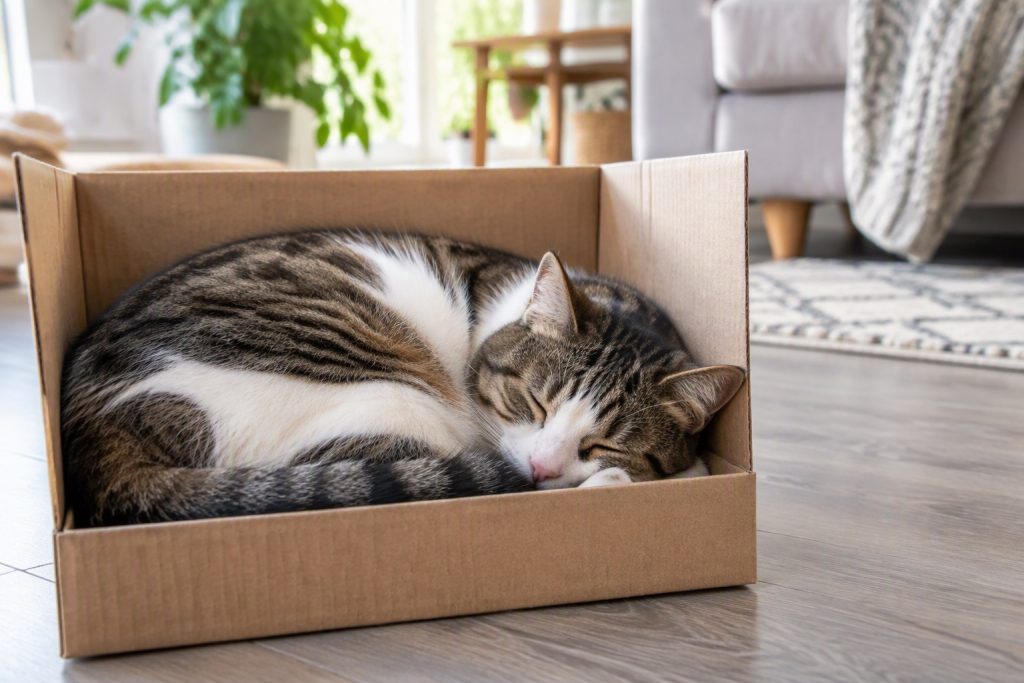
Cats sleep in boxes because a box feels safe, enclosed, and warm, which matches what a cat instinctively seeks for rest. Cardboard is also soft, retains body heat, and carries her own scent, so it quickly becomes a favourite spot. The behaviour is normal and healthy, and the main reasons are security, comfort, and a strong preference for tight, sheltered spaces over wide open ones.
- Boxes feel safe and enclosed to a cat.
- Cardboard is warm and holds her scent.
- Smaller boxes often beat expensive beds.
- Only worry if she hides constantly and seems unwell.
Why does my cat prefer a box to a bed?
A box gives a cat exactly what she is wired to want: a snug, enclosed space with walls on all sides and one way in. In the wild, resting in a sheltered spot reduces the chance of being ambushed, and that instinct persists in the living room. A cardboard box also feels warm, because it insulates and reflects body heat, and it absorbs and holds her scent, making it feel like hers. Beds, by contrast, can be too open, too soft, or smell of detergent, and some are simply the wrong shape. There is also a playful element: a box is a novelty, and cats are drawn to new containers. None of this is unusual. Many cats will choose a free box over a costly bed every time, which is why our article on whether cats need beds concludes that what matters is the cat’s preference, not the price tag.

Cervical pillow, plush hammock, floor mat and paw cushion — four places to nap. Gives a cat a…
Why do cats feel safe in enclosed spaces?
Enclosure reduces the number of directions a cat must monitor. In a box, she only needs to watch one opening, so her nervous system can relax in a way it cannot in the middle of a room. This is the same logic behind hiding in cupboards, under beds, and inside bags. Cats are both predator and prey, and their resting behaviour reflects that tension: they want to see without being seen. A snug space also traps warmth, which helps a cat conserve energy, and cats run a higher body temperature than humans, so they seek warmth deliberately. For a shy cat, a box is a retreat she controls, which lowers stress. This is why offering hiding places is a standard part of settling a nervous cat. If your cat chooses a box over your lap, she is not rejecting you; she is simply choosing security for that nap.
Does the size of the box matter?
Size matters more than most owners expect, and smaller is often better. A cat generally prefers a container just big enough to curl into, where her body touches the sides, because that contact feels secure and warm. A large box with lots of empty space can feel exposed, and she may ignore it or only use a corner. If you offer a box and your cat does not take to it, try cutting it down, removing the flaps, or adding a soft blanket to reduce the space inside. Some cats prefer a shallow tray they can sprawl in, while others want a deep one they can sink into. Kittens and small cats often choose shoebox-sized spaces, while large cats need more room. Watch where she settles naturally, then match the container to that shape rather than guessing.
Should I buy a cat bed instead?
You can, but buy with your cat’s preferences in mind rather than the shop display. Cats who love boxes often accept a bed that mimics one: a covered bed, a cave, or a deep-sided basket with a hood. Look for a bed with raised edges she can rest her chin on, since many cats like that support, and choose a size that lets her curl rather than stretch out if she is a curler. Place it where she already likes to sleep, not where you would prefer it, and give it time to gather her scent. Some cats need a bed to smell familiar, so a washable cover you can add a worn t-shirt to helps. If she still ignores it, do not take it personally. Our article on why a cat sleeps on your head shows how specific these preferences can be.
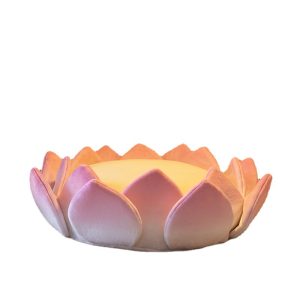
A thickened cloth bed is stepped into rather than climbed over. Try it near the window first, then…
When is box-sleeping a problem?
Sleeping in boxes is normal and needs no intervention. It becomes a concern only when it is part of a larger change. A cat who suddenly starts hiding in boxes or cupboards for most of the day, especially if she is also eating less, avoiding you, or seems painful, may be unwell or stressed. Hiding is a common sign of illness and of pain in cats, who mask discomfort instinctively. If the behaviour is new and accompanied by any other change, a vet visit is sensible. If it follows a disruption such as a move, a new pet, or building work, it is more likely stress, and giving her quiet, secure spaces and predictable routines helps. The key distinction is between a cat who happily naps in a box and a cat who is withdrawing. A cat who happily naps in a box is simply content; a cat who is withdrawing from daily life deserves a closer look, and possibly a vet visit sooner rather than later.
How can I give my cat a box-like bed?
You do not need to spend much. A sturdy cardboard box with the flaps removed, lined with a soft blanket, satisfies most cats, and you can replace it when it gets tatty. If you want something tidier, look for a felt cave, a covered pet bed, or a deep-sided basket that offers the same enclosed feel. Place it in a spot your cat already chooses, ideally slightly elevated if she likes height, and away from busy walkways and noisy appliances. Add a familiar-smelling item, such as a worn t-shirt, to speed up acceptance, and avoid strong detergents when washing covers. Offer more than one option, since cats like choice, and do not force her into any of them. If you have an older cat, choose a low-sided version so she can step in without strain. The best bed is the one she actually uses.
Frequently asked questions
- Why does my cat ignore an expensive bed for a box? Boxes are enclosed, warm, and scented like her, which many cats prefer over an open bed.
- Is it bad for my cat to sleep in a box? No, it is normal and healthy; only constant hiding with other signs is a concern.
- Should I cut a hole in the box? You can add a door hole to make a hiding den, but many cats prefer an open-topped box.
- How small should the box be? Small enough that she can curl with her sides touching, but not so small she cannot turn around.
- Can I train my cat to use a bed instead? Offer a box-like bed in her favourite spot and let her choose; forcing it rarely works.