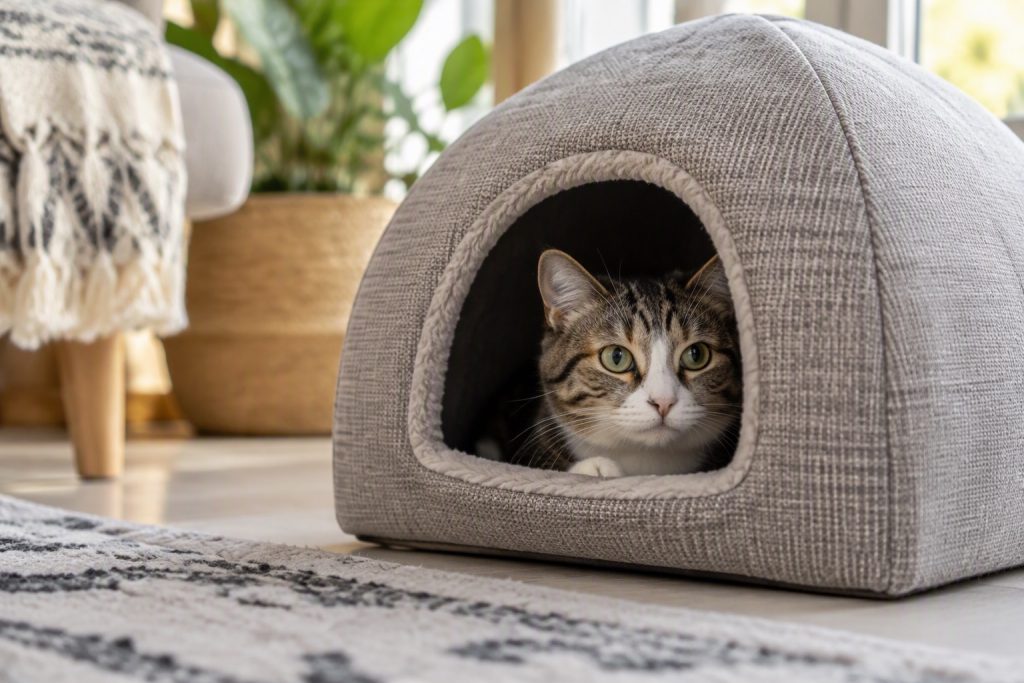
A cat hiding house is an enclosed bed or den that gives your cat a quiet, secure retreat where she can rest without being watched. Cats need somewhere to withdraw when they feel anxious, tired, or unwell, and a hiding house provides that. Look for a stable, easy-to-clean design with a low entry and a washable cover, and place it in a calm spot she already likes.
- Hiding places lower stress and aid rest.
- Choose a stable den with a low entry.
- Washable covers keep it hygienic.
- Place it in a quiet spot she already uses.
What is a cat hiding house and why do cats need one?
A hiding house is an enclosed bed, cave, or den with walls and a small opening, designed to give a cat a sheltered spot to retreat to. Cats are both predators and prey, and their sense of security depends on being able to watch while staying hidden. A hiding house mimics the natural dens and sheltered hollows a cat would seek, giving her a place where she controls who can see her and how much contact she has. This matters for everyday comfort, but it is especially important for anxious cats, new cats settling into a home, and cats coping with stressful events such as fireworks, visitors, or a move. Without a hiding place, a frightened cat may choose somewhere unsuitable, like under a bed or behind a sofa, where she may feel less safe or be hard to reach. Providing a proper den gives her a reliable refuge and helps her feel in charge of her environment, which reduces stress overall.
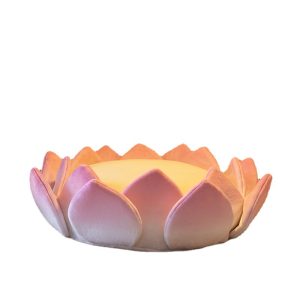
A thickened cloth bed is stepped into rather than climbed over. Try it near the window first, then…
What should I look for in a hiding house?
Stability, comfort, and easy cleaning top the list. The house should sit firmly on the floor and not wobble when your cat steps in, because an unstable den feels unsafe and will be avoided. Choose a design with a low entry so a senior cat or a cat with arthritis can step in without jumping, and make sure the opening is wide enough for comfort but small enough to feel enclosed. A removable, machine-washable cover is a practical must, since enclosed spaces collect fur and need regular cleaning. Look for soft, supportive padding inside, and check the materials for sturdiness, as a flimsy den that collapses will not be used. Consider size: a house large enough to curl in but snug enough to feel secure suits most cats. Some designs are stackable or foldable, which helps in small homes. Avoid anything with strong chemical smells or scratchy fabrics, and test that it does not tip when your cat pushes against the sides.
Where should I put a hiding house?
Placement decides whether your cat uses it. Put the house in a quiet, low-traffic spot where she already likes to rest, such as a corner of the living room, beside a bookshelf, or near a warm radiator that is not too hot. Avoid busy walkways, doorways, and areas beside noisy appliances like washing machines or speakers. A hiding house should not be tucked away so completely that your cat feels isolated, but it should be out of the main flow of the household. If you have more than one cat, position houses so each cat has a retreat she can reach without passing another cat. Some cats prefer a den that is slightly elevated, while others want it on the floor. If you are unsure, offer two in different locations and see which she chooses. Keep the spot warm and draught-free, and make sure she has a clear escape route if she feels the need to move. Our article on calming a cat during fireworks shows how valuable a den can be.
How many hiding spots does a cat need?
More than one is better, even for a single cat, because choice itself reduces stress. Cats like options, and having a few retreats around the home means she can pick one that suits her mood, temperature, and the activity around her. In a multi-cat household, the rule of thumb is at least one hiding spot per cat plus an extra, so no cat has to compete for a safe place. These do not all need to be purpose-made houses; a covered bed, a box, a cat cave, or a shelf with a hooded bed can all count. What matters is that each spot is genuinely secure and that your cat can reach it without passing another cat or a dog. Spread them across rooms rather than clustering them, and keep a few at different heights. Rotating or moving a hiding house occasionally can renew interest. If your cat is anxious, extra retreats give her more control over her world. Our article on whether cats need beds explores similar choices.

Cervical pillow, plush hammock, floor mat and paw cushion — four places to nap. Gives a cat a…
How do I get my cat to use a new hiding house?
Cats are cautious about new objects, so a little encouragement helps. Start by placing the house in a spot your cat already chooses for rest, rather than a location you prefer, and leave it undisturbed for a few days so she can investigate on her own terms. Put something familiar-smelling inside, such as a worn t-shirt or her usual blanket, to make it inviting. A few treats or a favourite toy near the entrance can draw her over, and you can place a treat just inside once she is comfortable approaching. Never force her in or trap her inside, as that makes the space feel unsafe. Avoid washing the cover with strongly scented detergent before she has used it, since the smell may put her off. If she ignores it, try moving it, or a different style, such as a covered bed versus a box. Patience and a good location usually win her over within a week or two.
When does hiding become a concern?
Using a hiding house is healthy and normal, but hiding more than usual can be a sign that something is wrong. Be concerned if your cat suddenly starts spending most of the day hidden, especially if she is also eating less, avoiding you, or seems unwell. Hiding is a common sign of pain and illness in cats, who instinctively withdraw when they feel vulnerable. It can also indicate stress from a change such as a new pet, a move, or household upheaval. Seek urgent veterinary advice if hiding comes with vomiting, diarrhoea, refusal to eat, weight loss, or signs of pain, since these need prompt attention. If the cause seems emotional, address the trigger and give her time and space, along with plenty of quiet retreats. The distinction is between a cat who happily uses her den for naps and one who is withdrawing from daily life. If in doubt, ask your vet.
Frequently asked questions
- Do cats need a hiding house? Most cats benefit from a secure retreat, especially anxious, new, or unwell cats.
- Can I use a cardboard box instead? Yes, a box with a door hole makes a good, cheap hiding den.
- Should a hiding house be covered or open? Covered dens suit cats who want to feel enclosed and safe.
- My cat hides all day. Should I worry? Yes, if it is new and comes with other signs; it can indicate illness or stress.
- How do I clean a hiding house? Remove and wash the cover regularly with a mild, unscented detergent.