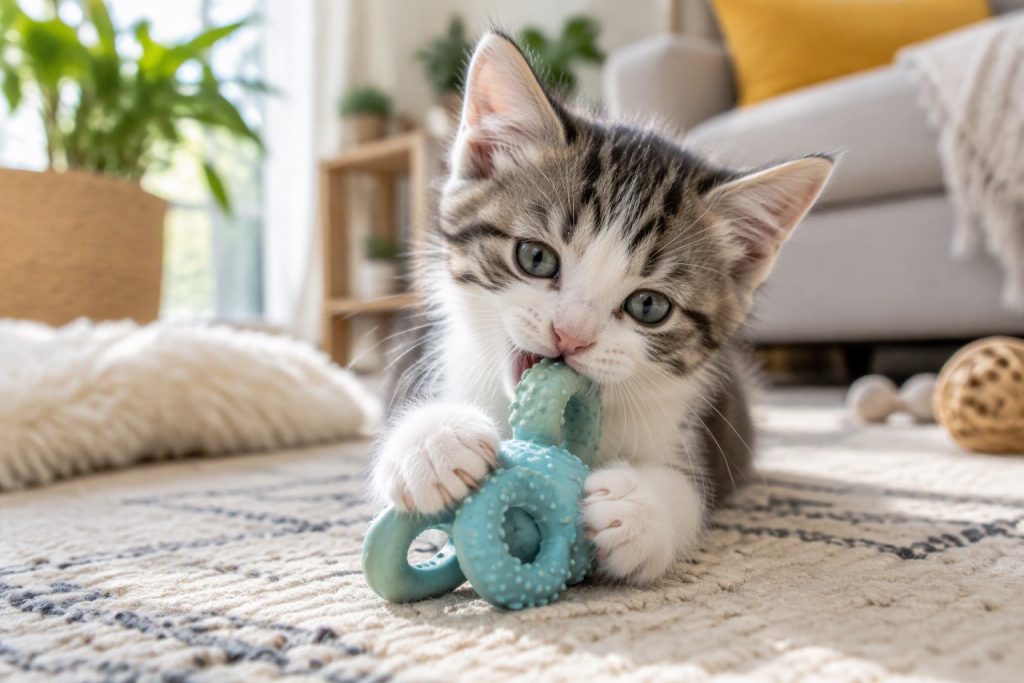
Kitten teething usually starts around three to four months of age, when the baby teeth begin to fall out and adult teeth push through, and it is mostly finished by six to seven months. During this window your kitten may chew more, drool a little, and seem uncomfortable. Providing safe chew toys and gentle care helps, and the phase passes on its own.
- Teething runs from about three to seven months.
- Chewing and drooling are normal signs.
- Offer soft, safe chew toys.
- See a vet for bleeding, pain, or retained teeth.
When do kittens teeth and what happens?
Kittens are born without visible teeth, and their baby teeth, also called deciduous teeth, begin to come through at around two to four weeks of age. By about six to eight weeks, most kittens have a full set of twenty-six baby teeth. The change to adult teeth starts at roughly three to four months, when the baby teeth loosen and fall out and the thirty adult teeth emerge, a process that continues until around six to seven months. During this time the gums can be tender and inflamed, and your kitten may experience discomfort as each tooth pushes through. Baby teeth are often swallowed as they fall out, so you may never find them, and that is normal. The transition usually goes smoothly, though some kittens show more signs than others. Knowing the timeline helps you tell normal teething from something that needs attention, and it is a useful thing to raise at your kitten’s vaccination visits.
Tray, scoop, anti-splash mat and clumping litter. The whole litter corner, one box. Keeps the litter area contained,…
What are the signs of kitten teething?
Teething signs vary, but the most obvious is increased chewing. A kitten whose gums are sore will gnaw on anything within reach, from toys to fingers, cables, and furniture corners, because pressure soothes the discomfort. You may also notice more drooling than usual, slightly swollen or red gums, and a kitten who is a little off her food or prefers softer food. Some kittens become more mouthy or nippy during this phase, and a few have mild diarrhoea or seem irritable. Occasionally you may spot a small amount of blood on a toy or in the water bowl, which is usually harmless, but heavy bleeding is not normal. Bad breath can appear as food and bacteria collect around the changing teeth. Most of these signs are mild and temporary. If your kitten seems in real pain, stops eating, or has significant bleeding, that is a sign to call your vet rather than wait it out.
What can I give a teething kitten to chew?
Offer safe, appropriate chew options to redirect the urge. Soft rubber or silicone kitten chew toys are ideal, especially those designed to be chilled, since cold numbs sore gums, though never freeze them rock hard. You can also offer a clean, damp cloth that has been chilled in the fridge for her to gnaw, or a purpose-made teething toy for kittens. Some kittens enjoy hard treats, but avoid anything that could break or splinter, and skip bones, antlers, and hard plastic, which can fracture teeth. Never give human items such as string, rubber bands, or small objects that could be swallowed, as these risk a blockage. Rotate the toys so they stay interesting, and keep a few chilled ones ready in the fridge. If your kitten rejects a toy, try a different texture or shape. The goal is to give her something satisfying to bite that is safe and will not hurt her mouth.
Should I brush a kitten’s teeth?
Yes, and the teething period is a good time to start. Brushing builds a habit that will protect her teeth for life, and kittens who learn early usually accept it. Use a soft kitten toothbrush or a finger brush and a pet-safe toothpaste, never human toothpaste, which contains ingredients harmful to cats. Begin by letting her lick a little toothpaste off your finger, then gently rub her gums and teeth for a few seconds, gradually building up to a full brush. Be patient, keep sessions short, and reward her, so it stays positive. During teething, her gums may be sensitive, so be extra gentle and stop if she seems uncomfortable. Daily brushing is ideal, but even a few times a week helps. Your vet can check her teeth at vaccination visits and advise on dental care. Our article on the first 30 days with a rescue cat covers other early care routines.

A rotating ABS plastic and feather wand fits a cat that needs a target more than another thing…
How do I protect my hands and furniture?
Teething kittens are mouthy, so set clear boundaries early. Never use your hands or feet as toys, even in play, because it teaches her that biting skin is acceptable and the habit becomes harder to break as she grows. Instead, redirect every nip to a toy, and stop the interaction briefly if she bites, so she learns that biting ends the fun. To protect furniture, cables, and belongings, remove access where you can, use cable covers for cords, and offer plenty of appropriate chews so she has a better option. Provide scratching posts and keep valuables out of reach during this phase. Make sure she has enough play and enrichment, since a bored kitten chews more. If she targets a particular item, make it unappealing with a pet-safe deterrent or move it. Consistency is key: everyone in the household should follow the same rules. Our article on litter training a kitten covers another essential early routine.
When should I see a vet about kitten teeth?
Teething is usually uneventful, but some situations need veterinary attention. See your vet if your kitten has significant bleeding from the mouth, seems in real pain, refuses to eat for more than a day, or has badly swollen or infected gums. Retained baby teeth are a common issue: if a baby tooth does not fall out as the adult tooth comes through, it can cause crowding, discomfort, and dental problems later, and it may need to be removed. A persistent double tooth is worth checking at around six to seven months. Also seek advice if your kitten has a mouth injury, a broken tooth, or persistent bad breath beyond the teething phase. Your vet can examine her mouth during routine visits and advise on any treatment. If you are unsure whether something is normal, a quick check is always worthwhile, especially for a young kitten who has less reserve than an adult cat.
Frequently asked questions
- At what age do kittens lose their baby teeth? Usually from around three to four months, finishing by six to seven months.
- Do kittens swallow their baby teeth? Often yes, which is normal and harmless.
- Is drooling normal when kittens teethe? Mild drooling is common, but heavy drooling or bleeding should be checked.
- Can I give my kitten ice to chew? Chilled, not frozen solid, is safer for sore gums.
- What if a baby tooth does not fall out? Ask your vet; retained teeth may need removing to prevent problems.