A single bout of soft stools in an otherwise bright cat is often nothing to worry about, but diarrhoea becomes a concern when it is frequent, lasts more than a day or two, contains blood or mucus, or comes with vomiting, lethargy, or refusal to eat. Kittens, senior cats, and unwell cats deteriorate quickly, so they need prompt veterinary attention. When in doubt, especially with any other signs, call your vet.
- One soft stool in a well cat is usually minor.
- Lasting more than two days needs a vet.
- Blood, vomiting, or lethargy is urgent.
- Never give human anti-diarrhoea medicine.
When should I worry about cat diarrhoea?
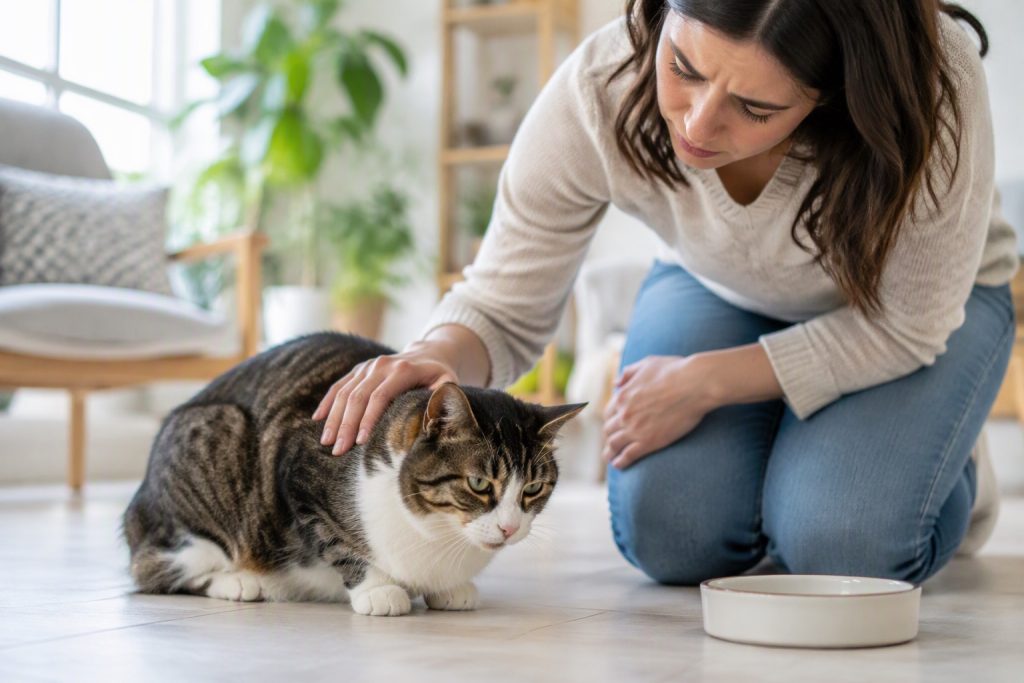
The pattern matters more than a single episode. If your cat has one or two loose stools but is otherwise bright, eating, drinking, and behaving normally, it is often a minor upset that settles on its own. Worry when diarrhoea lasts more than a day or two, when it is frequent, or when it comes with other signs such as vomiting, lethargy, loss of appetite, weight loss, or abdominal pain. Worry if there is blood or mucus in the stool, if the stool is black and tarry, or if your cat is straining repeatedly with little result. Worry more in a kitten, a senior cat, or a cat with a long-term illness, since they have less reserve and can dehydrate quickly. Any cat who is also vomiting cannot replace fluids, which makes dehydration a fast risk. If your cat seems unwell at all alongside the diarrhoea, treat it as a reason to contact your vet rather than waiting to see if it passes.

Clear glass bowl holding dry food. Made from plastic. Made for daily feeding and fresh water. Keeps food…
What causes diarrhoea in cats?
The causes range from mild to serious. Common triggers include a sudden change of food, eating something that disagrees with her, dietary indiscretion such as stealing human food or rubbish, and stress. Intestinal parasites, including worms, giardia, and coccidia, are frequent culprits, especially in kittens and cats who go outdoors. Infections, both viral and bacterial, can cause diarrhoea, sometimes with vomiting. Food intolerances or allergies can produce chronic loose stools. More serious causes include inflammatory bowel disease, pancreatitis, liver or kidney disease, hyperthyroidism, and cancer. A swallowed foreign object or a blockage may cause diarrhoea along with vomiting and pain, and is an emergency. Toxins, such as household plants, human medications, or chemicals, can also trigger it. Because the same symptom has so many possible causes, the duration, the presence of blood, and any other signs are what guide your vet towards the right diagnosis. Our article on cat vomiting and when to worry covers the closely related symptom.
What are the signs of serious diarrhoea?
Some signs tell you this is more than a minor upset. Blood in the stool, whether bright red or black and tarry, is serious and needs prompt attention. Repeated, watery diarrhoea that lasts more than a day or two risks dehydration, especially in small cats. Vomiting alongside diarrhoea means your cat cannot keep fluids down, which accelerates dehydration. Lethargy, weakness, a hunched posture, or a cat who will not eat are all warning signs. Straining to pass stool with little result can indicate a blockage or a painful condition. A distended or painful abdomen, fever, or collapse are emergencies. In kittens and senior cats, even mild diarrhoea can become dangerous quickly, so lower your threshold for calling a vet. Watch for signs of dehydration, such as tacky gums, skin that does not spring back when gently pinched, and sunken eyes. Our article on a cat not drinking enough water explains why hydration is so critical.
How do I care for a cat with diarrhoea at home?
For a mild, one-off episode in a cat who is otherwise well, supportive care is reasonable. Make sure fresh water is always available, and offer it in several places, since dehydration is the main risk. Keep her warm, quiet, and comfortable, and keep her indoors with easy access to a clean litter tray so you can monitor her stools. Note the frequency, appearance, and colour, as this helps your vet if you need to call. Do not give human anti-diarrhoea medication, which can be harmful to cats, and do not withhold food for long periods, as cats who stop eating can develop serious liver problems. If other cats are in the home, clean the litter area carefully and wash your hands, since some causes are infectious. If the diarrhoea continues beyond a day or two, or your cat seems unwell, call your vet rather than continuing home care, because dehydration can develop faster than owners expect.

Round bowl with a removable flower insert. Made from PP. Made for daily feeding and fresh water. Keeps…
What should I feed a cat with diarrhoea?
Diet can help, but keep it simple and ask your vet if you are unsure. For a mild upset, offering a small amount of bland, easily digestible food, such as plain cooked chicken with no seasoning, can settle the gut, though it is not a complete diet for more than a day or two. Many vets recommend a purpose-made gastrointestinal diet, which is balanced and designed for sensitive digestion. If a recent food change triggered the problem, return to the food your cat tolerated and reintroduce any new food more slowly. Make sure she keeps drinking, and consider offering wet food, which adds moisture. Avoid rich, fatty, or dairy foods, and never give milk, since most cats are lactose intolerant. Do not force her to eat. If she refuses food for more than a day, or the diarrhoea persists despite dietary changes, she needs veterinary assessment. A cat with chronic diarrhoea may need tests to find the underlying cause.
When is diarrhoea an emergency?
Treat diarrhoea as an emergency in several situations. Seek urgent help if your cat is vomiting and cannot keep water down, if she is weak, collapsed, or unresponsive, or if her abdomen looks swollen or feels painful. Blood in the stool, especially large amounts or black tarry stool, is urgent. Suspected poisoning or a swallowed object is an emergency, as is repeated straining with no stool. A kitten or a senior cat with diarrhoea should be seen promptly, since they dehydrate fast. If your cat is showing signs of severe dehydration, such as sunken eyes, tacky gums, or extreme lethargy, she needs immediate treatment with fluids. Do not wait to see if she improves. Call your vet or an emergency clinic and describe the signs, the duration, and anything she may have eaten. Early treatment is far easier than managing a cat who has become severely dehydrated or developed a blockage.
Frequently asked questions
- How long can cat diarrhoea last before it is serious? More than a day or two, or any diarrhoea with other signs, should be checked.
- Can I give my cat human anti-diarrhoea medicine? No. Human medications can be toxic to cats; ask your vet instead.
- Should I starve my cat with diarrhoea? No. Withholding food is risky for cats; offer small, bland meals instead.
- What does blood in cat stool mean? It can indicate infection, parasites, or a blockage, and needs prompt veterinary attention.
- Is diarrhoea in kittens more dangerous? Yes. Kittens dehydrate quickly, so see a vet early.