Hairballs form when a cat swallows loose fur while grooming and the fur clumps in the stomach instead of passing through the gut. To prevent them, brush your cat regularly to remove loose hair, keep her coat healthy with good nutrition, encourage her to drink, and provide enrichment that reduces over-grooming. Most occasional hairballs are harmless, but frequent ones can signal an underlying problem.
- Hairballs come from swallowed grooming fur.
- Regular brushing removes loose hair.
- Occasional hairballs are usually normal.
- Frequent hairballs need a vet check.
What causes hairballs in cats?
Hairballs, more accurately called trichobezoars, form when a cat grooms and swallows loose fur. Most of that fur passes harmlessly through the digestive system, but sometimes it collects in the stomach, where it tangles into a clump rather than moving on. The clump may be vomited up, often as a tube-shaped mass, or it may stay in the stomach and cause problems. Cats who shed heavily, long-haired breeds, and cats who groom a lot are most prone, and shedding increases in spring and autumn, which is when hairballs are more common. Over-grooming, whether from stress or a skin problem, increases the amount of fur swallowed. Occasionally, excessive hairballs point to an underlying condition such as a skin disease, allergies, or a digestive problem. A true hairball is not the same as vomiting food or bile, though owners often confuse them. Our article on hairballs in cats explains how to tell them apart.
Nail scissors, bath brush, de-shedding glove and a drying towel — the full groom in one box. Cuts…
How often are hairballs normal?
An occasional hairball, perhaps once every few weeks or months in a long-haired cat, is generally considered normal, especially during heavy shedding seasons. It is not a sign of illness on its own. What matters is the frequency and the pattern. If your cat brings up hairballs frequently, such as weekly or more, or if the episodes are increasing, that is not normal and deserves investigation. Frequent hairball-like vomiting can indicate over-grooming driven by stress or skin disease, a digestive issue, or another underlying problem. It can also be mistaken for vomiting caused by something else entirely. Long-haired cats, and cats who groom heavily, will naturally produce more, so brushing them regularly reduces the load. If your cat seems uncomfortable, is losing weight, has a poor appetite, or is vomiting more often, the issue is beyond routine hairballs. In that case, a vet visit is the right next step rather than more hairball paste.
How do I prevent hairballs?
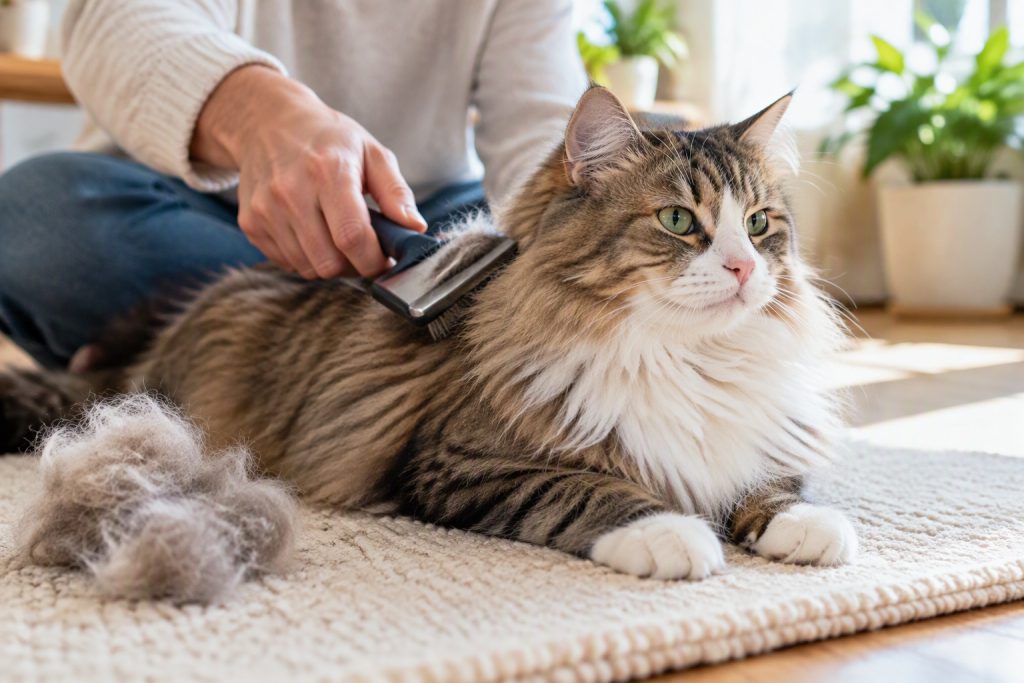
Prevention focuses on reducing the fur your cat swallows and keeping her digestive system moving. Regular brushing is the single most effective measure, especially for long-haired cats and during shedding season, because it removes loose fur before she grooms it off herself. Use a brush suited to her coat type, and brush gently in the direction of the fur, covering the back, flanks, belly, and tail where loose hair collects. Encourage drinking by offering fresh water in several places, or a fountain, since good hydration helps fur pass through. Provide plenty of play and enrichment to reduce stress-driven over-grooming, and keep her skin healthy with a good diet. Treat any skin condition or parasite problem promptly, since itchy skin leads to more licking and swallowing. If you notice increased grooming, address it early. Our article on how often to brush a cat helps you set a routine.
Does diet help prevent hairballs?
Diet can play a supporting role. A complete, balanced diet keeps the coat and skin healthy, which reduces excessive shedding and the amount of loose fur available to swallow. Some commercial diets are formulated for hairball control, usually with added fibre to help fur move through the digestive tract, and these can help cats who are prone to the problem. Increased fibre, whether from the diet or a vet-recommended supplement, can support normal gut movement. Adequate hydration matters too, since a cat who drinks well is less likely to have dry, sluggish digestion; wet food can help increase water intake. That said, diet alone will not solve a hairball problem caused by over-grooming or skin disease, so it works best alongside regular brushing and attention to the underlying cause. If you are considering a change of diet, do it gradually and check with your vet, especially for a cat with any health condition, and remember that brushing remains the most direct way to cut down the fur she swallows.
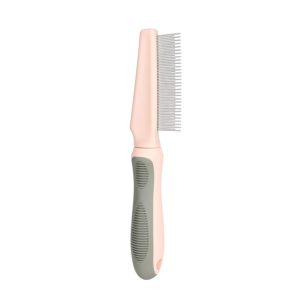
Brush designed to lift loose hair out of a cat's coat — the hair has to go somewhere…
Are hairball remedies safe?
Hairball pastes and lubricants, often petrolatum-based, are widely sold, but they should be used with care and ideally on veterinary advice. They work by coating the fur and easing its passage, which can help an occasional problem, but they are not a cure for a frequent hairball issue, and they can interfere with nutrient absorption if used long-term. Some products contain ingredients that may not suit every cat, and overuse can cause digestive upset. Never use human hairball or laxative products, as the doses and ingredients are not designed for cats. If your cat is bringing up hairballs often, the correct response is to find out why, not to rely on a paste indefinitely. A vet can advise whether a lubricant is appropriate, recommend a suitable diet or supplement, and check for underlying conditions. If your cat is vomiting repeatedly, losing weight, or off her food, seek veterinary care rather than treating it at home. Health topics that persist need a vet’s input.
When are hairballs a sign of a problem?
See your vet if hairballs become frequent, if your cat seems unwell, or if the pattern changes. Warning signs include bringing up hairballs weekly or more, vomiting that looks like food or bile rather than fur, weight loss, reduced appetite, lethargy, or a cat who seems uncomfortable after eating. Persistent vomiting, whether of hairballs or anything else, can indicate a blockage, inflammatory bowel disease, or another serious condition. A true blockage from a large hairball is rare but possible, and it is an emergency, with signs such as repeated unproductive retching, abdominal pain, and refusal to eat. If your cat is straining to bring something up without success, contact your vet urgently. It is also worth checking any sudden increase in grooming, since that often underlies more hairballs. A cat who is otherwise bright with an occasional hairball needs no treatment, but any change in frequency or wellbeing deserves attention.
Frequently asked questions
- Are hairballs normal in cats? An occasional one, especially in long-haired cats during shedding season, is generally normal and needs no treatment.
- Does brushing prevent hairballs? Yes, it is the most effective way to reduce the fur your cat swallows.
- Can diet reduce hairballs? High-fibre and hairball-control diets can help, alongside regular grooming.
- Are hairball pastes safe? They can help occasionally but are best used on veterinary advice, not long-term.
- When should I worry about hairballs? When they are frequent, or come with weight loss, vomiting, or appetite changes that persist for more than a day.