

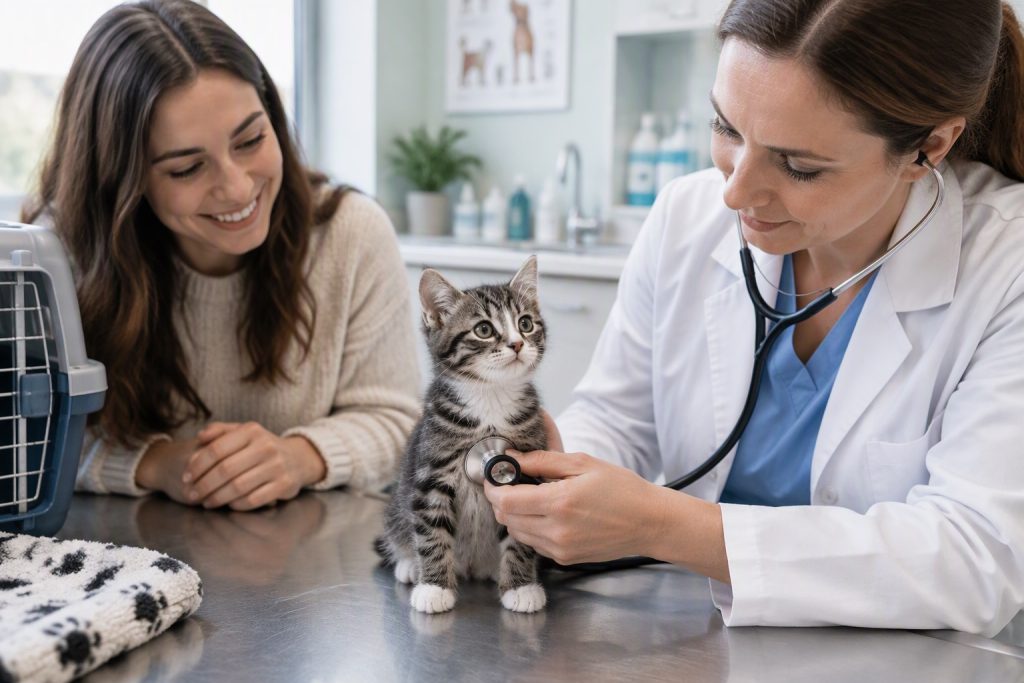
A cat’s first vet visit is a full health check, not just a quick look. The vet will weigh your cat, examine her from nose to tail, check her teeth, eyes, ears, coat, and heart, and discuss vaccinations, parasite treatment, microchipping, and neutering. It is also your chance to ask questions about feeding, behaviour, and settling her into your home.
- Expect a full nose-to-tail health check.
- Bring any records from a breeder or shelter.
- Vaccines, worming, and microchipping are discussed.
- Ask all your questions while you are there.
What happens at a cat’s first vet visit?
The first visit is a comprehensive health assessment, usually lasting twenty to thirty minutes. The vet will weigh your cat and record a baseline, then examine her systematically: eyes, ears, mouth and teeth, skin and coat, lymph nodes, abdomen, heart, and lungs. They will check for signs of parasites such as fleas and ear mites, look for any congenital problems, and assess her body condition. For a kitten or a newly adopted cat, the vet will discuss a vaccination schedule, worming and flea treatment, microchipping, and neutering. They may take a stool sample to check for internal parasites, and they will ask about her history, diet, appetite, litter habits, and behaviour. It is also a chance to raise anything you have noticed at home. The visit is as much about establishing a relationship and a health record as it is about treating problems, so nothing is too small to mention. Our guide to the first 30 days with a rescue cat covers other early steps.

A fabric and Oxford cloth harness stays close enough that a cat cannot back out of it. Take…
How do I prepare for the first vet visit?
Preparation makes the visit smoother for everyone. Gather any records you have, including vaccination history, worming and flea treatments, and any paperwork from a breeder, shelter, or previous owner, since this helps the vet build an accurate picture. Make a list of questions and concerns beforehand, because it is easy to forget them in the moment. If possible, bring a fresh stool sample in a clean container, as this is often requested. Book a time when the clinic is quiet if your cat is nervous, and avoid feeding her a large meal right before travel to reduce car sickness. Have her carrier ready and secure, and bring a familiar blanket or toy to make it feel less strange. If you have other pets, ask about their vaccination status too. Finally, allow extra time so you are not rushed, and stay calm yourself, since cats pick up on owner anxiety. A little preparation reduces stress for both of you.
How do I get my cat into the carrier without stress?
The carrier is often the biggest hurdle, so prepare it in advance. Leave the carrier out at home for a few days before the visit, with the door open and a soft blanket and a treat inside, so your cat can explore it and learn it is not a trap. A carrier that opens from the top as well as the front is easier to lower a cat into. On the day, place the carrier on a stable surface, and gently guide your cat in rather than chasing or grabbing her, which makes her fearful. If she resists, wrap her loosely in a towel and lower her in, or use the top opening. Never carry a cat loose in the car. Cover the carrier with a light towel during travel to reduce visual stress, and secure it with a seatbelt. Our article on the cat vaccination guide explains what to expect at the appointment itself. Keep the carrier out after the visit too, so it does not only appear when something unpleasant is about to happen.
What should I ask the vet?
Use the visit to get answers to everything you need. Ask about the vaccination schedule and which vaccines your cat needs, when worming and flea treatment should start and how often, and whether microchipping is appropriate if she is not already chipped. Discuss neutering, including the best age and what the procedure involves. Ask about her weight and body condition, and how much and what to feed her. Bring up any behaviour concerns, such as litter box problems, scratching, or night activity. If she came from a shelter or breeder, ask whether any specific health issues are known. Ask what signs of illness you should watch for, and what to do in an emergency, including the clinic’s out-of-hours arrangements. Finally, confirm when the next visit is due and what it will cover. Write down the answers, or ask if you can record them, so you can refer back later. No question is too basic.

Bundle of multicoloured printed leashes. Made from fabric. Made for walks, travel and everyday wear. Keeps your cat…
How much does a first vet visit cost?
Costs vary widely depending on where you live, the clinic, and what is included, so it is impossible to give a single figure. A first consultation typically includes the examination fee, and any vaccines, parasite treatment, microchipping, or tests are charged separately. Some clinics offer a kitten or new-cat package that bundles the initial consultations, vaccinations, and sometimes neutering at a lower total price, which can be worth asking about. It is entirely reasonable to ask for a written estimate before treatment, especially if tests or procedures are recommended, so there are no surprises. If cost is a concern, mention it, and ask about payment plans or lower-cost options. Pet insurance is worth considering early, since it can help with unexpected future costs, though pre-existing conditions are usually excluded, which is another reason to insure a young cat promptly. Whatever the cost, the first visit is a worthwhile investment in your cat’s health and in establishing a good relationship with a vet you trust.
What follow-up care will my cat need?
Your vet will outline a follow-up plan based on your cat’s age and health. Kittens usually need a series of vaccinations given a few weeks apart, with boosters later, and repeat worming treatments. Adult cats typically need annual check-ups and booster vaccinations, with parasite prevention tailored to their lifestyle. If any tests were run, results may come back after the visit, and the clinic will contact you. If a problem was found, such as dental disease or a skin issue, you may need a follow-up appointment or treatment at home. Keep a record of what was done and when the next visit is due, and set a reminder so you do not miss it. Watch for any reaction after vaccinations, such as mild lethargy or a small lump, and contact the vet if you are concerned. Building a routine of regular check-ups helps catch problems early, when they are easiest to treat, and keeps your cat’s health on track.
Frequently asked questions
- What age should a kitten first see a vet? Ideally at around eight weeks, when the first vaccinations are usually due.
- What should I bring to the first vet visit? Any records, a fresh stool sample, a secure carrier, and a list of questions.
- Will my cat be scared at the vet? Many cats are nervous, but a familiar carrier and a calm approach help a lot.
- Do I need pet insurance before the first visit? It is wise to insure early, since pre-existing conditions are usually excluded.
- How often do cats need check-ups? Usually once a year, and more often for kittens, seniors, or cats with health conditions.





