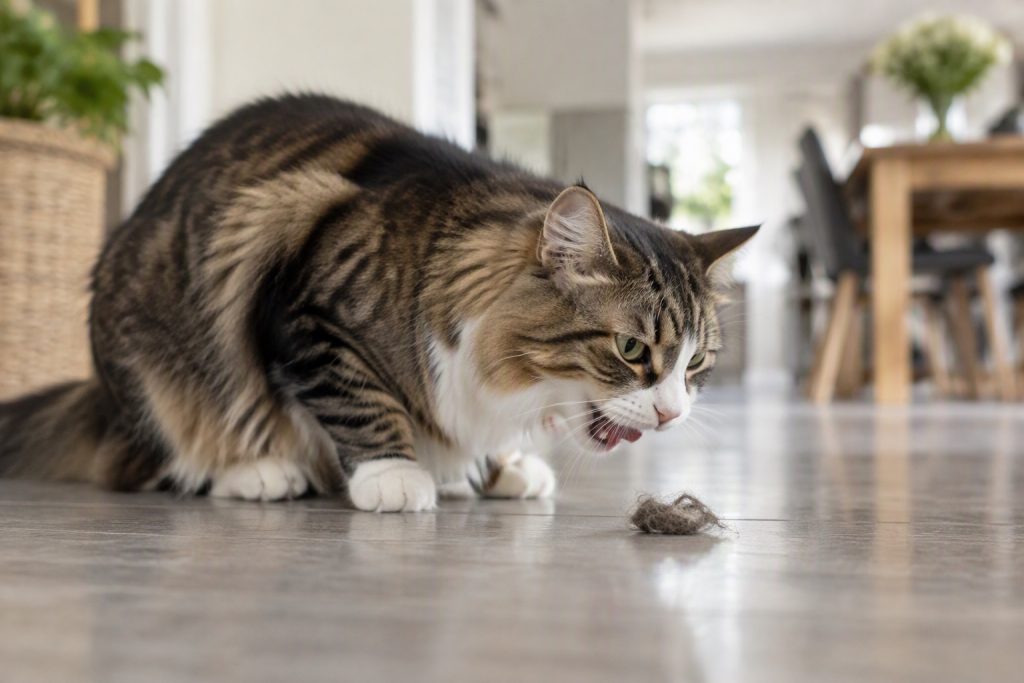
A hairball is fur your cat swallowed while grooming that clumped in the stomach and came back up, usually as a compact, tube-shaped mass of hair. Vomit is food, bile, or fluid that a cat brings up for other reasons, and it usually contains little or no hair. The distinction matters, because occasional hairballs are fairly normal, while repeated vomiting of food or fluid can point to a problem that needs a vet’s attention.
- Hairballs are dense clumps of fur, often tube-shaped.
- Vomit is food, bile, or fluid with little hair.
- Occasional hairballs are normal in many cats.
- Frequent or food-like vomiting needs a vet.
What is the difference between a hairball and vomit?
The key difference is what comes up and why. A hairball, more formally a trichobezoar, forms when swallowed grooming fur collects in the stomach and tangles into a clump instead of passing through the gut. When it is brought up, it is mostly hair, often matted into a cylinder that matches the shape of the stomach. Vomit is the stomach emptying its contents for a different reason, such as eating too fast, a sensitivity to a food, motion sickness, or an illness, and it looks like undigested food, bile, or frothy fluid. Cats often confuse the two because both involve retching and both can happen after grooming. Frequency and content are the best clues. Our article on hairballs in cats explores the causes in more depth.
Nail scissors, bath brush, de-shedding glove and a drying towel — the full groom in one box. Cuts…
What does a hairball actually look like?
A classic hairball is a compact, moist mass of fur, usually cylindrical or tube-shaped because it took the form of the stomach as it was compressed on the way up. It is typically the same colour as your cat’s coat, since that is where the fur came from, and it may be coated in a little clear fluid or bile. Sometimes it is loose and fluffy rather than tightly packed. Long-haired cats and heavy shedders tend to produce larger ones. A hairball is rarely mixed with much food, because it forms separately from the meal. If what you find is mostly food, bile, or liquid with a few strands of hair in it, you are more likely looking at ordinary vomiting than at a true hairball, and that changes what you should do about it. One more clue is consistency: a hairball tends to arrive as a single compact mass, whereas vomiting often comes in a run of several episodes over a short period, or repeats after every meal. If you find several deposits in a day and none of them is mostly fur, treat it as vomiting and act accordingly.
How can I tell them apart in practice?
Look at the content first, then at the pattern. If the mass is mostly dense fur and comes up occasionally, especially during shedding season or after a grooming session, a hairball is the likely explanation. If you see undigested or partly digested food, yellow bile, or clear froth, and if it happens repeatedly, that is vomiting. Notice the timing too: vomiting soon after eating often suggests eating too fast or a food sensitivity, while hairballs have no clear link to meals. Watch your cat’s overall condition as well. A cat who brings up an occasional hairball and is otherwise bright, eating, and playful is usually fine. A cat who vomits often, goes off food, loses weight, or seems dull is not, and that pattern needs veterinary assessment rather than home treatment. It also helps to know your cat’s normal. A cat who has brought up one hairball a month for years is a very different case from a cat who has never done it before and suddenly does it twice in a week, even though the object looks the same. Change, not the object itself, is often the signal that matters most.
How do I reduce hairballs in the first place?
Prevention centres on reducing the fur your cat swallows and keeping her digestion moving well. Regular brushing is the single most effective step, particularly for long-haired cats and during spring and autumn shedding, because it removes loose fur before she grooms it off herself. Brush gently in the direction of the coat and cover the back, flanks, belly, and tail. Encourage drinking by offering fresh water in several spots or a fountain, since good hydration helps fur pass through the gut. Add play and enrichment to reduce stress-driven over-grooming, and keep her skin healthy with a complete diet. Treat any itchy skin condition or parasite problem promptly, because itching drives more licking and more swallowed hair. Our article on cat fur ball prevention walks through the routine in detail.
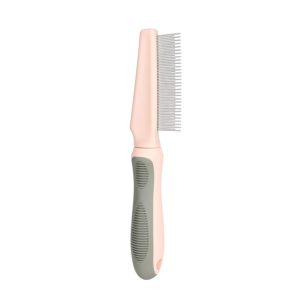
Brush designed to lift loose hair out of a cat's coat — the hair has to go somewhere…
Does diet or grooming help more?
They work together rather than competing. Grooming removes the fur at the source, which is the most direct fix, while diet supports the coat and the gut. A complete, balanced diet keeps skin and fur healthy, which reduces excessive shedding. Some commercial diets add fibre to help fur move through the digestive tract, and these can genuinely help cats who are prone to hairballs. Wet food can raise water intake, which supports smoother digestion. Neither approach will solve a problem caused by over-grooming from stress or by skin disease, so use them alongside brushing and address any underlying cause. If you are considering a diet change, make it gradually and check with your vet, especially for a cat with an existing health condition. Brushing remains the most reliable lever you control at home. If you want to try a hairball-control diet, introduce it over a week or more, keep brushing in the meantime, and give it at least a month before judging whether it helps, since coat and gut changes take time.
When should I call the vet?
Contact your vet if the vomiting becomes frequent, if your cat seems unwell, or if the pattern changes. Warning signs include bringing things up weekly or more, vomit that is mostly food or bile rather than fur, weight loss, reduced appetite, lethargy, or discomfort after eating. Persistent vomiting can indicate a blockage, inflammatory bowel disease, parasites, or another condition that needs diagnosis. A true blockage from a large hairball is uncommon but possible and is an emergency: watch for repeated unproductive retching, abdominal pain, and refusal to eat, and seek urgent care if you see them. It is also worth investigating a sudden increase in grooming, since that often underlies more hairballs. A bright cat with an occasional hairball needs no treatment, but any change in frequency or wellbeing deserves a professional look.
Frequently asked questions
- How can I tell a hairball from vomit? A hairball is mostly dense fur, often tube-shaped; vomit is food, bile, or fluid with little hair.
- Are hairballs normal? An occasional one, especially in long-haired cats during shedding season, is generally normal.
- Can my cat vomit hair without it being a hairball? Yes. Small amounts of hair mixed with food or bile still count as ordinary vomiting.
- Does brushing reduce hairballs? Yes, it is the most effective way to cut the fur your cat swallows while grooming.
- When is vomiting an emergency? Repeated unproductive retching, abdominal pain, or refusal to eat can signal a blockage and needs urgent care.