

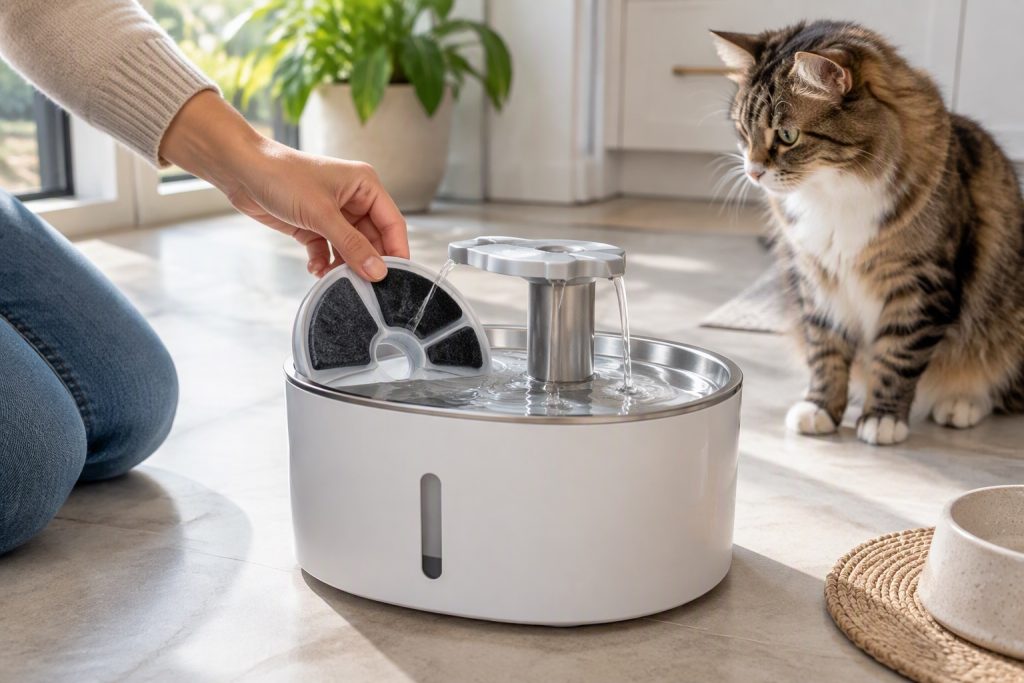
A cat fountain filter removes hair, dust, and food particles from the water and reduces odour, which keeps the water appealing enough that your cat actually drinks. The best filter is one that fits your specific fountain, traps fine debris as well as hair, and is replaced on schedule rather than washed and reused indefinitely. Filters do not sterilise water, so they support cleanliness rather than replace regular washing.
- Filters catch hair, dust, and food debris.
- They reduce odour and keep water appealing.
- Replace on schedule; do not reuse indefinitely.
- Filters do not sterilise, so wash the fountain too.
Why does a cat fountain need a filter?
Moving water stays fresher than still water, but it also collects debris. Every time your cat drinks, saliva and food particles enter the reservoir, and hair and household dust settle into it constantly. Without a filter, that material recirculates, the water begins to smell, and many cats will simply stop drinking. A filter traps the visible debris and passes water through a carbon layer, which reduces odours and improves taste. That matters because cats are notoriously fussy about water quality, and a fountain that smells or tastes stale defeats its own purpose. Filtration also protects the pump, since hair and grit are common causes of blockages and motor failure. A clean, well-filtered fountain encourages drinking, which supports urinary and kidney health. That matters more than most owners realise, because a cat who drinks too little is more prone to crystals, bladder irritation, and kidney strain, and the water she is offered has to be appealing enough that she chooses it over doing nothing at all.
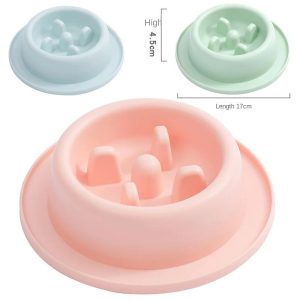
Round bowl with a removable flower insert. Made from PP. Made for daily feeding and fresh water. Keeps…
What types of fountain filter are there?
Most cat fountain filters combine two or three layers. A foam or sponge pre-filter catches hair and larger debris before it reaches the pump. A carbon layer, usually activated charcoal, reduces odours, chlorine taste, and some organic compounds. Some filters add an ion-exchange resin to soften water and reduce mineral build-up, which helps in hard-water areas. The shape is specific to each fountain: round discs, rectangular cartridges, and stacked inserts are all common, and they are not interchangeable between brands. Some fountains use replaceable filter cartridges, while others use a sponge that is rinsed and a carbon pad that is swapped. There are also fountains with no filter at all, which are simpler but need more frequent full cleaning. Whichever type you have, matching the replacement part exactly to your model is essential, because a filter that does not seat properly lets debris bypass it entirely.
How often should I change a fountain filter?
Most manufacturers recommend replacing the carbon filter every two to four weeks, and the foam pre-filter more often, sometimes weekly, depending on how many cats you have and how much they shed. A single cat may manage with monthly carbon changes, while a multi-cat home in a dusty house may need fortnightly. Rinsing the foam filter between changes helps, but do not wash a carbon filter and put it back, because once it is saturated it stops working and can begin releasing what it captured. Change the filter sooner if the water starts to smell, if the flow slows noticeably, or if you see visible debris passing through. Set a reminder, because it is easy to forget, and keep spare filters on hand so a clogged fountain never sits unused. Our guide on quiet cat water fountains covers models that make maintenance easy.
What should I look for in a filter?
Fit comes first: a filter that does not match your fountain leaks around the edges and does nothing. Look for a multi-stage design with a foam pre-filter and a carbon layer, and check that the carbon is properly contained rather than loose granules that can escape into the water. A filter that is easy to remove and reseat makes routine cleaning far less annoying, which means you will actually do it. Availability of replacement parts matters too, since a fountain whose filters are hard to find becomes useless. Consider the cost per replacement, because a cheap fountain with expensive filters can cost more over a year than a slightly pricier model with inexpensive ones. For hard water, a filter with a descaling layer is worth having. Our article on fountain versus bowl helps you decide whether a fountain suits your cat at all.
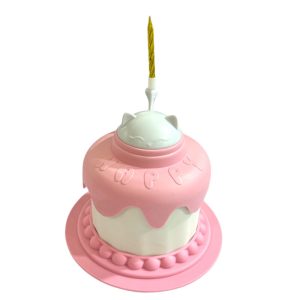
A cake-shaped silicone and TPE bowl lifts the eating surface off the floor. Measure the day's portion once…
Does a filter make the water safer for cats?
It makes the water cleaner and more appealing, but it is important not to overstate what it does. A carbon filter reduces odours, chlorine taste, and some organic compounds, and the foam layer removes hair and debris. It does not sterilise water or remove all bacteria, and it does not filter out dissolved minerals or heavy metals. For a healthy cat on mains water, that is entirely adequate. The greater risk comes from a neglected fountain: a dirty filter, biofilm on the surfaces, or a pump full of hair can make water worse than a clean bowl. So the filter is a support, not a guarantee. If your cat has a medical condition requiring specific water quality, ask your vet. Otherwise, change the filter on schedule, wash the fountain weekly, and your cat will have clean, fresh-tasting water that encourages her to drink more.
How do I keep a fountain clean?
Filtration only works alongside proper cleaning. Once a week, unplug the fountain, disassemble it, and wash every part in warm water with a mild, pet-safe soap, using a small brush to reach the corners of the reservoir and the impeller housing. Rinse thoroughly, because soap residue will put your cat off. Clean the pump according to the manufacturer’s instructions, and remove hair from the intake. Do not put parts in the dishwasher unless the maker says they are dishwasher-safe. Change the water every day or two rather than topping up a stale reservoir, and replace the filter on schedule. Watch for slimy biofilm, which forms quickly in warm weather and is a sign you need to clean more often. Keeping a spare fountain or a second water bowl means your cat always has an alternative while one is being cleaned. A second bowl also lets you see how much she is actually drinking, which is useful information if you ever need to describe her habits to a vet.
Frequently asked questions
- Do cat fountains need filters? They work better with one, since filters trap hair and reduce odour, but some models run without.
- How often should I replace the filter? Typically every two to four weeks for carbon, with foam rinsed more often.
- Can I wash and reuse a carbon filter? No. Once saturated it stops working, so replace it rather than rinsing it.
- Do filters make water safe from bacteria? No. They reduce debris and odour but do not sterilise, so clean the fountain weekly.
- My cat stopped drinking from the fountain. Why? A dirty filter or stale water is a common cause, so clean the unit and change the filter.





