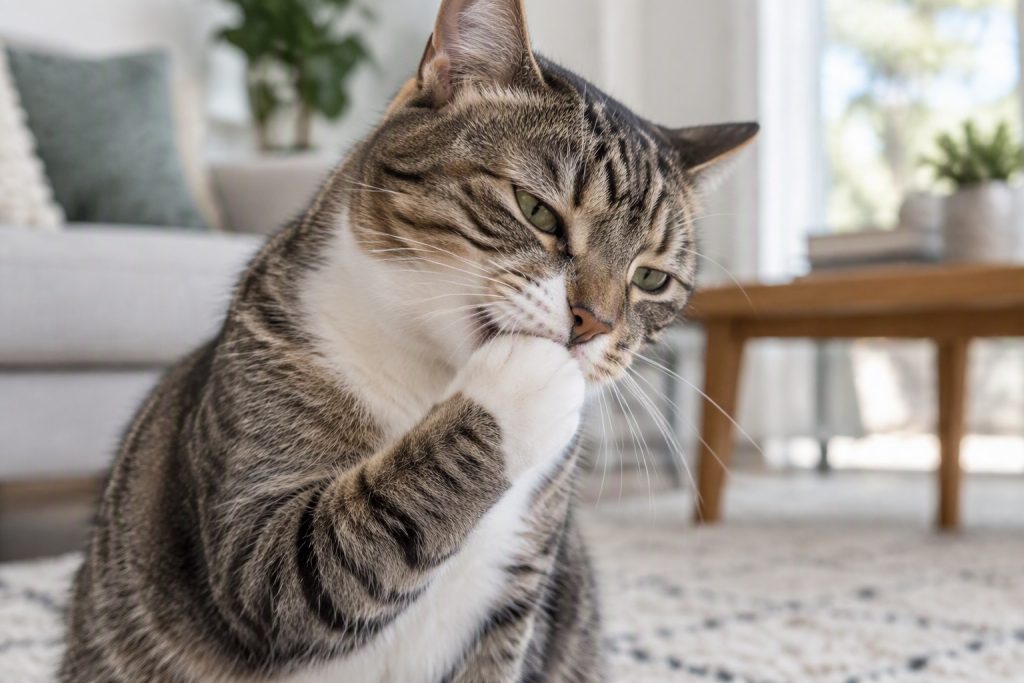
Cats chew their paws most often because something is making them itch, and the usual culprits are fleas, mites, allergies, or dry skin. Sometimes it is pain or an injury, and sometimes it is a stress-driven grooming habit. Occasional licking is normal, but repeated chewing, redness, hair loss, or limping means your cat needs a vet, because the cause determines the treatment and home guesses often miss it.
- Itching from fleas, mites, or allergies is the top cause.
- Pain or injury can also make a cat chew a paw.
- Occasional licking is normal; chewing is not.
- Persistent chewing needs a vet diagnosis.
Why does my cat chew its paws?
Paw chewing is a symptom rather than a diagnosis, and it has several possible drivers. Parasites are the most common: fleas cause intense itching, especially around the paws, head, and tail base, and a flea allergy makes even a few bites unbearable. Mites such as those causing mange or ear mites can also irritate the skin. Allergies are the next big group, whether to a food protein, pollen, dust mites, or a household product, and they often show as itchy paws and face. Dry skin, especially in winter, can make paws feel tight and uncomfortable. Pain is a real possibility too: arthritis, a cracked pad, a thorn, a splinter, or an ingrown claw can all make a cat lick and chew at one paw specifically. Stress and over-grooming round out the list. Because the treatments are completely different, identifying the cause matters more than stopping the behaviour.

A stainless ABS plastic and metal comb clears the loose hair before it lands on the furniture. Keep…
How do I tell if it is fleas or mites?
Look closely at the coat and skin. Fleas leave dark specks of dirt that turn reddish-brown when you wet them on a white tissue, and you may see live fleas, especially around the tail base and belly. Flea bites cause small red bumps and intense itching, and cats with a flea allergy can react severely to very few bites. Mites are harder to see: they often cause crusting, scaling, and hair loss, typically around the ears, face, and sometimes the paws and edges of the body. Ear mites produce dark, coffee-ground debris in the ears and vigorous head shaking and scratching. Because mites are microscopic and the signs overlap, a vet can confirm the diagnosis with a skin scraping or tape test. Our article on cat ear mite treatment explains the ear-specific picture. Do not guess at treatment, since the wrong product will not help and may delay proper care.
Could it be an allergy?
Allergies are a leading cause of paw chewing in cats, and they often start subtly. Environmental allergies to pollen, dust mites, or moulds tend to be seasonal or tied to the home, and they commonly affect the paws, face, and ears because those areas contact allergens directly. Food allergies can appear at any age, even to a food your cat has eaten for years, and they often cause itching around the head and neck as well as the paws, sometimes with vomiting or diarrhoea. Contact allergies to litter, floor cleaner, or a new laundry detergent are also possible. Diagnosis usually involves a process of elimination: a vet may recommend a hypoallergenic or novel-protein diet trial over several weeks, or allergy testing for environmental triggers. Treatment can include medication, special diets, and reducing exposure. Because allergies are managed rather than cured, a proper diagnosis is worth the effort.
Is paw chewing a sign of pain or injury?
It can be, and this is often overlooked. If your cat chews one paw rather than several, or if she limps, holds the paw up, or resists having it touched, think injury or pain rather than itch. Common causes include a cut or cracked pad, a splinter, a thorn, a piece of glass, a torn claw, or an ingrown claw that has curled into the pad. Arthritis can make a cat lick a joint, and nerve pain can cause focused chewing. A foreign body such as a grass seed can work its way in and cause swelling and discharge. Look at the paw in good light, but do not dig around if your cat is in pain, because you may cause further damage. If you can see something obvious and it comes out easily, remove it and clean the area; otherwise, see your vet. Our article on cat flea treatment covers the parasite side of the picture.
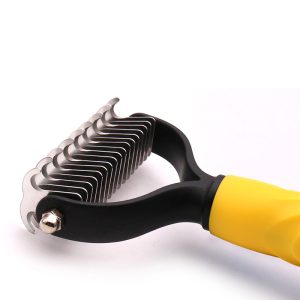
A plastic dematting comb clears the loose hair before it lands on the furniture. Use it before the…
How do I stop my cat chewing its paws?
You treat the cause, not the chewing. If parasites are the problem, use a vet-recommended flea and mite treatment appropriate for your cat, and treat all pets in the household, since fleas survive in the environment. If it is an allergy, follow the diagnostic plan your vet sets out, whether that is a diet trial or environmental management. If it is pain or injury, treat the paw and the underlying issue. In the meantime, you can reduce irritation by keeping the paws clean, drying them after wet walks or outdoor time, and checking the litter and floor cleaners for anything harsh. Never apply human creams, oils, or antihistamines to a cat’s paw, because many are toxic and will be licked off. An Elizabethan collar can stop a cat damaging her skin while the cause is treated, but it is a temporary measure. Stress-driven chewing needs enrichment and a calmer routine, not punishment.
When should I see a vet?
See a vet if the chewing is persistent, if the skin is red, swollen, scabby, or bleeding, if there is hair loss, or if your cat is limping or seems uncomfortable. Any single-paw problem, especially with swelling or discharge, should be examined promptly. If you see signs of infection such as pus, heat, or a bad smell, book an appointment the same day. Also see a vet if the behaviour starts suddenly, if it is getting worse, or if it comes with other changes such as weight loss, appetite changes, vomiting, or lethargy, since those can point to a systemic condition. Kittens and older cats deserve earlier attention. Because paw chewing has so many possible causes, guessing at treatments wastes time and can make things worse. Health topics that persist are always best discussed with your vet rather than managed indefinitely at home. A short note of which paws are affected and when the chewing happens gives your vet a much clearer starting point.
Frequently asked questions
- Why does my cat chew only one paw? A single paw usually points to a local problem such as injury, a foreign body, or a specific source of irritation.
- Can fleas make a cat chew its paws? Yes, especially with a flea allergy, which causes intense itching around the paws and tail base.
- Is paw chewing a sign of stress? It can be, as over-grooming is a common stress response, but itching and pain are more frequent causes.
- Should I put cream on my cat’s paw? No. Many human creams are toxic to cats, and she will lick them off. Ask your vet first.
- How do I know if it is an allergy? A vet diagnoses allergies through diet trials or testing, since the signs overlap with parasites and infection.