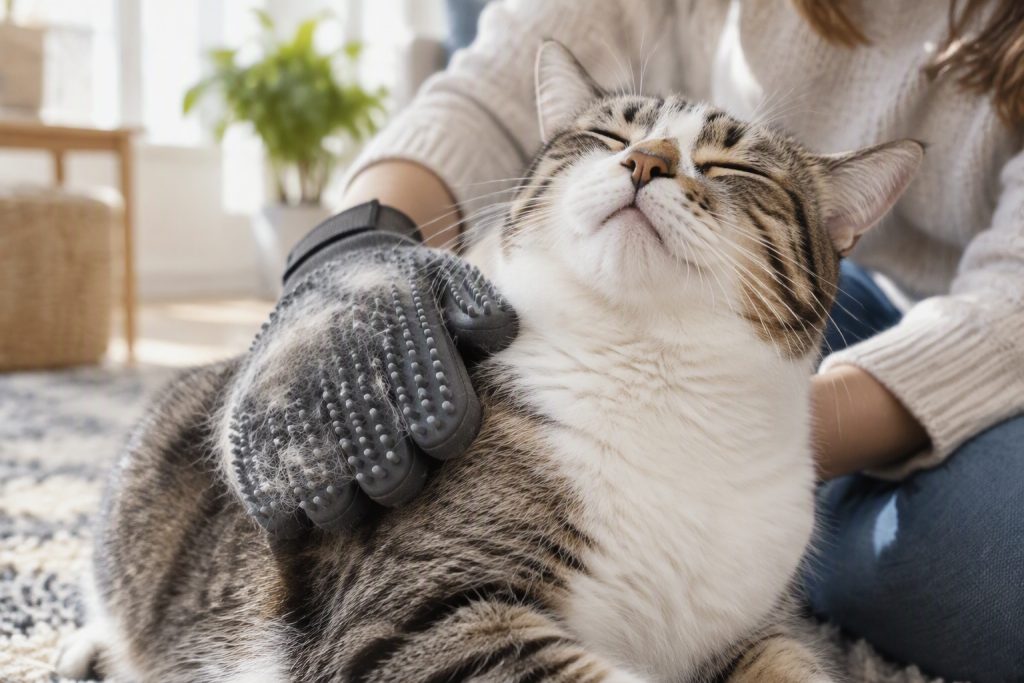
A cat grooming glove is a mitt with soft rubber or silicone nubs on the palm, and it works by stroking loose hair and dander off the coat while your cat enjoys what feels like petting. It is best for short-haired cats, for cats who dislike brushes, and for a quick daily tidy. It is not a substitute for a proper brush on a long-haired or heavily matted coat.
- Gloves collect loose hair while you pet.
- Great for short coats and brush-shy cats.
- Not enough for long hair or mats.
- Clean the nubs after every use.
What is a cat grooming glove and how does it work?
A grooming glove is a fabric or rubber mitt covered in small, soft nubs on the palm and sometimes the fingers. You wear it like a glove and stroke your cat as you normally would, and the nubs catch loose hair, dander, and surface dirt, which collects on the glove instead of floating around your home. The appeal is that it feels like affection rather than grooming, so cats who dislike the sensation of a brush will often accept a glove. Some designs have a removable hair layer that peels off for easy cleaning, and some are ambidextrous. Gloves are useful for a daily tidy, for removing loose fur during shedding season, and for cats who will only tolerate a few seconds of handling. They are less effective at reaching the undercoat, and they do not detangle, so they work best as part of a routine. Our article on the best grooming brush for shedding covers deeper coat care.
Nail scissors, bath brush, de-shedding glove and a drying towel — the full groom in one box. Cuts…
Who benefits most from a grooming glove?
Gloves suit several situations well. Short-haired cats benefit most, because their loose hair sits near the surface and comes away easily with a stroke. Cats who hate brushes are the other big group: a glove lets you remove hair without the tugging and scratching that a brush can cause, and the experience feels like petting. Kittens can be introduced to a glove early, which builds tolerance for handling. Cats with sensitive skin, older cats with thinner coats, and cats who are nervous about grooming tools also do well. Gloves are also handy for cats who shed heavily and leave hair on furniture, since a quick daily pass keeps the volume down. They are less useful for long-haired cats with dense undercoats, and they cannot deal with mats, which need proper detangling tools or professional help. For a cat with a matted coat, do not try to pull the mat out with a glove, because it hurts.
What should I look for in a grooming glove?
Look at the nub design first. Soft, rounded silicone or rubber nubs are comfortable for the cat, while hard or sharp nubs scratch and cause her to avoid the glove. The nubs should be long enough to reach through the coat to the loose hair but not so long that they dig into the skin. The fit matters too: a glove that is too loose slips and makes the job harder, while one that is too tight is uncomfortable for you. Adjustable wrist straps help. An ambidextrous design is convenient, and a removable hair layer makes cleaning much easier, since you can peel the collected fur off in one piece. Check that the material is durable and washable, because the glove will collect oils and dander. Some gloves include a small brush or a scraper edge, which is useful for stubborn areas. Finally, check the sizing against your hand, since most gloves come in a single size.
How do I use a grooming glove properly?
Start with short, gentle strokes in the direction of the coat, letting your cat get used to the sensation before you do any real work. Work along the back, flanks, chest, and tail, always moving with the fur rather than against it, since going against the grain pulls and irritates. Avoid the belly and legs until your cat is relaxed, and stop if she signals discomfort, such as a twitching tail, flattened ears, or a swat. Stroke firmly enough to collect hair but lightly enough to feel like petting. For a shedding cat, a few minutes a day during peak season makes a big difference. Clean the glove frequently during the session, because once it is full it stops collecting. Finish with a treat so the experience stays positive. Our article on how often to brush a cat helps you set a sensible schedule.
Brush designed to lift loose hair out of a cat's coat — the hair has to go somewhere…
Do grooming gloves work on long-haired cats?
They help, but they are not enough on their own. Long-haired cats have a dense undercoat that needs a tool able to reach beneath the top layer, such as a slicker brush, a comb, or an undercoat rake. A glove will remove surface hair and reduce the amount that floats around the house, but it will not prevent the undercoat from matting, and mats that are not addressed can tighten against the skin and cause pain. If you use a glove on a long-haired cat, use it in addition to proper brushing, and be honest about whether you are reaching the undercoat. Never try to pull a mat out with a glove, because it hurts and can tear the skin. For a cat who is already matted, a professional groomer or your vet may need to clip the coat. If your cat tolerates a comb, using one after the glove lets you check whether the undercoat is being reached, and it catches any small tangles before they tighten.
How do I clean and store a grooming glove?
Remove the collected hair after every use, either by peeling off the removable layer or by picking it out by hand. Rinse the glove in warm water with a mild soap, working it into the nubs to remove oils and dander, then rinse thoroughly and let it air dry completely before storing it. Do not put it in a hot dryer, which can warp the rubber or silicone. Store it somewhere dry and out of reach of your cat, since some cats will chew the nubs. If the glove starts to smell or the nubs become hard, cracked, or worn flat, replace it, because a worn glove pulls hair rather than collecting it. A quick rinse and dry after each session keeps the glove hygienic and ready for the next use, and it takes less than a minute.
Frequently asked questions
- Do grooming gloves actually work? Yes, for short-haired cats and daily tidying. They are less effective on dense undercoats.
- Can I use a grooming glove on a long-haired cat? Only as an extra. Long coats also need a slicker brush or comb to prevent mats.
- Are grooming gloves better than brushes? Not better, just different. Gloves suit brush-shy cats; brushes reach the undercoat.
- How often should I use a grooming glove? A few minutes daily is ideal, especially during shedding season.
- Can a grooming glove remove mats? No. Pulling a mat with a glove hurts your cat, so use proper detangling tools or see a groomer.