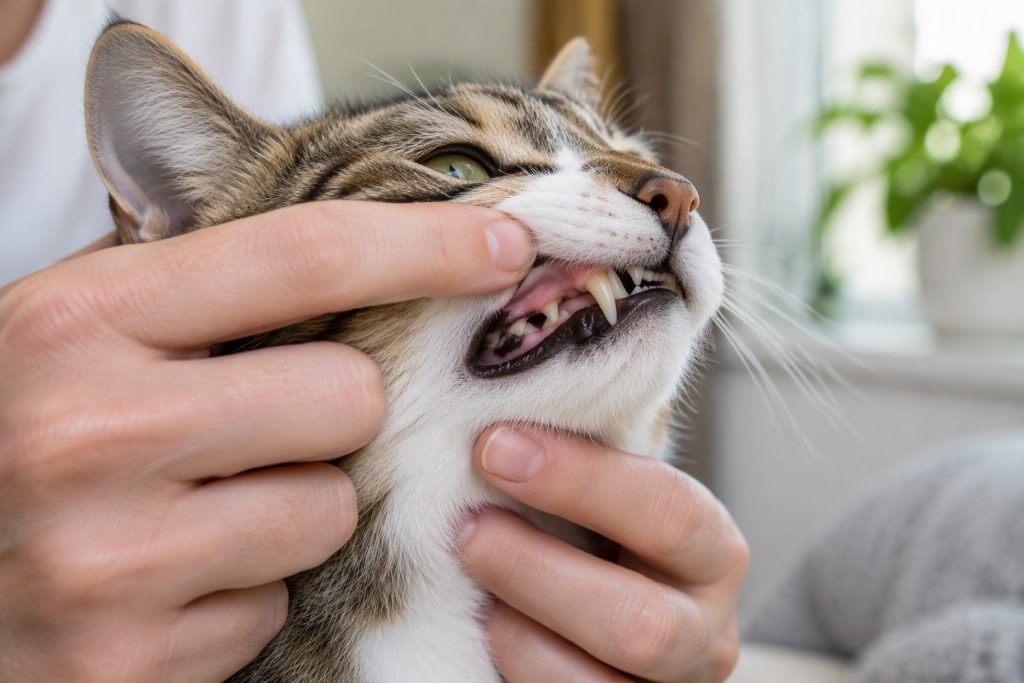
The earliest sign of gingivitis in cats is usually a thin red line along the gum where it meets the tooth, often present before you notice anything else. Bad breath tends to come next, then a reluctance to eat hard food, chewing on one side, or dropping food from the mouth. Because cats hide mouth pain very well, the first clue is often a change in behaviour rather than anything you can easily see.
- A red rim along the gumline is the first visible sign.
- Bad breath often appears before pain is obvious.
- Chewing on one side or dropping food signals discomfort.
- Early gingivitis is reversible; periodontitis is not.
What are the earliest signs of gingivitis in cats?
Gingivitis starts where the gum meets the tooth, so the very first change is a thin, bright red margin along that edge. The gum may look slightly swollen or shiny, and it often bleeds a little when you brush or when she chews something firm. The next sign most owners notice is smell, because the bacteria that inflame the gum also produce odour. Our guide to cat bad breath explains how to tell ordinary morning breath from something worth investigating. Behaviour changes follow: she may approach the bowl eagerly and then walk away, chew on one side only, tilt her head while eating, drop kibble, or paw at her mouth. Some cats drool slightly, and some become quieter or more irritable when their face is touched. Because these signs build slowly, many owners only notice them once the disease is well established, which is why a monthly mouth check at home is so useful.

A plastic dematting comb clears the loose hair before it lands on the furniture. Use it before the…
What does a healthy gum look like next to an inflamed one?
A healthy cat gum is a uniform, pale salmon pink, smooth, and firmly attached to the tooth with a crisp, clean edge. There should be no redness where the gum meets the enamel, no swelling, and no bleeding when you press gently with a clean finger or a soft brush. Inflamed gum looks different in a specific way: the redness is concentrated in a band right at the tooth edge rather than spread evenly, the tissue looks puffy or glossy, and it may bleed at the slightest contact. If you lift the lip and see a distinct red line following the curve of each tooth, that is the classic picture of gingivitis. A healthy mouth also smells mild and slightly savoury, not sour or metallic. Checking once a month in good light, and photographing what you see, makes it much easier to spot a change over time.
Why do cats hide dental pain so well?
Cats evolved as both hunters and prey, and an animal that advertises weakness becomes a target. That instinct survives in the living room: a cat with sore gums will keep eating, keep grooming, and keep jumping, right up until the pain outweighs her ability to compensate. She may simply eat more slowly, prefer softer food, or use one side of her mouth in a way that is easy to miss. This is why dental disease in cats is so often found during a routine examination rather than reported by an owner. It also means that by the time a cat is visibly refusing food, the problem is usually significant. Watching for subtle shifts, such as taking longer over meals, favouring wet food when she used to eat dry, or flinching when her cheeks are stroked, gives you a much earlier warning than waiting for obvious distress.
Is gingivitis the same as periodontal disease?
No, and the difference matters a great deal. Gingivitis is inflammation of the gum tissue alone. At this stage the damage is reversible: with proper cleaning, the gum can return to normal. Periodontitis is what happens when the inflammation spreads below the gumline and starts destroying the ligament and bone that hold the tooth in place. That damage is permanent and cannot be undone. Gingivitis is extremely common in cats, and a large proportion of cats over three years old show some degree of it. The progression is not inevitable, but it is common enough that early action is worthwhile. If you see the red gumline and do nothing, you are gambling on which way it goes. That is why brushing, veterinary checks, and any professional cleaning your vet recommends are all part of the same effort rather than competing options.
Nail scissors, bath brush, de-shedding glove and a drying towel — the full groom in one box. Cuts…
How is gingivitis in cats treated?
Treatment depends on how far it has progressed. For early gingivitis, your vet will usually recommend a professional dental clean under anaesthetic, which removes the plaque and tartar that brushing cannot reach, followed by a consistent home routine. Your vet may also prescribe a medicated mouth rinse or gel, and in some cases an antibiotic if there is significant infection. If a tooth is badly affected, extraction may be the kindest option, and most cats eat far better afterwards once the source of pain is gone. At home, daily brushing with a cat-safe toothpaste is the gold standard, supported by veterinary dental diets, dental chews, or water additives if your cat will not tolerate a brush. Never use human toothpaste, which contains ingredients cats should not swallow. Always have any persistent gum redness, drooling, or eating difficulty assessed by a vet rather than treating it at home.
Can I prevent gingivitis at home?
Largely yes, and the single most effective habit is daily brushing. Plaque begins to harden into tartar within about a day or two, so brushing every day removes it while it is still soft, whereas brushing once a week leaves most of the work undone. Our step-by-step cat teeth cleaning guide walks through how to build the habit without a struggle, starting with letting her lick the paste off your finger. Alongside brushing, veterinary-approved dental diets and chews help by mechanically scouring the tooth surface. Water additives can reduce bacterial load, though they are a supplement to brushing rather than a replacement. Keep up regular veterinary examinations, because your vet can see below the gumline where you cannot. Finally, do not rely on hard kibble alone to clean teeth; most cats swallow it whole, so it does very little for the gum edge where gingivitis actually starts. Consistency matters far more than intensity, so a short daily brush beats an occasional long one.
Frequently asked questions
- How quickly can gingivitis appear? Plaque starts forming within hours and gum inflammation can develop in days, which is why daily brushing matters.
- Can gingivitis in cats heal on its own? Mild cases can improve with good home care, but tartar and established inflammation need veterinary cleaning.
- Is gingivitis painful for my cat? Yes, inflamed gums are sore, even if your cat hides it well.
- Does dry food clean my cat’s teeth? Very little, because most cats swallow kibble without chewing it properly.
- When should I see a vet? Any persistent bad breath, red gumline, drooling, or change in eating warrants an examination.