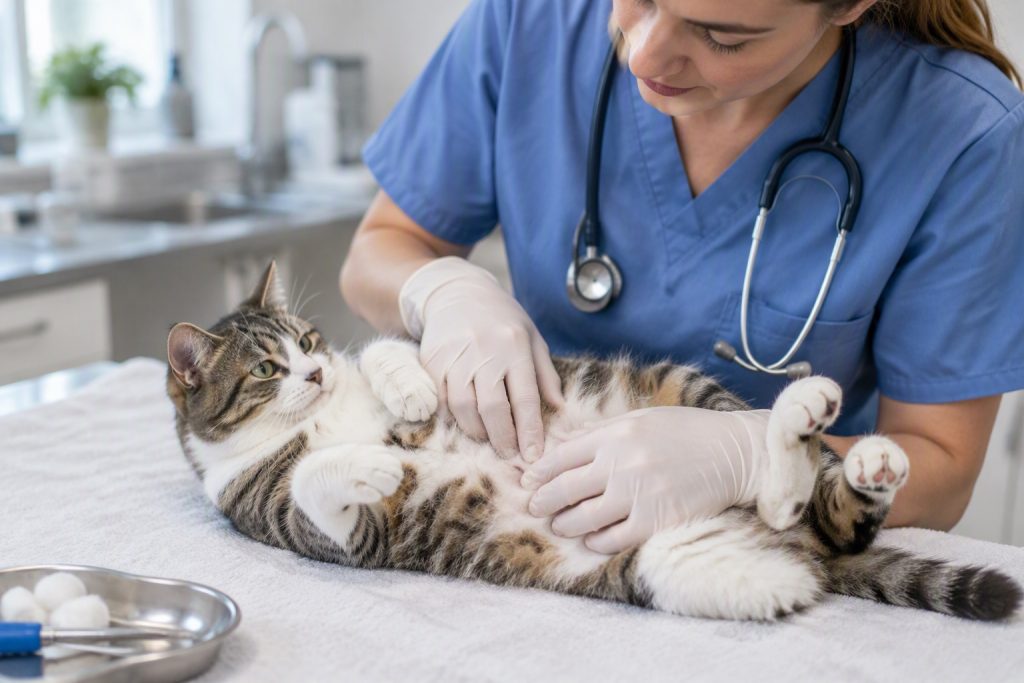
The most common signs of worms in cats are a change in appetite, a pot belly in kittens, vomiting or diarrhoea, visible worms or rice-like segments in the stool or around the anus, and a dull, rough coat. Some cats show almost no signs at all, which is why routine worming matters. Because the different worm types need different treatments, and because some worms can pass to humans, the right approach is a veterinary diagnosis rather than a guess.
- Look for worms or rice-like segments in stool.
- Kittens with a pot belly are a common case.
- Many infected cats show no signs at all.
- Use vet-recommended worming, not guesswork.
What are the symptoms of worms in cats?
Signs vary with the worm and the cat. Roundworms, the most common type, often cause a pot-bellied appearance in kittens, along with poor growth, a dull coat, and sometimes vomiting that brings up a worm. Tapeworms are usually spotted as small, white, rice-like segments around the anus or in the bedding, and they often cause itching around the rear end, which shows up as scooting or licking. Hookworms attach to the gut lining and feed on blood, so they can cause weight loss, pale gums, and black tarry stool. Lungworm can cause coughing, and in severe cases breathing difficulty. Many cats carry a light burden with no obvious signs at all, which is why some owners are surprised by a positive result. Weight loss despite a good appetite is a pattern worth investigating, since it can point to worms or to a thyroid problem. Any persistent digestive or weight change should be checked by a vet.

Nail scissors, bath brush, de-shedding glove and a drying towel — the full groom in one box. Cuts…
How do cats get worms?
There are several routes, and knowing them helps you judge the risk. Roundworm eggs and larvae can be picked up from contaminated soil, from grooming paws that have walked through infected ground, and from eating an infected rodent or bird. Kittens can be infected before birth or through their mother’s milk, which is why kittens are almost always assumed to carry roundworms and are wormed on a schedule from a young age. Tapeworms are usually acquired by eating an infected flea, which is why fleas and tapeworms so often appear together. Hookworm larvae can penetrate the skin, and cats can also ingest them. Lungworm is picked up by eating infected slugs, snails, or the animals that carry them. Cats with outdoor access, cats who hunt, and cats with fleas are all at higher risk. Our article on cat flea treatment explains why flea control is genuinely part of worm control rather than a separate job.
How is a worm infection diagnosed?
A vet will usually start by asking about signs, lifestyle, and outdoor access, then examine your cat for weight loss, a rough coat, pale gums, and abdominal shape. A faecal sample is the most useful test: a vet or technician examines it under a microscope for eggs, and different worm types have distinct egg shapes, which guides treatment. Some clinics use a flotation test, which concentrates eggs so they are easier to find. Tapeworms are often diagnosed simply by seeing the segments, since their eggs are shed inside the segments rather than free in the stool, which means a faecal test can miss them. Blood tests may be used if anaemia is suspected from hookworms. Occasionally a cat with a heavy burden will pass a whole worm, which you can bring in a sealed container for identification. Accurate diagnosis matters because not all wormers treat all worms.
How are worms in cats treated?
Treatment is a worming product prescribed or recommended by your vet, chosen to target the specific worm involved. The common forms are spot-on preparations applied to the skin at the back of the neck, tablets given by mouth, and in some cases injectable treatments. The right choice depends on the worm, your cat’s age, her weight, whether she is pregnant or nursing, and whether she has fleas that also need treating. It is genuinely important to use a product appropriate for cats, because some dog wormers are toxic to cats, and using the wrong product or the wrong dose can cause serious harm. Follow the dosing schedule your vet gives, and repeat treatment as directed, since a single dose may not clear a reinfection cycle. If your cat has fleas, treat those at the same time or she will simply reinfect herself with tapeworm. Never assume a shop-bought product covers everything; check with your vet which worms are relevant to your cat.

Brush designed to lift loose hair out of a cat's coat — the hair has to go somewhere…
Can worms pass from cats to people?
Yes, and this is one of the main reasons routine worming matters. Roundworm larvae can, in rare cases, migrate through human tissue, and children who play in soil or sand are at higher risk. Hookworm larvae can penetrate human skin and cause an itchy, creeping rash. Tapeworm infection in humans is uncommon from cats but possible. The risk is low for healthy adults but worth taking seriously in households with young children, pregnant people, or anyone immunocompromised. Practical steps reduce it a lot: worm your cat on the schedule your vet recommends, clean the litter box daily and wash your hands afterwards, cover sandpits when not in use, wear gloves when gardening, and discourage your cat from hunting where possible. If a person in the household develops unexplained symptoms after contact with a cat, mention the cat to a doctor.
How do I prevent worms in my cat?
Prevention is mostly routine and low-effort. Worm your cat on a schedule your vet recommends, which for many cats means every one to three months, and more often for outdoor cats or hunters. Control fleas year-round, because fleas carry tapeworm. Keep the litter box clean and dispose of waste properly rather than composting it. Feed cooked or commercial food rather than raw meat, which can carry parasites, and keep your cat from hunting where you can. Wash your hands after handling the litter box or gardening. Bring a faecal sample to routine check-ups, since a light infection can be invisible. Keep vaccinations up to date as well, because a cat weakened by other illness copes less well with parasites; our cat vaccinations guide covers what is recommended. Kittens need a specific schedule, so ask your vet for a plan from the first visit.
Frequently asked questions
- How do I know if my cat has worms? Look for visible worms or rice-like segments, a pot belly, weight loss, or a dull coat, but many cats show no signs.
- Can I buy worming treatment without seeing a vet? You can, but the product may not cover the worms your cat actually has.
- Are cat worms dangerous to humans? Some can affect people, especially children, so routine worming and hygiene matter.
- Do indoor cats need worming? Yes. Fleas, soil on shoes, and raw food can all bring worms indoors.
- Why does my cat keep getting worms? Untreated fleas, hunting, or an incomplete worming schedule are the usual reasons.