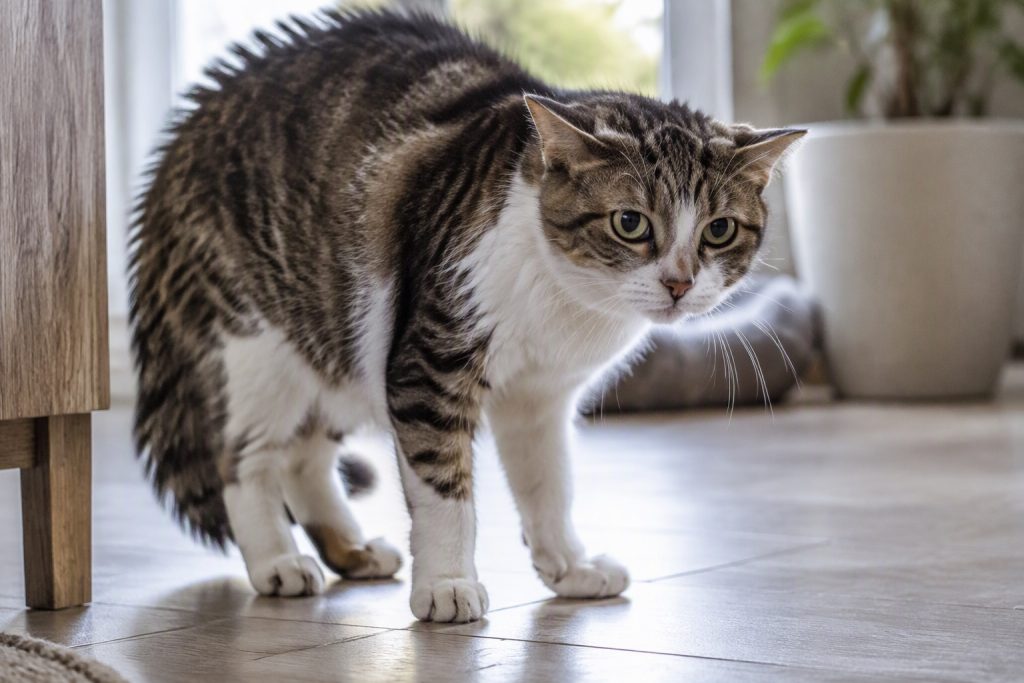
A cat who is shaking may be cold, dreaming, excited, or frightened, and those are all normal. Shaking becomes a concern when it is persistent, when it affects the whole body rather than a limb, when it comes with weakness, vomiting, or a change in behaviour, or when it appears suddenly in an older cat. Tremors, shivering, and seizures look similar to an untrained eye but have very different causes, so anything that does not stop quickly should be assessed by a vet.
- Cold, fear, and excitement are common benign causes.
- Persistent whole-body shaking needs a vet.
- Shaking with weakness or vomiting is urgent.
- Film the episode, since it helps diagnosis.
Why is my cat shaking?
Start with the ordinary explanations. Cold is the most common: cats have a higher body temperature than we do and feel the cold quickly, especially older cats, thin cats, and cats with short coats. Fear and stress come next, and a cat who is frightened may tremble, tuck her tail, flatten her ears, and hide. Excitement and anticipation also produce shivering, which is why some cats tremble at the sound of a can opening. Pain can cause trembling, particularly in the hind legs or the abdomen, and a cat in discomfort may shake while standing or while trying to settle. Nausea is another frequent cause, and it often comes with lip licking, drooling, and vomiting. Finally, some cats simply shake a limb to dislodge something, and a cat who has just woken may tremble briefly while stretching. Match the shaking to everything else she is doing before you worry.

A thickened cloth bed is stepped into rather than climbed over. Try it near the window first, then…
What medical conditions cause shaking in cats?
A number of conditions produce tremors. Low blood sugar, which can occur in very young kittens, in cats who have not eaten for a long period, or in cats with diabetes being treated with insulin, causes weakness and trembling. Hypothermia causes shivering that progresses to lethargy. Pain, especially from arthritis, dental disease, or an abdominal problem, causes muscle trembling. Neurological conditions such as cerebellar disease produce a characteristic head tremor that worsens when the cat tries to focus. Toxin exposure, including to certain plants, human medications, and household chemicals, can cause tremors and should be treated as an emergency. Kidney disease, liver disease, and electrolyte imbalances can all produce weakness and shaking. Seizures look different again: a seizure usually involves loss of awareness, paddling, drooling, and a period of confusion afterwards. Our guide to how to tell if a cat is in pain helps you spot the subtle signs that often accompany tremors.
How do I tell shivering from a seizure?
Shivering and seizures are genuinely different, and the distinction is important. Shivering is a fine, rapid tremor in a cat who is fully aware of her surroundings, responsive to her name, and able to walk and jump normally once it stops. She may be hunched or tense, but she reacts to you. A seizure involves a loss of normal awareness: your cat may fall to her side, paddle her legs, chomp her jaw, drool, lose bladder or bowel control, and then be disoriented, wobbly, and sometimes temporarily blind afterwards for minutes to hours. A focal seizure may affect only the face or one limb, with twitching and a vacant stare. Cats can also have tremors that are neither: a fine head tremor that appears when she is concentrating on food is characteristic of a cerebellar problem. If you are unsure, film the episode, because your vet will find that far more useful than a description.
When is shaking an emergency?
Seek immediate veterinary care if the shaking is continuous and does not stop, if your cat is unable to stand or walk, if she is vomiting repeatedly, if she is drooling heavily or having difficulty breathing, if she seems unaware of her surroundings, or if you know or suspect she has eaten something toxic, including a houseplant, human medication, or a chemical. Also act urgently if the shaking came on suddenly in an older cat, or if it is accompanied by a fever, a swollen abdomen, or collapse. For a kitten, trembling with weakness can indicate low blood sugar, which is life-threatening and needs treatment without delay. If the shaking stops quickly and your cat returns to completely normal behaviour, it is still worth mentioning at your next appointment, but it is not usually an emergency.

Cervical pillow, plush hammock, floor mat and paw cushion — four places to nap. Gives a cat a…
What should I do while it is happening?
Stay calm and keep the environment quiet, since your own alarm will raise your cat’s stress and can worsen trembling. Do not restrain her, and do not put your hands near her mouth, because a frightened or seizing cat can bite without meaning to. Move anything she could injure herself on, dim the lights, and reduce noise. Note the time the episode started and how long it lasts, and record a short video on your phone if you can do so from a distance. Check the room temperature and whether she may have been cold, and look for anything she might have eaten. If she seems to be in pain, do not give any medication, since human painkillers are toxic to cats. Once the episode passes, offer water and a quiet place to rest, and observe her closely for the next few hours. Then call your vet with your notes and the video.
How is shaking investigated and treated?
Your vet will start with a full examination, including temperature, heart rate, gum colour, hydration, and a careful neurological check. Blood tests are usually the next step, looking for low blood sugar, electrolyte imbalances, organ problems, and signs of infection. Depending on the findings, they may recommend imaging, an ECG, or a referral to a neurologist. Treatment depends entirely on the cause: warming for hypothermia, food or glucose for low blood sugar, pain relief for discomfort, a change in insulin dose for a diabetic cat, or specific therapy for a neurological or toxic cause. Our article on cat vomiting covers what to watch for if nausea is part of the picture. Keep a written log of episodes, including time, duration, and what was happening beforehand, because patterns over days and weeks are often what lead to a diagnosis. Bring the log and the video to the appointment.
Frequently asked questions
- Why does my cat shake when she is not cold? Fear, pain, nausea, excitement, and neurological conditions can all cause shaking.
- Is it normal for cats to shiver when they sleep? Yes. Twitching and small tremors during dreaming are common and harmless.
- How do I know if my cat is having a seizure? A seizure involves loss of awareness, paddling, drooling, and confusion afterwards.
- Can low blood sugar make a cat shake? Yes, especially in kittens. It is serious and needs prompt veterinary care.
- Should I film my cat shaking? Yes. Video is one of the most useful things you can bring to a vet appointment.