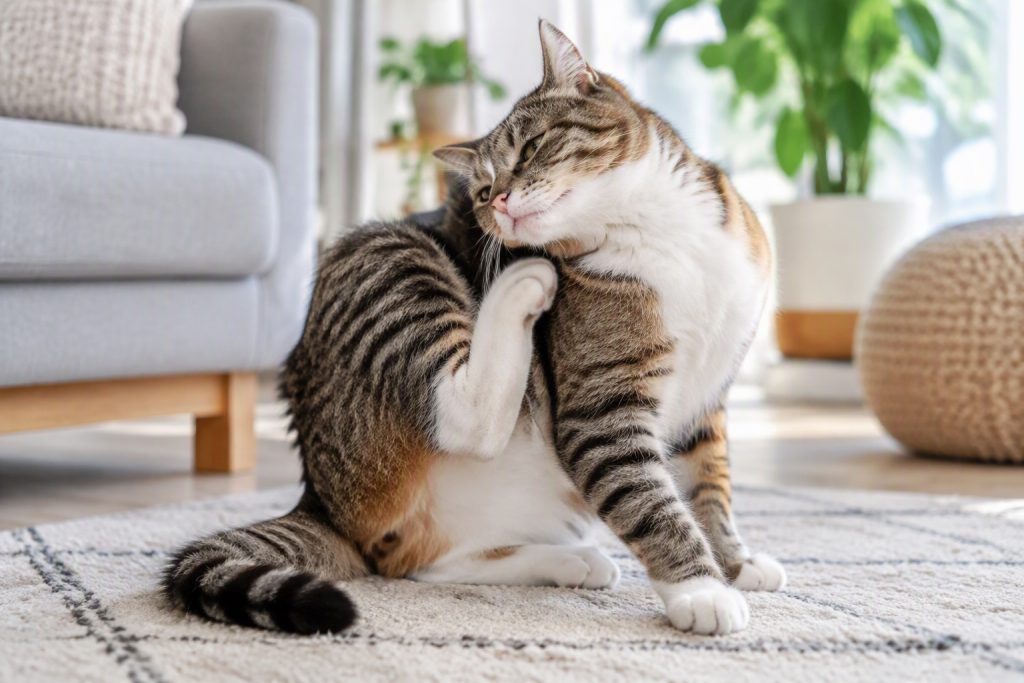
A cat who itches with no fleas usually has one of a handful of other problems: dry skin, environmental or food allergies, a skin infection, mites that are too small to see, or a reaction to something in the home. Fleas are the most common cause of itching in cats, so the first step is to rule them out properly rather than assume they are absent. If the itching is persistent, comes with hair loss, scabs, or redness, or if your cat is grooming obsessively, a vet visit is the fastest way to identify the cause.
- Fleas can be present even if you see none.
- Dry skin and allergies are common culprits.
- Mites and infections also cause intense itching.
- Persistent itching with hair loss needs a vet.
How can I be sure it is not fleas?
Fleas are easy to miss, especially on a fastidious cat who grooms them away. Adult fleas are small and dark and move quickly, and many cats with a flea problem show only the evidence rather than the insects themselves. The most reliable check is to comb your cat over a white sheet of paper or a damp paper towel with a fine-toothed flea comb, focusing on the base of the tail, the lower back, and the neck. If you see small dark specks that turn reddish-brown when you dampen them, that is flea dirt, which is digested blood and confirms fleas even if you never spot an adult. Itching concentrated at the base of the tail and the back is a classic flea pattern. Treating the cat and the home properly is the only way to settle flea allergy, and our article on cat flea treatment explains how to do it thoroughly.

Nail scissors, bath brush, de-shedding glove and a drying towel — the full groom in one box. Cuts…
What are the other common causes of itching?
Once fleas are ruled out, the list is fairly short. Dry skin is very common, especially in winter, in overheated homes, or in cats on a poor diet, and it causes flaky dandruff and general itchiness rather than intense localised scratching. Environmental allergies, such as to pollen, dust mites, or mould, cause itching that may be seasonal or year-round, often with sneezing or watery eyes. Food allergies can cause itching too, frequently around the head and neck, sometimes with digestive signs. Skin infections, both bacterial and fungal, cause itching and are often secondary to another problem. Ear mites cause intense itching around the ears and head, with dark debris in the ear canal. Finally, some cats over-groom from stress or pain rather than true itching, which can look identical to an allergy at first glance.
Could it be dry skin or the weather?
Yes, and it is worth checking before assuming something more serious. Indoor heating and air conditioning strip moisture from the air, and a cat’s skin can become dry and flaky, especially in winter. Low humidity, frequent bathing, and a diet low in essential fatty acids all contribute. Signs include fine white dandruff along the back, a dull coat, and general rather than focused scratching. You can help by raising humidity with a humidifier, making sure she drinks well, and improving her diet, since omega-3 fatty acids from fish oil support skin health, though you should check any supplement with your vet first. Never use human moisturisers or medicated creams on a cat, because she will lick them off and many are toxic. Our guide on cat dry skin treatment covers gentle, cat-safe options.
How do I tell allergies from other causes?
Pattern and timing are your best clues. Flea allergy itching concentrates at the base of the tail and back. Food allergy itching often centres on the head, face, ears, and neck, and may come with vomiting or diarrhoea, and it does not respond to seasonal changes. Environmental allergy itching tends to affect the paws, face, and belly, and often follows a seasonal pattern or flares when the pollen count rises or when dust is disturbed. Mites cause intense itching with visible debris or crusting, usually around the ears or face. Skin infections produce redness, scabs, pustules, or a musty smell. Because these patterns overlap, and because cats often have more than one problem at once, guessing rarely works. A vet can examine the skin, take samples, and if needed recommend a proper elimination diet, which is the only reliable way to diagnose food allergy.
Brush designed to lift loose hair out of a cat's coat — the hair has to go somewhere…
What can I do at home to ease the itching?
You can make her more comfortable while you work out the cause. Keep up a regular flea treatment all year, even for an indoor cat, because fleas arrive on clothing and other pets, and one missed month can restart the cycle. Improve her diet and consider whether a skin-supportive supplement is appropriate, after checking with your vet. Raise the humidity if your home is dry, and use only cat-safe, fragrance-free bedding and detergents, since perfumes and residues can irritate skin. Groom her gently to remove loose fur and dander, and use a soft brush rather than anything abrasive. Do not bathe her frequently, because shampooing dries the skin further, and never use a human or dog product. If she is scratching to the point of breaking the skin, an Elizabethan collar can prevent self-injury until you see the vet. Keep a simple diary of when the itching flares, which helps identify triggers.
When should I see a vet about the itching?
See a vet if the itching lasts more than a few days, if it is intense or worsening, or if it comes with hair loss, bald patches, red or broken skin, scabs, crusting, a bad smell, or dark debris in the ears. Seek prompt care if your cat is losing weight, off her food, vomiting, or lethargic, and treat any sign of severe self-trauma as urgent. Do not keep trying different over-the-counter remedies for weeks, because that delays diagnosis and can make skin problems worse. A vet can check for parasites, infection, and allergies, and can rule out less common causes. If your cat is over-grooming without obvious skin changes, mention that too, because stress and pain can drive grooming that looks like itching, and the treatment is different. Persistent itching is a medical question, and the sooner it is answered, the sooner she is comfortable.
Frequently asked questions
- Can my cat have fleas if I never see them? Yes. Many cats groom fleas away, so comb for flea dirt rather than relying on seeing adults.
- Why is my cat itching more in winter? Indoor heating dries the air, which dries the skin and increases flakiness and itchiness.
- Can food cause itching in cats? Yes. Food allergy often itches around the head and neck and may come with digestive signs.
- Are home remedies safe for itchy cats? Only cat-safe ones. Never use human creams or medicated products, which can be toxic.
- How long should I wait before seeing a vet? A few days. Persistent itching, hair loss, or broken skin should be checked promptly.