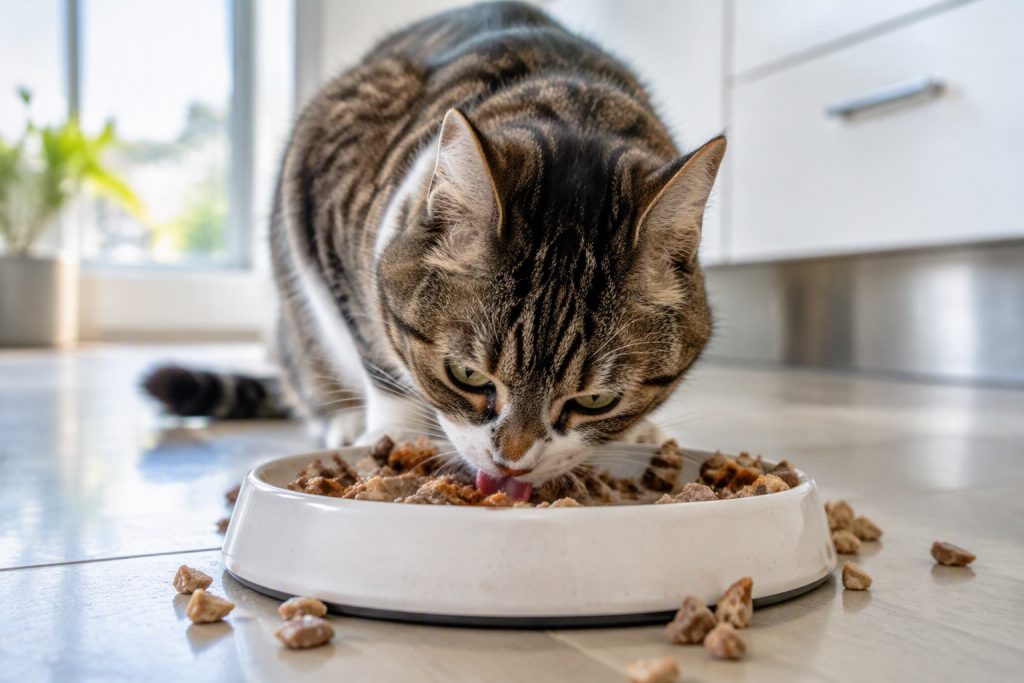
Cats eat too fast for several reasons: competition in a multi-cat home, a history of having to compete for food, boredom, a highly palatable diet, or simply habit. Fast eating often leads to vomiting shortly after a meal, because the food is swallowed with air and the stomach is overwhelmed. The fix is usually to slow her down with a puzzle feeder, a slow-feeder bowl, or smaller, more frequent meals. If fast eating comes with weight loss, vomiting that is not just after meals, or other signs, it is worth a vet check.
- Competition and habit are common reasons.
- Fast eating often causes vomiting after meals.
- Slow feeders and puzzle bowls help most cats.
- Vomiting with weight loss needs a vet.
Why does my cat eat so fast?
The most common reason is competition, whether real or remembered. In a home with more cats, or with a cat who came from a shelter or a colony, food can feel scarce, so she eats quickly to secure it before another cat takes it. Even a single cat can eat fast out of habit if she learned early that meals were unpredictable. Boredom plays a role too: a cat with little stimulation may gulp her food simply because it is the most interesting thing in her day. Some diets are highly palatable, which encourages rapid eating, and some cats are naturally fast eaters with no underlying issue at all. Medical causes are less common but worth knowing: hyperthyroidism increases appetite, and conditions that impair nutrient absorption can make a cat feel constantly hungry, so she eats quickly and still loses weight. Our article on slow feeders for cats covers the practical fixes.
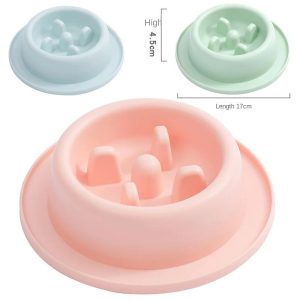
Round bowl with a removable flower insert. Made from PP. Made for daily feeding and fresh water. Keeps…
Why does eating fast make my cat vomit?
When a cat eats quickly, she swallows a lot of air along with the food, and the stomach fills faster than it can comfortably process. The food also arrives in large chunks rather than being broken down gradually, which can irritate the stomach. The result is often regurgitation or vomiting shortly after eating, with food that looks largely undigested and comes up soon after the meal. This is uncomfortable but usually not dangerous in itself. However, repeated vomiting is not something to ignore, because it can irritate the oesophagus, and if it happens often, it can be a sign of a more serious problem such as a food intolerance, an obstruction, or an underlying illness. If the vomiting happens only occasionally and only right after a fast meal, slowing her down usually solves it. If it happens at other times, or with other signs, see our article on when cat vomiting is worth worrying about.
How do slow feeders and puzzle bowls help?
Slow feeders work by making eating physically harder, which forces the cat to take smaller amounts over a longer period. A slow-feeder bowl has ridges or a maze pattern that a cat must work around with her tongue, so she cannot scoop up mouthfuls at once. A puzzle feeder goes further, requiring her to bat, roll, or fish food out of compartments, which turns the meal into a hunting-like task. Both approaches slow eating, reduce air swallowing, and add mental stimulation, which is especially valuable for bored indoor cats. Many cats take to puzzle feeders quickly once they learn how they work, and the enrichment alone often improves the meal, because a cat who has to work for her food finishes more satisfied and is less likely to beg afterwards. Start with an easy puzzle and increase the difficulty gradually, so she does not get frustrated and give up. A good rule is to begin with a feeder she can empty in a couple of minutes, then move to a harder one once she has the idea. Because these feeders also slow eating in multi-cat homes where one cat tends to finish first and then push the others away, they help the whole household eat more calmly. Whichever you choose, introduce it in stages and keep mealtimes relaxed.
What other changes reduce fast eating?
Several simple changes help alongside a slow feeder. Split her daily food into more, smaller meals rather than one or two large ones, using an automatic feeder if you are out during the day. If you have more than one cat, feed them in separate rooms or with a visual barrier, so no cat feels the need to compete, and never take food away to “teach” her, which increases anxiety. Choose a shallow, wide dish so she cannot scoop mouthfuls easily. If she eats wet food, you can spread it thinly over a flat plate, which makes it harder to gulp. Keep mealtimes calm and predictable, since stress and unpredictability drive fast eating. Feed at the same times each day, in the same place, so she learns that food is reliable and does not need to be rushed. Finally, add more play and enrichment, because a cat with a fuller day is often a slower, more relaxed eater, and a good play session before a meal mimics the natural hunt-then-eat pattern that helps cats settle.
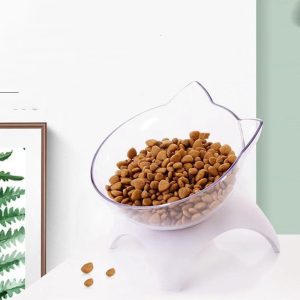
Clear glass bowl holding dry food. Made from plastic. Made for daily feeding and fresh water. Keeps food…
When is fast eating a medical concern?
See a vet if fast eating comes with weight loss despite a good appetite, because that combination can point to hyperthyroidism, diabetes, or a digestive problem. Also seek care if the vomiting is frequent, happens at times other than right after a meal, contains blood, or is accompanied by diarrhoea, lethargy, or a change in behaviour. A cat who eats frantically and never seems satisfied, or who is losing condition, needs an assessment rather than a slow feeder alone. Regurgitation that happens repeatedly can also cause damage to the oesophagus, so persistent episodes should be investigated. Older cats are more prone to hyperthyroidism and other conditions that affect appetite, so their threshold for a vet visit should be lower. Fast eating itself is rarely an emergency, but the signs that sometimes accompany it can be.
Can fast eating cause other problems?
Beyond vomiting, fast eating can cause bloating and gas, which is uncomfortable and can lead to more vomiting. It can also contribute to food guarding and anxiety around meals, especially in a multi-cat home, because the habit reinforces the belief that food is scarce. For cats who eat very quickly and then vomit, there is a risk of food being inhaled into the airway, which is serious, though this is uncommon. Some cats who eat too fast also beg constantly, because the meal is over so quickly that it does not feel satisfying. The good news is that these problems usually resolve when the pace slows, because the cat gets the same amount of food over a longer period and finishes feeling full. Addressing the environment, the dish, and the meal structure solves the majority of cases without any medical treatment.
Frequently asked questions
- Why does my cat eat fast and then vomit? She swallows air and overwhelms her stomach. Slowing her down with a puzzle or slow feeder usually helps.
- Do slow feeders really work? Yes, for most cats. They make eating harder, so she takes smaller amounts over a longer time.
- Is fast eating a sign of illness? Usually not, but fast eating with weight loss can indicate hyperthyroidism or another condition.
- How do I stop food competition between cats? Feed cats in separate rooms with visual barriers so no cat feels rushed.
- Should I take the food away to slow her down? No. Removing food increases anxiety and makes fast eating worse.