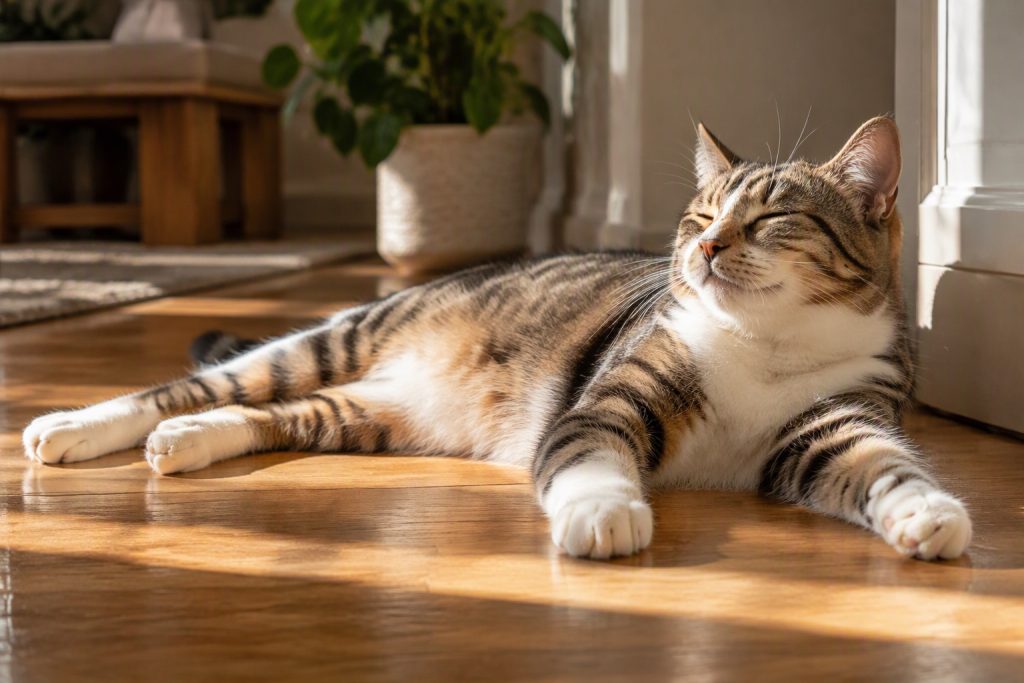
Cats sleep in sunbeams because sunlight is free, steady warmth, and cats are built to seek out and conserve heat. A patch of sun also carries the scent and feel of safety, and the warmth helps them relax deeply and digest food. The behaviour is completely normal and healthy, but a cat who will not leave a hot sunbeam on a very hot day, or who pants and seems distressed, needs to be moved somewhere cooler.
- Sunbeams deliver free, steady radiant warmth.
- Cats run warmer than us and conserve heat when resting.
- Warmth helps them relax and digest.
- Watch for overheating on hot days and provide shade.
Why do cats love sleeping in the sun?
A cat’s body temperature sits a little higher than ours, and when she is resting, that temperature naturally dips, so her instincts push her toward anything that replaces lost heat efficiently. Sunlight is ideal because it warms her directly through the fur without requiring effort, and unlike a warm room, a sunbeam is intense and immediate. This preference is inherited from wild ancestors who rested in warm, open spots to conserve energy between hunts, and it remains wired into domestic cats. The warmth also helps with digestion and soothes stiff muscles and joints, which is why a cat often heads for the sun after eating. A sunbeam frequently comes with a view, another feline priority, since windows and open spaces let her watch the world while she rests. Add the fact that sun patches move slowly and predictably, and she can follow one across the floor all afternoon.

Cervical pillow, plush hammock, floor mat and paw cushion — four places to nap. Gives a cat a…
Is sunbathing safe for cats?
Moderate sunbathing is safe and beneficial, but there are real risks in excess. Cats can suffer sunburn, particularly on thin-furred areas such as the ears, nose, and eyelids, and light-coloured cats are most vulnerable. Repeated sun exposure over years can lead to skin damage and, in some cats, skin cancers on the ears and nose, which is why outdoor cats and cats who bake on windowsills should be checked for changes such as crusting, scabbing, or non-healing sores. Overheating is another risk: a cat in a hot sunbeam behind glass can become dangerously warm, because the greenhouse effect traps heat and she may not move in time. Watch for panting, restlessness, drooling, or a cat who seems limp or unresponsive, and move her to a cool, shaded spot at once. Always provide shade and fresh water, and never leave a cat in a hot car or a sun-baked conservatory. Our article on why cats sleep on windowsills covers the related habit.
Does sunbathing mean my cat is unwell?
Usually not, but a change is worth noting. Seeking warmth is normal, but a cat who suddenly craves heat constantly, who presses against radiators or hot surfaces, or who seems cold all the time may be dealing with a health issue. Thyroid problems, kidney disease, and age-related changes in circulation can all make a cat feel cold and drive heat-seeking behaviour. A cat who sleeps in the sun more because she is lethargic, who is losing weight, or who is eating or drinking differently should be assessed. On the other hand, older cats and those with arthritis often genuinely benefit from warmth, and increased sunbathing in a stiff senior cat is a sensible response to painful joints rather than a red flag by itself. Judge by the whole picture: energy, appetite, weight, and grooming. If several things have changed together, book a vet visit. For anything persistent, ask your vet.
How do I make a safe sunny spot for my cat?
Give her warmth without the risks. A window perch or a raised bed in a sunny spot lets her soak up light while staying off cold floors and away from draughts. Choose a spot where she can move in and out of the sun as she pleases, so she can self-regulate, and provide shade nearby in the form of a chair, a curtain, or a covered box. On very hot days, draw a sheer curtain to filter the harshest light, and keep fresh water close by, ideally in a fountain so it stays appealing. For light-coloured or thin-coated cats, consider limiting the most intense midday sun and checking ears and nose regularly. If the room becomes very hot, use a cooling mat or a shaded spot and encourage her to move. Never place a heated pad in direct sun, and always give her an easy exit. Our guide on whether cats need beds explains how to set up a proper resting place.

A thickened cloth bed is stepped into rather than climbed over. Try it near the window first, then…
Why does she follow the sunbeam around the house?
Because a sunbeam is a moving heat source, and cats are excellent at tracking resources. As the sun shifts, the warm patch moves across the floor and up the walls, and a cat who has learned that a particular spot is comfortable will relocate to wherever the warmth now is. This is the same instinct that makes her find a new warm spot when you move a chair or open a different door. The behaviour also reflects a cat’s efficient nature: rather than generating heat herself, she lets the sun do the work, saving energy. Some cats will even wait near a window at the time the sun arrives, which shows how well they learn patterns. It is a harmless, charming behaviour and a good sign that she is comfortable and confident enough to move around the home. If she stops following the sun or seems unable to settle, that change is more meaningful than the habit itself.
When should I be concerned about heat-seeking?
Be concerned if heat-seeking becomes obsessive or if it comes with other signs. A cat who will not leave a hot spot, who pants, drools, or seems distressed, is at risk of overheating and should be cooled gently with a damp cloth, shade, and water, and seen by a vet if she does not recover quickly. A cat who seeks heat constantly while also losing weight, eating more, drinking more, or seeming restless may have a thyroid or metabolic problem. A cat who is lethargic, hiding, or not grooming alongside the heat-seeking needs assessment. If you notice crusty, scabby, or non-healing lesions on her ears or nose after years of sunbathing, have them checked, as these can be sun-related skin damage. And if she is elderly and newly cold all the time, mention it to your vet. For anything persistent, professional advice is always the safer path.
Frequently asked questions
- Why do cats sleep in sunbeams? Sunlight provides free, immediate warmth that helps them conserve energy and relax, an instinct from wild ancestors.
- Can cats get sunburn? Yes, especially on the ears, nose, and eyelids, and light-coloured cats are most at risk.
- Is sunbathing bad for cats? Moderate sun is fine and comforting. Excess exposure can cause burns and long-term skin damage.
- Why does my cat follow the sun around the room? She is tracking a moving heat source, which is efficient and instinctive.
- Should I worry if my cat always seeks heat? Constant heat-seeking with weight loss, restlessness, or lethargy can signal illness. Ask your vet.