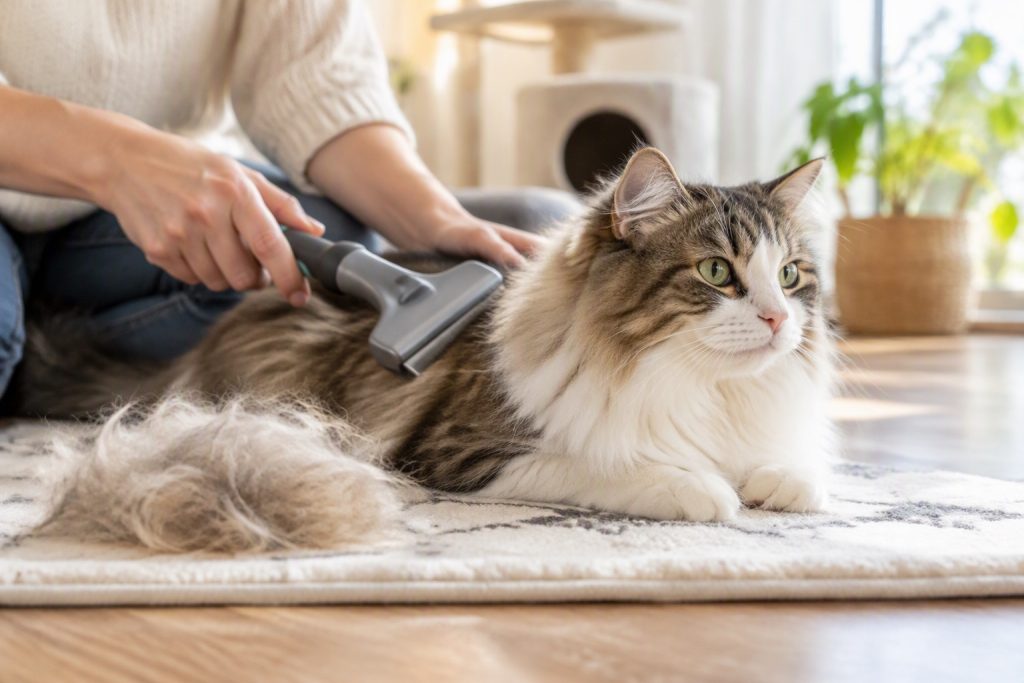
The best hairball remedy for cats is usually not a product at all but a combination of regular brushing, more moisture in the diet, and more activity, because hairballs form when swallowed hair does not pass through the gut. When a product is needed, a vet-recommended lubricant or a high-fibre hairball diet can help hair move through. Frequent hairballs are not normal and can signal an underlying problem, so persistent cases need a vet.
- Brushing is the most effective hairball prevention.
- More moisture and fibre help hair pass through.
- Frequent hairballs are not normal, so see a vet.
- Avoid petroleum-based remedies without advice.
What actually causes hairballs in cats?
Hairballs form because cats groom themselves with a rough tongue that catches loose hair, and they swallow most of it. Normally that hair passes through the digestive tract and out in the stool, but when the coat is shedding heavily, when the gut moves slowly, or when a cat over-grooms, hair accumulates in the stomach and forms a matted clump. When it cannot pass into the intestine, the cat vomits it up as a cylindrical hairball. Long-haired cats and cats who groom a lot are most prone, and shedding seasons, dry food diets, dehydration, and skin problems that increase grooming all raise the risk. Hairballs are more common in cats who cannot groom efficiently, including older and overweight cats. It is worth knowing that vomiting hair is not the same as a healthy hairball, and a cat who brings up hair frequently may have a motility or skin problem that needs investigation. Our guide on hairballs in cats explains the basics.
Nail scissors, bath brush, de-shedding glove and a drying towel — the full groom in one box. Cuts…
Do over-the-counter hairball remedies work?
Some do, with caveats. The most common products are flavoured lubricant pastes, often petroleum-based, which coat the hair so it slides through the gut more easily, and high-fibre supplements that add bulk to help hair move. Lubricant pastes can help occasionally but should not be used long term without veterinary advice, because they can interfere with nutrient absorption and, if overused, cause digestive upset. Fibre supplements can be helpful but need adequate water intake to work, otherwise they can worsen constipation. Hairball diets, which combine higher fibre with specific fibre blends, have some evidence behind them and are a gentler option for cats who get frequent hairballs. Gels, treats, and water additives vary widely in effectiveness. The key point is that none of these address the cause; they only help the hair pass. If hairballs are frequent, the underlying reason needs attention, and your vet can recommend the safest option for your cat.
What is the most effective prevention?
Prevention beats treatment. Brush your cat regularly, ideally daily during shedding season, using a brush suited to her coat, because every hair you remove is one she cannot swallow. Increase her water intake with wet food and a water fountain, since hydration keeps the gut moving. Provide daily play and activity to stimulate digestion, and use puzzle feeders to slow eating. Consider a vet-recommended hairball diet or a fibre supplement if she is prone, and treat any skin condition, allergy, or parasite that is driving excessive grooming. Keep her at a healthy weight, because obesity slows gut motility, and help older cats with grooming, since they often cannot reach their own backs. If your cat is a heavy shedder, a de-shedding tool used gently can remove a lot of loose undercoat. These measures together reduce hairballs far more reliably than any single product. Our article on fur ball prevention goes further.
Are hairball remedies safe for every cat?
No, and some cats should not receive them without veterinary advice. Cats with diabetes, kidney disease, or other conditions requiring a controlled diet should not be given high-calorie pastes or treats freely, and fibre supplements can worsen constipation or interfere with medication absorption if given incorrectly. Petroleum-based lubricants should not be used in cats with certain gastrointestinal problems, and they are not a long-term solution for any cat. Cats with a suspected blockage must not be treated at home with a remedy, because the problem is an obstruction, not a hairball, and delay can be fatal. Kittens and pregnant cats need special care with any supplement. Always read the label, check the ingredients, and confirm the product is intended for cats, since some remedies marketed for dogs are unsuitable. If you are unsure whether a product is right for your cat, ask your vet rather than guessing, especially if she has any ongoing condition.
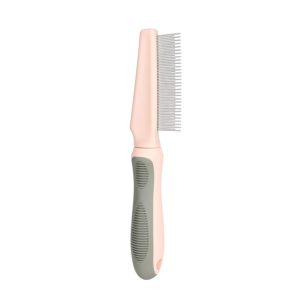
Brush designed to lift loose hair out of a cat's coat — the hair has to go somewhere…
How do I tell a hairball from something serious?
A genuine hairball is a cylindrical wad of hair, usually brought up after retching, and it is not the same as ordinary vomiting. See a vet if your cat vomits hair frequently, since more than occasional hairballs suggests a problem. Seek urgent care if she retches repeatedly without producing anything, vomits repeatedly, has a swollen or painful abdomen, stops eating, becomes lethargic, or has not passed a stool. These can indicate an intestinal blockage, which is a surgical emergency, especially if the cat is straining or has diarrhoea alongside vomiting. Also watch for weight loss, a dull coat, increased grooming, or skin problems, which point to an underlying condition driving the hairballs. Older cats who suddenly start vomiting hair should be checked, because motility slows with age and other diseases become more likely. Never assume that vomiting is just a hairball, particularly if it happens often or your cat seems unwell.
When should I see a vet about hairballs?
See your vet if hairballs occur more than occasionally, if they are accompanied by vomiting of food, if your cat is losing weight or grooming excessively, or if simple prevention measures are not working. Frequent hairballs can be a sign of inflammatory bowel disease, a skin allergy, a parasite, or a motility problem, all of which need diagnosis and treatment. A cat who vomits hair and also has a poor coat, itchy skin, or hair loss may have an underlying dermatological condition. Your vet can examine her, run tests, and recommend a suitable diet or supplement, as well as ruling out a blockage. Keep a record of how often hairballs occur, what they look like, and any other symptoms, since that history helps. Do not keep treating at home indefinitely with over-the-counter remedies. For anything persistent, or if you are worried about your cat at all, get professional advice promptly.
Frequently asked questions
- What is the best hairball remedy for cats? Regular brushing plus more moisture and fibre in the diet works best. Products are a supplement, not a cure.
- Are hairball pastes safe? Occasionally, yes, but long-term use of petroleum-based pastes should be discussed with your vet.
- How often are hairballs normal? Occasional hairballs happen, but frequent ones are not normal and should be checked.
- Can hairballs cause a blockage? Yes. A large clump can obstruct the intestine, which is a surgical emergency.
- Do hairball diets work? They help some cats by improving fibre and hair passage, especially alongside good hydration.