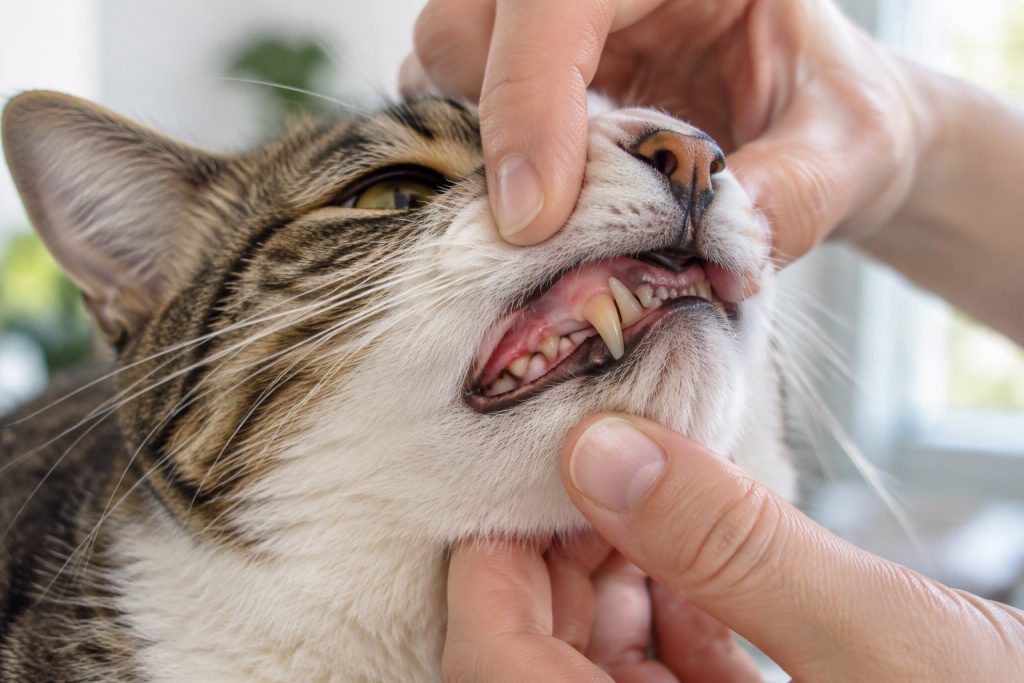
The earliest signs of gum disease in cats are subtle: a thin red line where the gum meets the tooth, bad breath, and a hesitation to chew hard food. You may notice her dropping food, chewing on one side of her mouth, or flinching when you touch her cheeks. Because cats hide dental pain extremely well, most owners only spot the problem once it is fairly advanced, so checking her mouth regularly and booking a vet dental exam matters far more than waiting for obvious symptoms.
- A red line where gum meets tooth is the first sign.
- Bad breath is never normal in a cat.
- She may chew on one side or drop food.
- Only a vet can grade gum disease properly.
What does early gum disease look like in a cat?
In the earliest stage, called gingivitis, the gum edge turns red and slightly swollen where it meets the tooth, and a thin rim of plaque sits along the gumline. The gums may bleed a little when brushed or when she eats something hard. At this point the damage is still reversible, because the underlying bone and ligament that hold the tooth are not yet affected. Left alone, gingivitis can progress to periodontitis, where the gum pulls away from the tooth, pockets form, and the supporting bone starts to erode. That stage is not reversible and leads to loose, painful teeth. This is why regular home checks matter: the difference between a treatable red gumline and permanent damage can be just a few months. Our guide to gingivitis signs in cats walks through what a healthy mouth should look like. Run a clean finger along the outside of her upper back teeth; if the gum edge feels raised, spongy, or tender, that is a sign to book a check. Gingivitis at this stage usually responds well to a professional clean and a consistent brushing routine.

A plastic dematting comb clears the loose hair before it lands on the furniture. Use it before the…
What are the warning signs at home?
Watch for changes in how she eats and behaves, since these often appear before you see anything in her mouth. She may chew on one side, drop food, take longer over meals, or suddenly prefer soft food over kibble. She might paw at her face, drool, chatter her teeth, or resist having her head touched. Bad breath is a classic clue, and so is a build-up of brown tartar near the gumline. Some cats become grumpy, hide more, or stop grooming. Others lose weight despite eating, because chewing hurts. Because cats are wired to hide weakness, a cat who is still eating normally can still have significant disease. If you notice any of these patterns, treat them as a prompt to book a dental check rather than a reason to wait. Weighing her once a month is useful, because a slow, unexplained drop in weight often tracks with dental pain.
Why does bad breath matter so much?
Bad breath is one of the most reliable early indicators of dental disease, and it is the sign owners most often dismiss. A healthy cat’s breath is mild; a strong, sour, or rotten smell usually means bacteria are multiplying in plaque, tartar, or infected gum pockets. Occasionally it signals something beyond the mouth, such as a digestive or kidney problem, so it should never be ignored. The smell comes from the same bacterial film that inflames the gums, so treating the breath with mints or additives does nothing for the underlying disease. If your cat’s breath has changed, that is your cue to look at her gums and get a professional opinion. Our article on cat bad breath covers the other possible causes. If the smell comes with drooling, a changed appetite, or a swollen face, see a vet promptly rather than trying home remedies. Bad breath that develops suddenly, rather than gradually, deserves a closer look.
How can I check my cat’s gums safely?
Pick a calm moment and keep it brief. Sit her on your lap or beside you, lift her lip gently at the side with one finger, and look at the gumline above the upper canine and the back teeth. Healthy gums are a pale, even pink, smooth, and firm, with no red rim and no bleeding. Gently press a fingertip on the gum: it should blanch white and refill pink within a second or two. Look for redness, swelling, a dark red line, tartar, missing or loose teeth, and any ulcer or lump. Never force her mouth open or poke at a sore area — if she flinches or the mouth looks painful, stop and let a vet examine her. Build the habit slowly, pairing it with a treat so it stays low-stress. If your cat will not tolerate a full check, describe what you can see to your vet, who may examine her briefly under gentle restraint.
Nail scissors, bath brush, de-shedding glove and a drying towel — the full groom in one box. Cuts…
What can I do to slow gum disease?
The single most effective home measure is daily tooth brushing with a cat-safe toothpaste, because it physically removes the plaque that triggers gum inflammation. If she will not tolerate a brush, work up to it gradually with a finger brush or gauze, and use enzymatic toothpaste she likes. Dental treats, dental diets, and water additives can help but are not a substitute for brushing. Keep her overall health good, since conditions like kidney disease and diabetes worsen dental problems. Feed a balanced diet and keep her hydrated. Book professional cleanings as your vet advises, because tartar above the gumline can only be removed properly under anaesthetic. Starting young makes brushing easier, but older cats can still learn if you go slowly. Even with good home care, most cats still need periodic professional cleaning, because brushing cannot remove tartar that has already hardened.
When does gum disease need a vet?
Any suspicion of gum disease deserves a professional exam, because only a vet can probe pockets, take dental X-rays, and grade the disease accurately. Book an appointment if you see red or bleeding gums, bad breath, tartar, drooling, chewing on one side, dropping food, pawing at the mouth, weight loss, or a change in eating. Cats with painful mouths often need a scale and polish under anaesthetic, and sometimes extractions. Do not wait for her to stop eating, because by then the disease is usually advanced and she may have been in pain for a long time. Cats with kidney disease or diabetes are especially prone to dental problems, so keep those conditions well managed and mention them at the dental exam. If she is also unwell, off her food, or has other symptoms, mention them, because dental pain and general illness often travel together.
Frequently asked questions
- What are the first signs of gum disease in cats? A red line along the gumline, mild swelling, bad breath, and slight bleeding when the gums are touched.
- Can cat gum disease be reversed? Early gingivitis can be reversed with cleaning and home care. Once bone is lost, it can only be managed, not cured.
- How often should I check my cat’s gums? A quick look once a week, plus brushing most days, catches problems early.
- Is bad breath always a sign of gum disease? It is the most common sign, though kidney and digestive problems can also cause it.
- Should I brush my cat’s teeth if her gums bleed? Stop and see a vet first. Bleeding gums are inflamed and need professional assessment.