

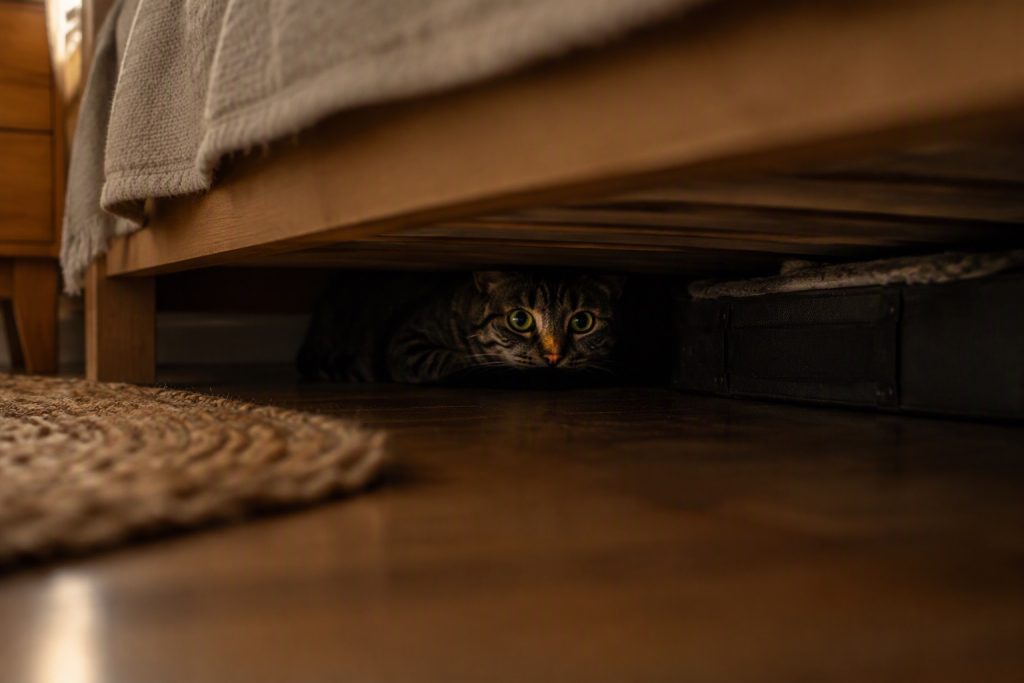
A cat hides after the vet because the visit was frightening and stressful, and hiding is how cats regain a sense of control. She may also still smell of the clinic, the anaesthetic, or other animals, which makes her own home feel unfamiliar and unsafe. Most cats settle within a few hours to a day once they feel secure again. If the hiding lasts longer than usual or comes with other signs, get her checked.
- Hiding is a normal stress response to the vet.
- Clinic smells can make home feel unfamiliar.
- Most cats settle within hours to a day.
- Long or unusual hiding needs a vet check.
Why does the vet upset cats so much?
A vet visit breaks almost every rule a cat relies on for feeling safe. She is taken from her territory, placed in a carrier, driven somewhere noisy and strange, and handled by unfamiliar people who may restrain her, take her temperature, or give an injection. The smells of other animals and disinfectant are overwhelming, and she cannot predict or control any of it. Cats are also highly territorial, so leaving home is stressful in itself. Even a gentle, well-run clinic is a lot for a small animal to process. On top of that, if she was unwell or in pain, the discomfort itself raises her stress. This is why a calm, unhurried visit and a familiar-smelling carrier help so much. Our guide to hiding as a sign of illness explains when hiding is more than just stress. Even a short journey and a gentle examination can leave a sensitive cat feeling shaken for the rest of the day. Some cats hide for an hour, others for most of a day, and both can be normal.

Cervical pillow, plush hammock, floor mat and paw cushion — four places to nap. Gives a cat a…
Why does she hide at home afterwards?
Once home, hiding is her way of switching off and recovering. Cats deal with threat by making themselves invisible, so retreating under a bed or into a cupboard feels like the safest possible choice. There may also be a scent problem: she now carries the smell of the clinic, which can make her own home smell wrong to her, and other cats in the household may treat her differently because of it. If she had anaesthesia, she may still feel woozy and disoriented, which adds to the urge to hide. Pain or nausea after a procedure or vaccination can also make her withdraw. None of this means she is being difficult; it means she needs quiet time to feel safe again. Our guide to the best cat hiding house explains how a proper den can help her recover. A quiet, covered bed in a familiar corner gives her somewhere to retreat that is not under the sofa. Do not wash her bedding right after a visit, because a familiar smell is reassuring.
How long is hiding normal?
For a routine visit, most cats come out within a few hours, and almost all are back to normal within a day. After a longer or more stressful appointment, or one involving sedation or surgery, she may take a day or two. What matters is the direction of travel: she should gradually emerge, eat, drink, use the litter box, and rejoin the household. If she is still hiding after 24 to 48 hours, or if she is not eating, drinking, or toileting, that is no longer routine stress and needs attention. A cat who hides after the vet and also vomits, breathes oddly, or seems painful may be having a reaction to a vaccine or medication, which requires prompt veterinary advice rather than patience. A cat who is not eating, drinking, or using the litter box after a visit needs a call, not more time. Some cats hide for a day or two after sedation, which is also normal.
How do I help her settle?
Give her space rather than chasing her. Set up a quiet, dim room with her bed, food, water, and litter box close by, and close the door to keep the household calm. Speak softly and avoid loud noises, visitors, and other pets. Do not drag her out from under the bed, because that removes the safety she has chosen and adds to her stress. Instead, sit nearby at a distance and let her come to you. Offer a favourite treat or a small meal, and keep the lights low. A pheromone diffuser can help some cats relax. Once she emerges, let her set the pace and keep things quiet for the rest of the day. Warmth, silence, and familiar smells are the fastest route back to normal. Keeping other pets away for a few hours stops her being crowded while she recovers. Warmth, dim light, and quiet are the three things that help most.

A thickened cloth bed is stepped into rather than climbed over. Try it near the window first, then…
When is hiding a red flag?
Hiding becomes a concern when it lasts longer than a day or two, when it comes with other symptoms, or when it is out of character. Call your vet if she is not eating or drinking, is vomiting or has diarrhoea, is straining to urinate, is breathing rapidly or with effort, has swelling at an injection site, or seems painful when touched. Facial swelling, hives, or difficulty breathing after a vaccine are emergencies. A cat who hides and also seems confused, wobbly, or unusually cold may be reacting to anaesthesia or medication. Trust your instincts: if she seems genuinely unwell rather than simply quiet, phone the clinic. It is always better to ask than to wait, and staff would rather reassure you than treat a problem that has grown. It also helps to note the time of the visit and any treatment given, so the clinic has the full picture. If she hides and also vomits or breathes oddly, seek help immediately.
How do I make the next visit easier?
Preparation reduces the stress on both of you. Leave the carrier out at home permanently with a soft blanket inside so it is ordinary furniture, not a signal of doom. Spray it with a calming pheromone before you leave, and cover it with a towel in the car. Book a quiet appointment time if you can, and ask whether the clinic offers low-stress handling or a feline-friendly waiting area. Bring a worn item of your clothing so the carrier smells like home. At the clinic, keep her carrier covered and elevated rather than on the floor. Afterwards, follow the same calm routine at home. With repetition and a gentle clinic, many cats become noticeably less distressed over time. A calm owner and a calm clinic do more for a nervous cat than any single product.
Frequently asked questions
- Is it normal for a cat to hide after the vet? Yes. It is a normal stress response, and most cats settle within a few hours to a day.
- Why does my cat hide after a vaccination? She may feel sore or slightly unwell, and hiding is her way of resting. Call the vet if she seems very unwell.
- Should I pull my cat out from hiding? No. Let her come out on her own, because forcing her out adds stress.
- How long should hiding last after a vet visit? Usually under 24 hours. Beyond 48 hours, or with other symptoms, contact your vet.
- How do I stop my cat hating the vet? Leave the carrier out at home, use pheromones and a cover, and ask the clinic about low-stress handling.



