

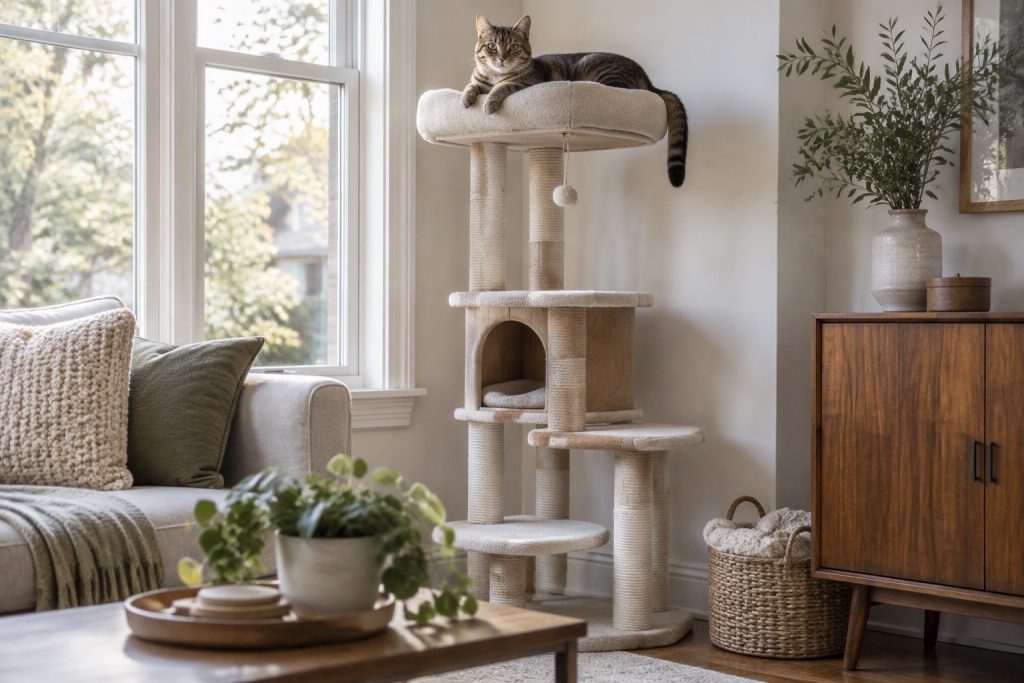
Most cat trees fail for one reason: they are put where they look best rather than where the cat wants to be. A tree in a quiet corner behind a door gets ignored, while one placed next to the sofa, by the window, or on the route the cat already patrols gets used every day. Placement matters more than height, materials or price, and getting it right is usually a matter of watching where the cat already chooses to sit and then putting the structure there instead of somewhere tidier. This is the change that turns a piece of ignored furniture into the most used object in the house.
- Cats use the tree placed where they already want to be, not the one in the quietest corner.
- Stability matters more than size; a wobbly tree will be avoided immediately.
- Cats like height and a view, so near a window or a family gathering point works well.
- In a multi-cat home, more than one high spot is needed so cats can avoid each other.
Where should I put my cat tree?
Start by watching the cat for a week and noting where it already spends time. Most cats have a favourite windowsill, a spot on the back of the sofa, or a place near a doorway where they monitor the house. Those are the places to put the tree, because you are adding height and comfort to a position the cat has already chosen. The two best locations in most homes are beside a window with a view and close to where the family sits, because cats like to be near activity without being in the middle of it. Avoid cold corners, hallways with draughts, and anywhere the cat cannot see the room. If the tree is in a spot you chose for tidiness rather than the cat, expect it to be ignored.

A cat tree built to give a cat height to climb, perch and watch from — height is…
Why does my cat ignore its cat tree?
Usually because it wobbles, it is too low, or it is in the wrong place. Stability is the most common problem, because a cat landing on a swaying platform once will not try again, and the whole structure becomes furniture for humans. Height is the second: a tree that only lifts the cat a foot off the floor does not give it the elevated view that makes the position valuable. Third is position. Smaller reasons include a tree that smells of a previous cat, a scratching surface the cat dislikes, or one squeezed against a wall so the cat cannot approach it comfortably. Before buying a replacement, try moving the existing tree next to the window or the sofa, and check whether it rocks. Those two changes fix a surprising share of cases.
Does the cat tree need to be by a window?
It does not have to be, but a window view adds a great deal. A tree beside a window gives the cat height, warmth, a resting spot and something to watch, which covers several needs in one place. If your windows already have a perch or a shelf, the tree can go somewhere else useful, such as near the main seating area where the cat can be part of household life from above. The one position to avoid is directly in front of a window that looks onto another cat’s territory, because that turns a resting spot into a source of tension and can cause staring and redirected aggression. If that happens, shift the tree or block the lower part of the glass. More on this is in the value of a window perch.
How tall should a cat tree be?
Tall enough that the cat can get its head above the room and look down on the space. For many cats that means a tree of around a metre and a half or more, though the exact figure matters less than the effect. A cat sitting at eye level with a human gains nothing; a cat sitting above human head height has the vantage point it naturally seeks. Height also helps in a multi-cat home, because the higher platforms let cats separate vertically instead of competing on the floor. If a full-height tree is not practical, a wall-mounted shelf or two at different heights achieves much of the same result. Whatever you choose, make sure the base is wide enough and heavy enough that the tallest platform does not tip when the cat jumps onto it.
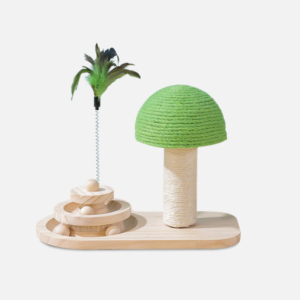
A double wood cat tree puts the perch where the cat actually wants to be. Check that the…
How many cat trees does a cat need?
One good tree is usually enough for a single cat, provided it is well placed and stable. In a multi-cat home, the answer is more about high spots than trees: there should be enough elevated resting places that every cat can be up at the same time without sharing. Two cats competing for one top platform creates exactly the kind of low-level tension that leads to blocking, staring and litter box avoidance. You can achieve the same result with a tree, a shelf, a perch and the top of a wardrobe, as long as they are spread out and each has a clear route. The test is simple: if one cat is on the highest spot, is there another equally good spot free? If not, add one.
Does a cat tree stop furniture scratching?
It helps, but only if the tree has a surface the cat wants to scratch and it is in the right place. A tall tree with sisal posts gives the cat a stable, vertical scratching surface, which is exactly what most cats prefer. The mistake is placing the tree in the corner while the cat scratches the sofa, because the cat has already told you where it wants to scratch. Put a scratching surface next to the sofa, whether that is part of the tree or a separate post, and the behaviour usually moves. A tree also provides climbing and perching, which reduces the boredom that drives some destructive behaviour in the first place. For the scratching side in more detail, see redirecting scratching.
Frequently asked questions
- Should a cat tree be against a wall? Usually yes, for stability, but leave enough room for the cat to approach and jump up comfortably. Do not wedge it into a gap the cat cannot enter easily.
- My cat only uses the top platform. Is that a problem? No, that is normal and a good sign. It means the height is right. Just make sure the tree is stable enough for repeated landings.
- Can I put a cat tree in a bedroom? You can, but cats often prefer to be where the household activity is. A living area placement usually gets more use.
- Do cat trees need to be anchored? A heavy base is usually enough. If the tree is tall and light, anchoring it to the wall is a sensible safety measure.
- How do I clean a cat tree? Vacuum the platforms regularly and spot clean with a pet-safe cleaner. A tree that smells strongly of other cats may be avoided.


