If your cat perches on the rim and urine arcs over the side, the usual causes are a box that is too small, litter that is too shallow, or a cat who has learned to balance on the edge to avoid stepping in wet litter. Occasionally it signals joint pain or a urinary problem. The fix is almost always a bigger, higher-sided box with deeper litter, not a lecture about aim.
- Usually a too-small box or too-shallow litter.
- A high-sided, uncovered box stops most overshoot.
- Cats perch on the rim to avoid stepping in wet litter.
- If it starts suddenly, rule out a medical cause first.
Why does my cat pee over the edge instead of in the box?
Cats do not miss on purpose. When urine lands over the side, one of a few things is happening. The box may be so small that she has to stand with her back feet on the rim to fit, which tilts her rear outward. The litter may be so shallow that her paws sink into wet clumps, so she perches on the edge to stay dry. She may be a long-bodied cat who simply outgrows a standard box. Or the litter tray may sit against a wall, so she backs up and has nowhere for the stream to go but over. Watch one trip to the box without disturbing her and you will usually spot which of these it is. Keep a note of whether she squats or stands, and where the box sits in the room. That single observation saves weeks of guessing and tells you which fix to try first.
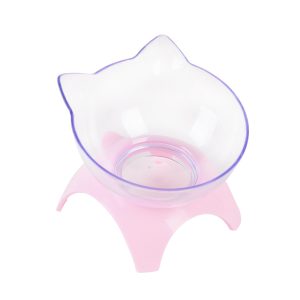
Tray, scoop, anti-splash mat and clumping litter. The whole litter corner, one box.
Will a high-sided box actually fix it?
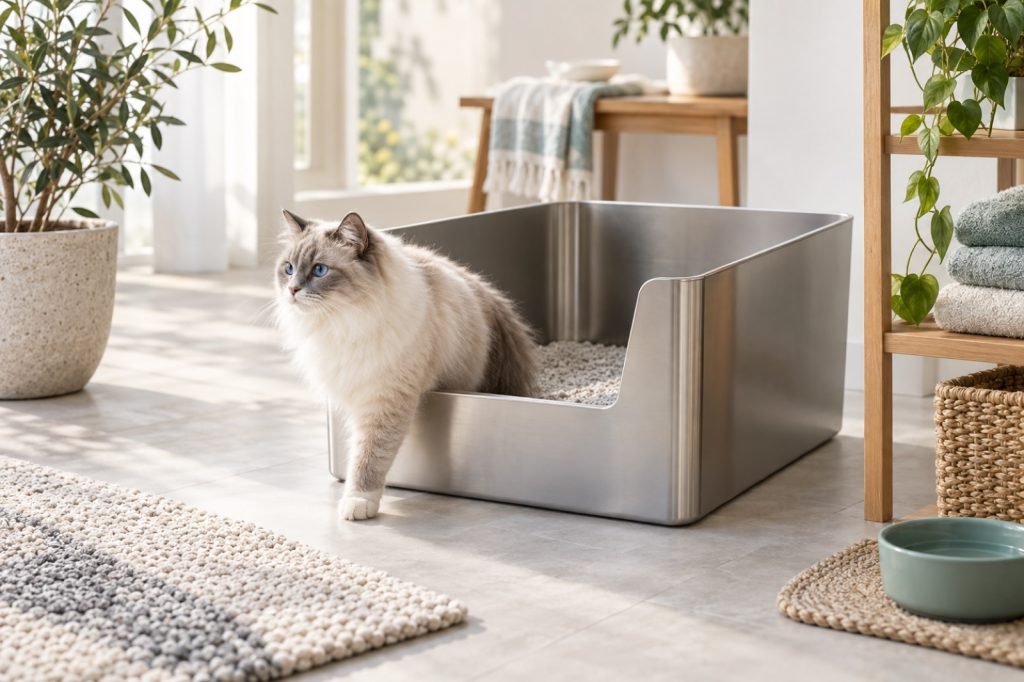
Often, yes — especially when paired with a larger footprint. A high-sided, uncovered box gives her room to stand fully inside and a wall to catch any overshoot. The key is the combination: high sides stop the arc, while extra length and width let her turn and squat without hanging over the rim. Choose a box with a low entry cut-out if you also have a kitten or a senior, so the high sides do not become a barrier to getting in. Keep it uncovered, because hoods trap odour and force a cat to crouch in a confined space, which can make the problem worse. If the box is genuinely enormous and she still overshoots, the next suspects are litter depth and posture. Give the new box a week before judging it, since cats are suspicious of change and may avoid a replacement for a few days.
How deep should the litter be?
Aim for five to seven centimetres of unscented clumping litter. That is deep enough for real digging and coverage, but not so deep that a cat sinks and feels unstable. Shallow litter is the single most common trigger for rim-perching, because every time she squats, her paws touch damp clumps. Top the box up rather than waiting until it looks low, since cats remove litter on their paws with every visit. Scoop twice daily if you can, because a box with old wet spots pushes cats to the edges. If your cat digs enthusiastically and flings litter everywhere, a high-sided box plus a litter mat handles the mess without punishing her natural behaviour. Deeper litter and a bigger box work together. Where the box sits matters as well, because a cat who feels exposed will rush and misjudge her stance — our guide to litter box placement covers the quiet, low-traffic spots that let her relax.
Is perching on the rim a sign of something else?
Sometimes it is pain, not preference. A cat with arthritis in her hips or spine may avoid the deep squat that a normal pee requires, so she stands stiffly and lets the stream fall where it will. The same is true of a cat with a sore paw or a recent injury. If your cat used to squat properly and now stands, watch her gait on the stairs and how she jumps onto the sofa. A box with a low entry and higher sides can help her keep her balance, and soft, deep litter cushions her joints. If the change came on suddenly, or comes with straining, blood, or frequent small visits, book a vet appointment before assuming it is behavioural. A cat who used to squat and now stands is telling you something changed, and the sooner you identify it the easier it is to fix.
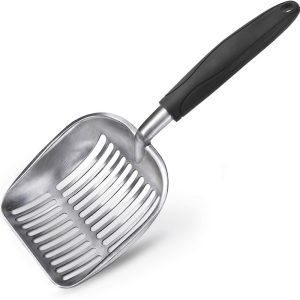
Aluminum Alloy Pet Cat Litter Scoop. Part of the KiKi Meow Cat Litter and Hygiene collection for cats.
Could this be a medical problem?
Yes, and it deserves a proper look. Urinary tract infections, crystals, cystitis, and bladder stones all change how a cat urinates, and a cat in discomfort often associates the litter box with pain. That can push her to the edge of the box, to a bath mat, or to a cool floor. Male cats are especially at risk of urethral blockage, which is a genuine emergency, so a cat who strains without producing urine, cries out, or stops eating needs a vet immediately. Even when the cause is behavioural, a quick check rules out the dangerous possibilities first. Only once your vet has cleared medical causes should you focus on box size, litter, and placement. The order matters: health first, then environment. If you have more than one cat, competition over a shared box can also drive this behaviour, which is why having enough boxes is part of the picture.
How do I clean up and stop repeat damage?
Clean accidents with an enzymatic cleaner rather than an ammonia-based household spray, because ammonia smells like urine and invites a repeat visit. Blot first, then soak, then let it air dry. Protect the surrounding floor with a waterproof mat or a washable puppy pad under and around the box. If the box sits against a wall, pull it out a few centimetres and add a splash guard or a higher back panel. Once you have upgraded the box and litter, keep the routine boring and consistent. Most cats stop overshooting within a week or two of getting a box that fits them, and the accidents fade as the new habit takes hold.
Frequently asked questions
- Why does my cat stand up to pee? Often a box that is too small or litter that is too shallow, but it can also be joint pain or a urinary issue.
- Do covered boxes make overshooting worse? They can, because a hood traps odour and limits space. An uncovered, high-sided box suits most cats better.
- My cat is a large breed. Will a normal box work? Usually not. Choose a box about one and a half times her body length, with high sides.
- Should I put a lid on the box to stop the mess? No. Fix the box size and litter depth instead, and add a splash guard if needed.
- When should I see a vet? If the behaviour is new, or comes with straining, blood, or repeated small trips, see a vet promptly.