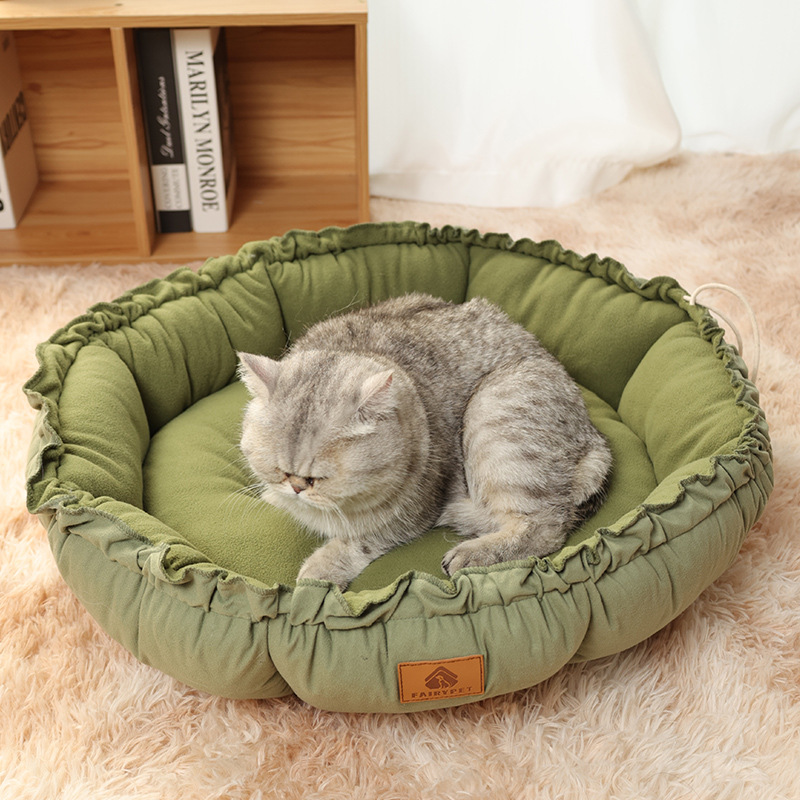
Yes, cats benefit from having a bed even though they sleep anywhere, because a designated bed gives them a warm, safe, scent-marked retreat that reduces stress and supports joint health as they age. You do not need an expensive bed, but you should offer at least one that matches your cat’s preferred sleeping style.
- Provide at least one bed so your cat has a defined, safe retreat she can scent-mark as her own.
- Beds reduce stress by giving a predictable den, especially for rescues and multi-cat homes.
- Older cats need padded, low-entry beds to protect aching joints from hard floors.
- Match the style to her personality—open for bold cats, enclosed for nervous ones.
Don’t cats just sleep anywhere they like?
It is true that cats will nap on a windowsill, a cardboard box, or your laptop, but that freedom does not mean they have no need for a bed. Those random spots are improvisations, and improvisations are often cold, draughty, or unsafe. A real bed gives her a consistent, warm, defended space she can return to and mark with her scent, which is deeply calming for a prey animal that likes to know where safety is. When a cat rejects a bed, the issue is usually the bed itself, not the concept—our guide on why cats ignore beds covers that. Providing a proper cat bed is less about forcing routine and more about offering a better option than the floor. Think of the bed as infrastructure: she may not use it every time, but when she wants security, it should be there and worthy of her.
What are the real health benefits of a cat bed?
The biggest health payoff is joint protection. Cats spend twelve to sixteen hours a day lying down, and hard surfaces slowly aggravate arthritis, which affects a large share of cats over seven years old. A padded bed cushions elbows, hips, and knees and keeps them off cold tiles that stiffen joints. Beds also conserve body heat; because cats run hotter than us, a warm nest prevents the muscle tension that comes from chilling. For a new rescue still settling in, a secure first month is easier when she has one den she controls. A bed can even improve sleep quality, and better sleep means a calmer, friendlier cat. None of this requires a luxury product—a simple padded mat counts—but the consistent support of a dedicated bed is genuinely better than whatever hard surface she finds, especially as she ages and her tolerance for cold, firm floors drops.
Cat Beds For Indoor Cats Cute Cat Beds With Versatile Dual-Use Design, Reversible Donut Pet Bed For And…
How many beds should one cat actually have?
For a single cat, two or three beds in different rooms is ideal, because cats are territorial nappers who like options depending on the time of day, the sun, and who else is around. A warm bed in the living room for daytime bird-watching, a quiet enclosed bed in the bedroom for night, and perhaps a mat in a sunny spot covers her bases. More than that is usually excess unless you have a large home. A rotation of beds also lets you wash one while another stays in service, which keeps smells down. If you have just one bed and she ignores it, the problem may be that it is in the wrong room, not that she needs none—see our notes on beds your cat ignores. Start with two: one open and warm, one enclosed and quiet, and let her teach you her preference through use.
What bed style matches which cat?
Matching style to temperament is the difference between a used bed and a rejected one. Confident, social cats tend to like open donut or bolster beds where they can sprawl and keep an eye on the room. Nervous, rescued, or multi-cat-household cats usually prefer enclosed cave beds that hide them from perceived threats. Senior cats need low sides they can step into without jumping and firm padding that does not swallow them. Kittens often like small, snug spaces that mimic a den. A rescue cat in her first weeks will almost always choose enclosure over exposure. Offer the wrong shape and she will sleep on the floor beside it; offer the right one and she claims it immediately. When in doubt, buy one open and one enclosed and place them in different rooms, then keep whichever she uses and relocate the other to a second favourite spot she frequents.
Are expensive beds worth it, or is a box fine?
A cardboard box is a decent temporary den, but it is cold, floppy, and impossible to wash, so it accumulates odour and loses shape fast. A purpose-made bed, even a cheap one, offers washable fabric, stable walls, and insulation that a box cannot. You do not need to spend a fortune—a basic padded bolster often outperforms a trendy designer cave if the location and style are right. A well-chosen bed pays back through less furniture shedding, lower stress, and easier cleaning. The features worth paying for are removable covers, non-slip bases, and the right shape for your cat; the features not worth paying for are gadgets, overly thick sides, and novelty shapes. If budget is tight, one good washable bed beats three cute but useless ones. Reserve the box for play, and give her a real bed for sleep, because comfort and hygiene are what actually improve her daily life.
When should I introduce a bed to a new cat?
Introduce a bed on day one, but place it where the cat already hides or rests rather than where you wish she would sleep. A new rescue is mapping territory and will gravitate to the quietest, safest corner, so put a simple enclosed bed there and let her discover it. During the critical first 30 days, consistency matters more than style; once she settles, you can add a second bed in a sunnier spot. Rub the bed with her scent or your worn t-shirt so it smells like safety from the start. Avoid moving it daily, because a cat needs the bed to stay put to trust it. If she ignores it at first, that is normal—give it a week and resist forcing her. The bed is a long-game comfort object, and the cats that benefit most are the anxious ones who, once they claim a bed, return to it for years as their reliable safe place.
Frequently asked questions
- Can a cat be perfectly healthy with no bed? She can survive, but she misses joint support, warmth, and a stress-reducing den she controls.
- Should the bed be machine washable? Yes—washable covers prevent odour buildup, which matters because cats scent-mark where they sleep.
- My cat ignores every bed—what now? Revisit location, scent, and style; our guide on ignored beds walks through the fixes.
- Do kittens need a different bed than adults? A small, snug, low-entry bed suits kittens; upgrade to larger, supportive styles as she grows.