Spaying is the surgical removal of a female cat’s ovaries and usually her uterus, performed under general anaesthetic. Most cats go home the same day, are groggy for a few hours, and are largely back to normal within a few days, with full healing over about ten to fourteen days. Expect to keep her quiet, protect the incision, and watch closely for any sign of complications during that time.
- It is a routine operation under general anaesthetic.
- Most cats go home the same day.
- Full healing takes about ten to fourteen days.
- Keep her quiet and the incision clean.
What exactly does spaying involve?
Spaying, or ovariohysterectomy, removes the ovaries and typically the uterus so the cat can no longer become pregnant or come into season. Some vets perform an ovariectomy, removing only the ovaries, which achieves the same goal with a smaller incision. The operation is done under general anaesthetic with pain relief, and the surgeon makes a small incision on the belly to reach the reproductive organs. The procedure usually takes well under an hour, and most cats are awake and stable enough to go home the same day. Spaying eliminates the risk of pregnancy, stops the heat cycle with its yowling and restlessness, and greatly reduces the risk of uterine infections and mammary tumours later in life. It is one of the most common routine surgeries in veterinary practice. Your vet will explain the exact technique they use and why it suits your cat. It is a day procedure for most cats, with no overnight stay required.
A breathable plastic grooming tool takes the undercoat first, which is where matting starts. Try it after a…
What happens on the day of surgery?
Your vet will ask you to withhold food for a set period before the operation, usually overnight, because anaesthesia is safer on an empty stomach. Water is generally allowed. On arrival, the team will check her over, confirm her weight for drug dosing, and place her under anaesthetic. During surgery she is monitored for heart rate, breathing, and temperature. Afterwards she is kept warm and watched until she is awake enough to go home. You will usually receive written aftercare instructions and a supply of pain relief. Ask any questions you have before you leave, including what to expect in the first 24 hours and who to call out of hours. It helps to write down the clinic’s phone number and the emergency contact before the day arrives, so you are not searching for it later. If you are unsure about anything on the discharge sheet, ask before you leave rather than guessing at home.
What does the first night at home look like?
She will probably be sleepy, unsteady, and a little grumpy as the anaesthetic wears off. Keep her in a warm, quiet room with soft bedding, away from stairs and other pets, and let her rest. Offer a small amount of water and a light meal, but do not be alarmed if she is not interested straight away. She may shiver, which is normal as her temperature normalises, so keep her warm. Do not let her jump onto furniture, and place her litter box, food, and water within easy reach. Check the incision once before bed, looking for bleeding or swelling. Some cats cry or seem restless; if she appears to be in real pain, or is vomiting repeatedly, call your vet. Our guide to the first vet visit is useful for building a good relationship with your clinic. Keep her warm and quiet, and check on her gently through the evening. Do not be alarmed if she is clingy or unusually quiet for a few hours.
How do I care for the incision?
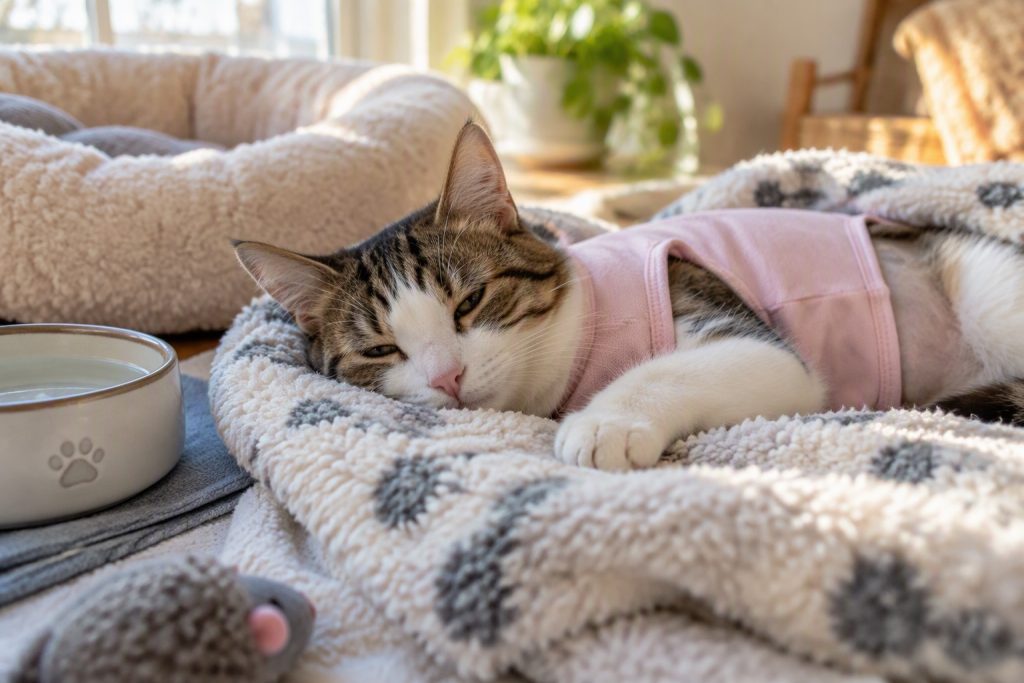
Keep the wound clean, dry, and undisturbed. Check it once or twice a day by looking only, and watch for redness, swelling, discharge, a bad smell, or the edges opening. She must not lick or chew it, so use whatever barrier your vet recommends: a recovery suit, a soft collar, or a cone. Use it consistently, even if she objects, because licking is the most common cause of complications. Do not apply creams or home remedies unless the vet approves them. Avoid bathing her and keep her away from damp ground until it heals. If you use clumping litter, ask whether a paper-based litter is better for the first few days. Any concern about the wound is worth a phone call, because catching an infection early is far easier than treating an advanced one. Our guide to neutering recovery covers the same principles in detail. A suit that fits well is usually easier than a cone for a belly incision, as long as the wound stays covered. Licking is the most common reason a wound becomes infected, so the barrier matters.

Cervical pillow, plush hammock, floor mat and paw cushion — four places to nap. Gives a cat a…
What are the risks and warning signs?
Spaying is very safe, but as with any surgery there are small risks, including bleeding, infection, a reaction to anaesthesia, and problems with the incision. Warning signs to act on include heavy bleeding, a lot of swelling or a hot, painful lump, pus or discharge, an open wound, persistent vomiting, refusal to eat or drink for more than a day, lethargy that worsens instead of improving, difficulty breathing, or straining to urinate. Call your vet if you see any of these. A little bruising and mild swelling are normal for a few days. Trust your instincts: if something seems wrong, a phone call costs nothing and may catch a problem early. Keep the clinic’s number and an out-of-hours emergency number to hand. Most complications are easily treated when they are caught early, which is why a quick call is always worthwhile.
When is she fully recovered?
Most cats are back to their normal selves within a few days, but the incision takes about ten to fourteen days to heal fully, and you should restrict jumping and rough play for that whole period. Your vet will usually check the wound at a follow-up visit and tell you when she is cleared for full activity. Until then, keep her indoors and away from anything that could pull at the wound. Once she is healed, her behaviour may change for the better: no more heat cycles, less yowling, and a reduced urge to roam or escape. If she was spayed as an adult, the change may be gradual as her hormones settle. If you notice any behavioural or physical concerns after recovery, raise them with your vet at the next check. A short follow-up visit lets your vet confirm the incision has healed before she returns to full activity. If she was in season when she was spayed, recovery is usually no different.
Frequently asked questions
- How long does it take a cat to recover from spaying? Most are back to normal within a few days, with full healing in about ten to fourteen days.
- Do cats have to stay overnight after spaying? Most go home the same day, once they are awake and stable.
- Is spaying painful for a cat? The surgery is done under anaesthetic with pain relief, and discomfort afterwards is managed with medication from your vet.
- Should I use a cone or a suit after spaying? Either can work. A recovery suit is often preferred for a belly incision, as long as the wound stays covered.
- What if my cat is still sleepy the day after spaying? Mild tiredness is normal, but worsening lethargy, vomiting, or refusal to eat needs a vet call.