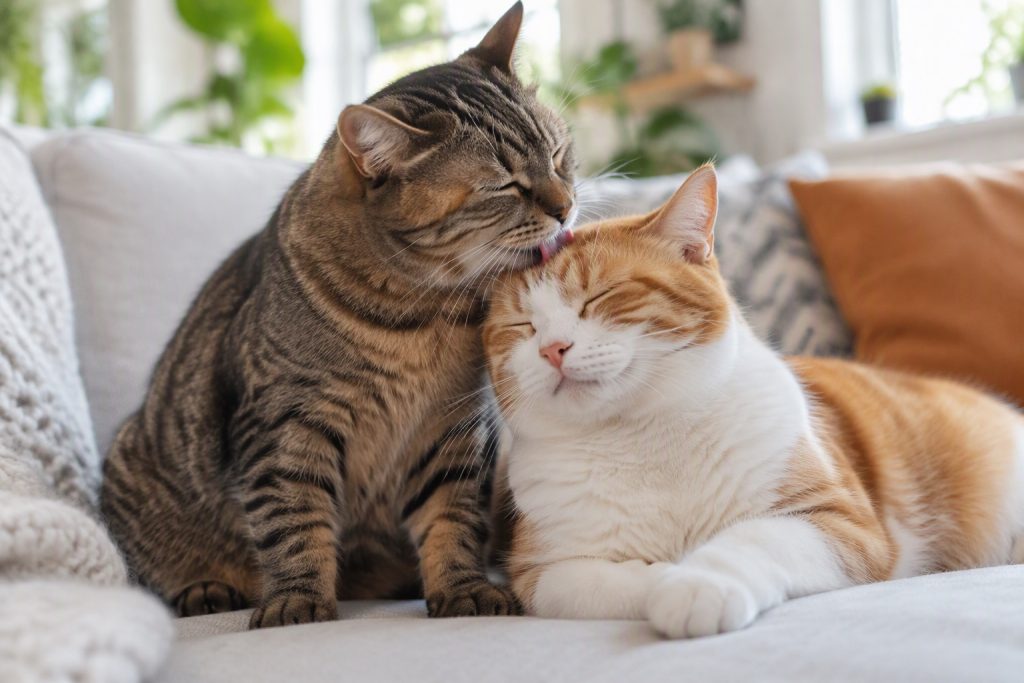
Cats groom other cats as a form of social bonding, a way of sharing scent, and a sign of trust between cats who live together. It is usually affectionate and harmless, especially when it happens between cats who are relaxed and take turns. It can become a problem when one cat is obsessive, when the grooming is one-sided and unwanted, or when it escalates into biting and pulling out fur, which can be a sign of stress or an underlying skin problem.
- Grooming another cat is usually social bonding.
- It shares scent and reinforces a shared group smell.
- Healthy grooming is mutual and relaxed.
- Obsessive, one-sided grooming can signal stress.
Why do cats groom each other?
Allogrooming, as it is called, serves several purposes. The most important is social: grooming another cat reinforces a bond and signals trust, because a cat must be relaxed to allow another to touch her vulnerable areas such as the head and neck. It also spreads scent, creating a shared group odour that helps cats recognise each other as part of the same social unit, which reduces tension in a multi-cat home. Grooming can be a form of affection, but it can also be a displacement behaviour, something a cat does when she is slightly anxious or when she wants to defuse a situation. Mother cats groom their kittens constantly, and that early experience shapes the behaviour. In many pairs, grooming is a peaceful, reciprocal ritual, and cats often take turns, each licking the other’s head and neck. It is one of the clearest signs that two cats accept each other.

Rainbow-striped plush cylinder. Keeps a bored indoor cat busy and burns off restless energy. Made from fleece and…
Is grooming other cats a sign of dominance?
Sometimes, but not always, and context decides. When grooming is relaxed and mutual, with both cats purring and taking turns, it is simply bonding. When one cat consistently grooms the other while the recipient is tense, tries to move away, or is pinned down, the behaviour can be a subtle assertion of control rather than affection. In that case the groomer may hold the other cat in place, and the session can end in a scuffle. Dominance in cats is not as clear-cut as in dogs, and much of what looks like hierarchy is really about access to resources and comfort. Watch the recipient’s body language: relaxed ears, soft eyes, and a still body mean it is welcome, while flattened ears, a twitching tail, and attempts to leave mean it is not. If one cat is regularly stressed by the other’s grooming, you may need to separate them at times and provide more resources, such as extra beds, bowls, and litter trays. Our guide on why cats knead looks at a related comfort behaviour.
When is grooming another cat a problem?
It becomes a problem when it causes harm or distress. Signs include bald patches or thinned fur on the recipient, especially around the neck, shoulders, and back; skin that looks red, sore, or scabby; a cat who flinches, hisses, or runs away when the other approaches; and sessions that frequently end in swatting or biting. Obsessive grooming of another cat can also indicate that the groomer is stressed, bored, or anxious, or that she has an itch or a skin condition herself that she is transferring to her companion. Occasionally a cat will over-groom a housemate who is unwell, which is thought to be a response to a change in the other cat’s smell. If the recipient is losing fur or seems unhappy, treat it as a welfare issue and intervene. Our article on why cats groom excessively covers the individual side.
How do I stop unwanted grooming between my cats?
Start by reducing tension and giving each cat space. Provide plenty of resources, including separate beds, perches, feeding stations, water bowls, and litter trays, so neither cat feels she must compete or submit. Give them the option to be apart, with vertical space and rooms they can access alone, since cats often resolve tension by avoiding each other. Break up grooming sessions gently if one cat is unhappy, by distracting them with a toy or a treat, rather than shouting, which adds stress. If the grooming is obsessive, increase enrichment for the groomer: more play, puzzle feeders, and climbing opportunities reduce anxious behaviours. Check both cats for skin problems, parasites, and allergies, since itchy skin can drive over-grooming. If tension between the cats is significant, consider a pheromone diffuser and, if it persists, ask your vet or a behaviourist for help with the relationship rather than just the behaviour.
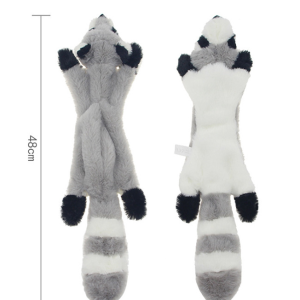
Made from cloth Key features 【Name】 : cat simulation animal sound shell toy[Fill]: No fill, 2 built-in BB…
Do cats groom humans the same way?
Yes, and it usually means the same thing: affection and bonding. When a cat licks your hand, arm, or hair, she is treating you as part of her social group, sharing scent and expressing trust. Cats often groom their favourite person in the same places they would groom another cat, such as the hands and head, and some do it when they are relaxed and content. Occasionally grooming is a request, such as when a cat licks you and then walks toward her bowl. Some cats groom people when they are slightly anxious, as a self-soothing behaviour. The licking is generally harmless, though a rough tongue can be uncomfortable on bare skin, and you can redirect her gently if needed. If a cat suddenly starts grooming you obsessively, especially in one spot, or seems agitated, it can be worth checking whether she is stressed or unwell. For anything persistent, ask your vet.
When should I see a vet about grooming behaviour?
See a vet if either cat develops bald patches, red or broken skin, or a dull, greasy coat, since these can indicate over-grooming, parasites, allergies, or a skin infection. If one cat is losing weight, hiding, or becoming withdrawn because of the other’s attention, that is a welfare concern and may need veterinary or behavioural support. A sudden increase in grooming behaviour, in either direction, can also reflect stress, pain, or illness, so note when it started and whether anything changed, such as a new pet, a move, or a new routine. If the groomer is biting and pulling fur, the recipient needs a check to make sure there is no skin problem causing the attention, and the groomer may need assessment for anxiety. Do not use punishment, which worsens stress. For anything persistent, or if you are unsure whether the behaviour is social or medical, get professional advice.
Frequently asked questions
- Why does my cat groom my other cat? Usually as social bonding and scent sharing, which reinforces their relationship.
- Is grooming a sign of dominance? Sometimes, if the recipient is tense or pinned. Mutual, relaxed grooming is just affection.
- Why is one cat losing fur from being groomed? Over-grooming by a companion can cause bald patches. It may reflect stress or a skin problem.
- Should I stop my cats grooming each other? Only if one is distressed or losing fur. Otherwise it is healthy bonding.
- Does my cat grooming me mean she loves me? It is a strong sign of trust and bonding, treating you as part of her social group.