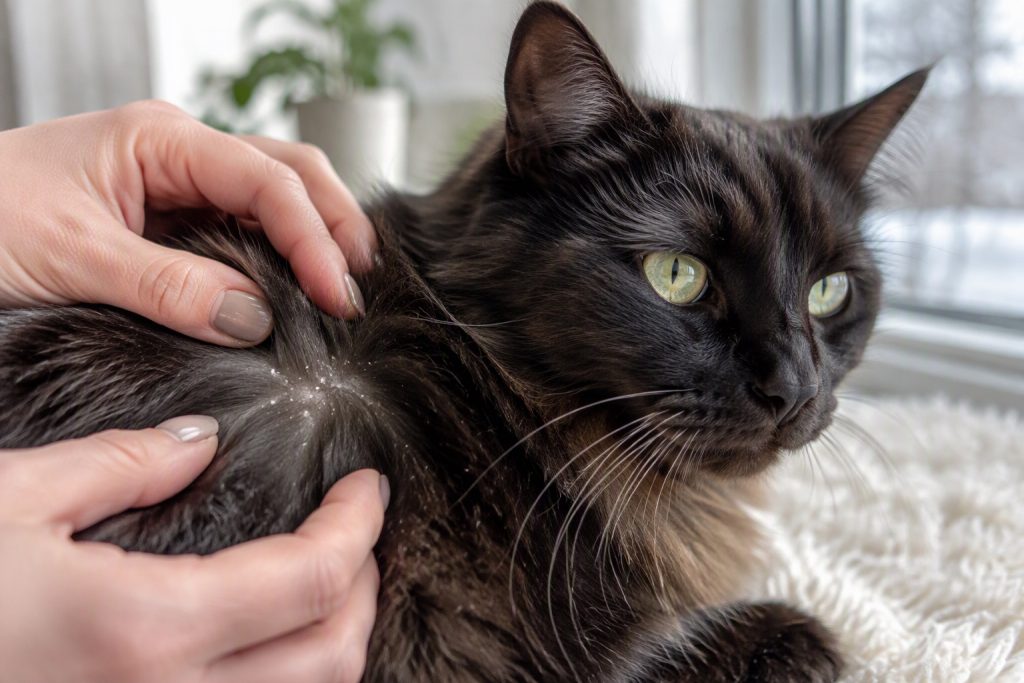
Winter dandruff in cats is usually dry skin caused by low indoor humidity, overheated homes, and reduced grooming, and it shows up as white flakes on the coat, especially along the back and near the tail base. It is often harmless and improves with better hydration, more humidity, and gentle grooming. But dandruff can also signal parasites, allergies, poor nutrition, or an underlying illness, so flakes that persist or come with itching, hair loss, or weight change need a vet.
- Low humidity and indoor heating dry out skin.
- Flakes on the back and tail base are classic.
- Hydration, humidity, and gentle brushing help most cases.
- Itching, bald patches, or weight loss needs a vet.
Why do cats get dandruff in winter?
Winter dandruff is mostly about moisture, or the lack of it. Cold outdoor air holds little water, and when it is heated indoors the relative humidity drops further, which pulls moisture from the skin. Skin that is too dry sheds cells in visible flakes instead of renewing smoothly. Cats who sit near radiators, fires, or heating vents dry out even more. Reduced grooming is another factor: a cat who grooms less, whether because of age, arthritis, obesity, or dental pain, leaves dead skin and hair on the coat, and the flakes become more obvious. Static electricity from dry air can make the coat stand up and the flakes cling. Indoor allergens such as dust and mould also rise in winter, and they can irritate skin. For most cats, these seasonal factors are the whole explanation, and the dandruff improves once humidity and grooming improve. Our guide on cat dandruff treatment covers the options.
Nail scissors, bath brush, de-shedding glove and a drying towel — the full groom in one box. Cuts…
Is winter dandruff a sign of something serious?
Usually not, but it can be. Dry skin alone produces fine, loose flakes without redness, itching, or hair loss, and it responds to moisture and grooming. Dandruff that comes with itching, scratching, biting, redness, scabs, or bald patches points to another cause, such as fleas, mites, a fungal infection, or an allergy. Cheyletiella mites, sometimes called walking dandruff, cause heavy flaking and itching, and they can spread to people. Ringworm, despite its name, is a fungal skin infection that causes scaly, bald patches. Poor nutrition, especially a lack of essential fatty acids, can cause a dull, flaky coat, and so can an underlying illness such as kidney disease, thyroid problems, or diabetes. A cat who is unwell often has a poor coat alongside other signs. If the dandruff is severe, persistent, or accompanied by other symptoms, have it assessed rather than treating it as purely cosmetic.
How can I treat winter dandruff at home?
Start with hydration and humidity. Raise the moisture in the air with a humidifier, keep your cat away from direct heat sources, and increase her water intake by offering wet food and a water fountain. Brush her gently several times a week with a soft brush to remove dead skin and distribute natural oils, being careful not to scratch irritated skin. A damp cloth wiped lightly over the coat can help, but do not bathe a cat frequently, because over-bathing strips oils and worsens dryness. If she needs a bath for a skin condition, use only a cat-specific, moisturising shampoo and follow your vet’s advice. Good nutrition matters too: a complete diet with adequate omega fatty acids supports skin health, and your vet may recommend a supplement. Keep her bedding clean and washed in unscented detergent. Avoid human moisturisers and oils, which she will lick off and which may be harmful. Our article on dry skin treatment for cats goes further.
What about diet and supplements?
Skin health starts from within, so diet is worth reviewing. A complete, balanced cat food with good-quality animal protein provides the building blocks for healthy skin and coat. Essential fatty acids, particularly omega-3 and omega-6, support the skin barrier and can reduce flaking, and some cats benefit from a vet-recommended fish oil or skin-support supplement. Do not give human supplements without checking, because doses and ingredients can be unsuitable, and some oils and additives are harmful to cats. If your cat is on a prescription diet, ask your vet before adding anything, since supplements can unbalance a therapeutic food. Poor coat condition can also reflect an underlying problem absorbing nutrients, such as intestinal disease, so if diet changes do not help, a vet visit is warranted. Weigh her regularly, because both weight loss and obesity affect coat condition. Improving nutrition and hydration together often makes a visible difference within a few weeks, especially through winter.
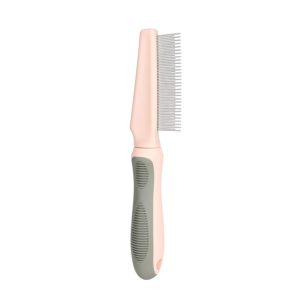
Brush designed to lift loose hair out of a cat's coat — the hair has to go somewhere…
How do I prevent winter dandruff next year?
Build the habits before the heating season starts. Run a humidifier through winter, or place bowls of water near radiators, and keep rooms at a steady, moderate temperature rather than very hot. Give your cat access to places away from direct heat, and provide warm but not scorching sleeping spots. Keep up regular gentle brushing all year, and increase it during shedding periods so dead skin and hair do not accumulate. Feed a complete diet with adequate fatty acids, and consider a vet-approved supplement if she is prone to dry skin. Keep her well hydrated with wet food and moving water, and keep bedding clean. Maintain a healthy weight and help older cats groom areas they cannot reach. If your cat has a chronic condition that affects her coat, follow your vet’s management plan. These measures reduce dandruff and keep her coat in better condition overall, not just in winter.
When should I see a vet about dandruff?
See your vet if the dandruff is heavy or persistent, if it does not improve with humidity, hydration, and grooming, or if it comes with itching, redness, scabs, or hair loss. A cat who is scratching constantly, losing fur in patches, or developing sores may have parasites, an infection, or an allergy that needs specific treatment. Dandruff alongside weight loss, increased appetite or thirst, vomiting, diarrhoea, or lethargy can indicate an underlying illness, and a dull, flaky coat is sometimes the first visible sign. Older cats and cats with chronic conditions deserve a check when their coat changes. Your vet may examine skin scrapings, test for mites and fungus, run blood work, and recommend a medicated shampoo or treatment. Do not use human medicated shampoos or over-the-counter parasite products intended for dogs, because some are toxic to cats. For anything persistent, or if you are unsure of the cause, get professional advice.
Frequently asked questions
- Why does my cat have dandruff in winter? Low humidity and indoor heating dry out the skin, and reduced grooming makes flakes more visible.
- Is cat dandruff contagious to humans? Ordinary dry-skin dandruff is not, but mites and fungal infections that cause flaking can spread to people.
- Can I bathe my cat to treat dandruff? Only occasionally and with a cat-specific moisturising shampoo, since frequent bathing worsens dryness.
- What supplements help cat dandruff? Omega fatty acids can help, but ask your vet before adding any supplement, especially with a prescription diet.
- When is dandruff a health problem? Itching, bald patches, scabs, or dandruff with weight loss or lethargy needs a vet visit.