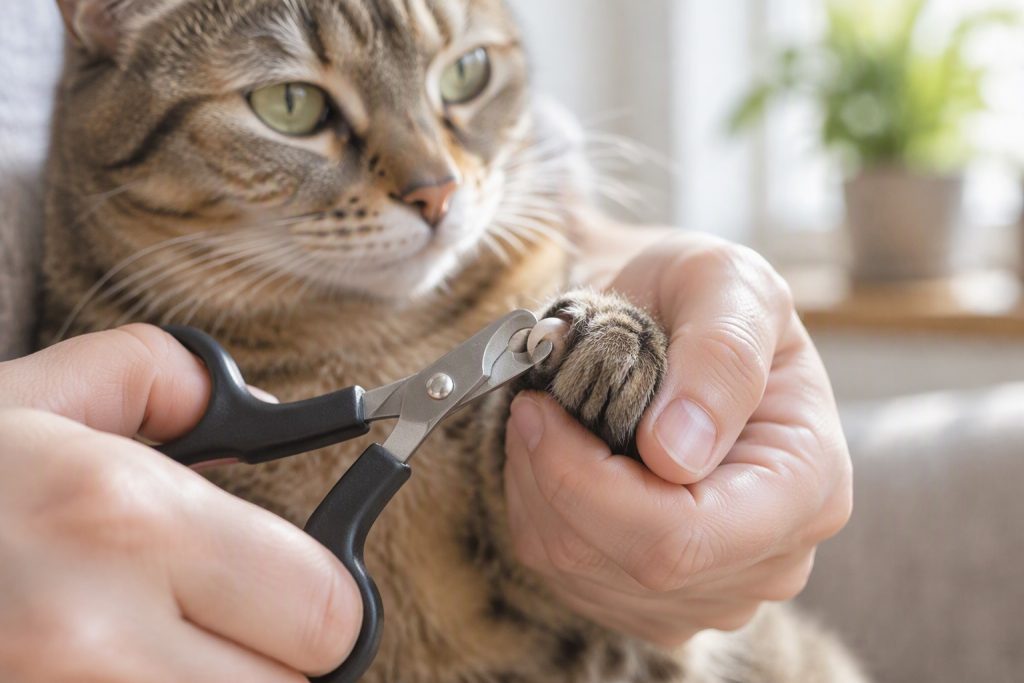
The best cat nail scissors are small, sharp, and comfortable to hold, with curved blades and rounded tips so you can see exactly where you are cutting and avoid the quick, the sensitive blood supply inside each claw. Look for stainless steel blades that stay sharp, a handle that gives you control during a wriggly session, and a size that suits the small, curved claws of a cat. Scissor-style trimmers give the most visibility and control, which makes them a good choice for owners who are new to trimming.
- Sharp, stainless steel curved blades work best.
- Rounded tips help you avoid the quick.
- Scissor style gives the most control.
- Small size suits a cat’s curved claws.
Why choose scissors over clippers for cats?
Scissor-style trimmers have a few advantages that make them a favourite for cats. The open blade design lets you see the claw clearly as you position the blade, which is important because cat claws are small, curved, and contain a quick that you must avoid. Because you can see the whole claw, you are less likely to cut too close. Scissors also tend to be gentler on the claw, since they shear cleanly rather than crushing, and they are often quieter than guillotine clippers, which matters for cats who are startled by clicking sounds. The main drawback is that you need a steady hand, because a wriggling cat can cause the blade to slip. For cats with thin, curved claws, and for owners who want maximum visibility, scissors are often the better tool. Our article on the best cat nail clippers compares the main styles.
A plastic dematting comb clears the loose hair before it lands on the furniture. Use it before the…
What features make cat nail scissors safe and effective?
Sharpness is the most important feature, because a dull blade crushes and splinters the claw rather than cutting it cleanly, which is painful and can lead to splitting. Look for stainless steel blades that hold an edge, and replace or sharpen them when they start to drag. Curved blades suit the shape of a cat’s claw better than straight blades, because they let you follow the curve. Rounded safety tips reduce the risk of accidentally poking your cat if she moves suddenly, and they also protect the skin around the claw. A handle that fits your hand and offers grip is essential, since you need control in a small space. Finally, the scissors should be small enough to manoeuvre around tiny claws, because large dog clippers are unwieldy on a cat. A locking mechanism is a nice extra, since it keeps the blades closed and safe between uses.
How do I trim my cat’s claws safely?
Go slowly and keep the session positive. Start by handling your cat’s paws when she is relaxed, so she gets used to having her feet touched, and reward her with treats and praise. When you are ready, hold a paw gently, press the pad to extend a claw, and identify the quick, which is the pink or translucent part visible inside the claw. Cut only the clear, curved tip, well in front of the quick, and take off just a small amount at a time, because it is easier to trim again than to fix a cut quick. Trim one or two claws per session if she is nervous, and stop before she becomes stressed. If you do nick the quick, apply a little styptic powder or cornstarch and apply gentle pressure, and give her a break. Our guide on how often to trim cat claws covers the schedule.
How often should I trim my cat’s claws?
Most indoor cats need their claws trimmed every two to three weeks, though this varies with the individual. Cats who use scratching posts and walk on hard floors wear their claws down naturally, so they may need trimming less often, while cats who are less active, older, or who do not scratch much may need it more often. Indoor cats generally need more frequent trimming than outdoor cats, because they do not wear their claws down on rough ground. You will know it is time when you can feel the claw tips catching on fabric or skin, or when the claws look long and sharp. Senior cats especially need regular attention, because they may not groom or scratch as effectively, and long claws can curl into the pad and cause pain. Set a routine and check the claws weekly so you can trim a little at a time rather than waiting until they are very long.
Nail scissors, bath brush, de-shedding glove and a drying towel — the full groom in one box. Cuts…
What should I do if my cat hates having her claws trimmed?
Build tolerance gradually rather than forcing it. Start by touching her paws briefly and rewarding her, then progress to pressing the pad to extend a claw, then to touching a claw with the scissors without cutting, and only then to trimming one claw. Keep each session very short, and always end on a success, even if that means trimming just one claw. Use treats, gentle praise, and a calm environment, and try after a play session when she is relaxed. If she becomes distressed, stop and try again later. Some cats do better with two people, one to hold and one to trim, or with a towel wrap that keeps her calm without restraint that frightens her. If trimming is genuinely impossible, ask your vet or a groomer to do it, and check whether long claws are causing problems. Never force a struggling cat, because it risks injury to both of you and makes future sessions harder.
How do I care for the scissors themselves?
Good care keeps the blades sharp and safe. Wipe the blades with a damp cloth after each use to remove any residue, then dry them thoroughly, because moisture causes stainless steel to spot or rust over time. Store the scissors closed and locked, out of reach of children and pets, and keep them somewhere dry. Check the blades regularly for nicks, rust, or dullness, since a damaged blade will crush rather than cut. If the scissors come apart, follow the maker’s instructions for cleaning and reassembly. Do not use the scissors for anything other than claws, because cutting paper, string, or other materials dulls the edge quickly. When the blades start to drag or the claw splinters instead of slicing cleanly, replace or sharpen them. A sharp, well-kept pair of scissors is safer for your cat and easier for you, and it makes the whole routine quicker and less stressful.
Frequently asked questions
- Are scissors or clippers better for cat nails? Scissors give more visibility and control, while clippers can be faster. It depends on your cat and your confidence.
- How do I avoid cutting the quick? Trim only the clear tip, well in front of the pink quick, and take off small amounts at a time.
- What if I accidentally cut the quick? Apply styptic powder or cornstarch with gentle pressure and give your cat a break.
- How often should I trim my cat’s claws? Every two to three weeks for most indoor cats, checking weekly and trimming as needed.
- My cat hates nail trims. What can I do? Build tolerance slowly with treats and short sessions, or ask your vet or a groomer for help.