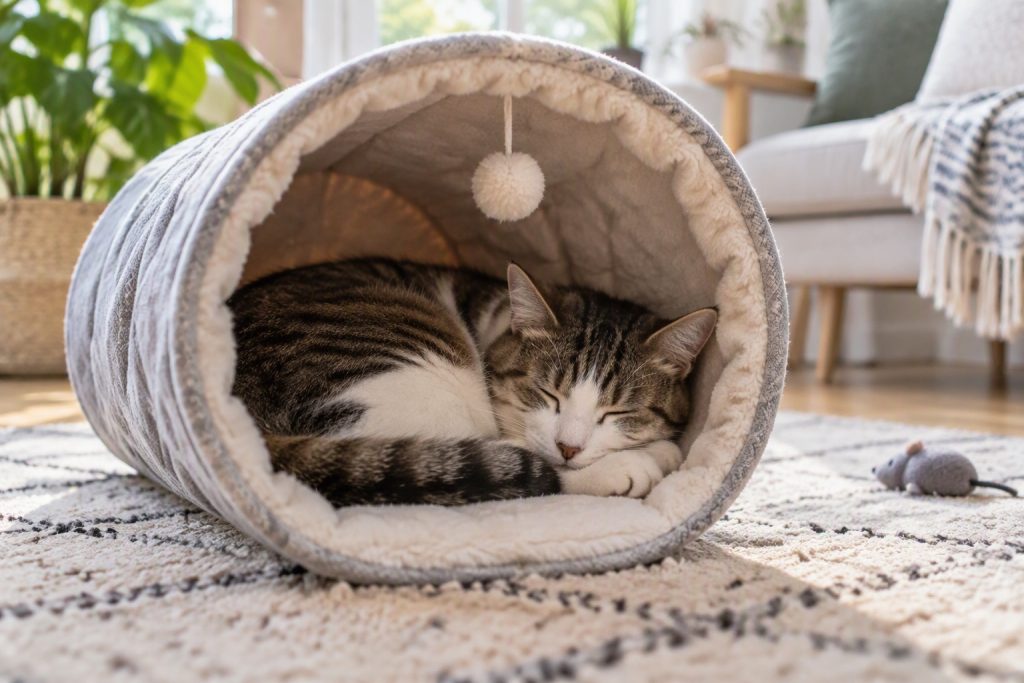
The best cat tunnel bed is a collapsible tube with a soft, washable lining that gives your cat both a hiding place and a place to sleep. The ideal one is wide enough for an adult cat to turn around in, long enough to feel like a real burrow, and stable enough that it does not roll when she dives in. Look for a removable, machine-washable inner pad or liner, and crinkle or peek-hole features if your cat enjoys those. A tunnel bed suits cats who like to hide, ambush, or curl up in enclosed spaces.
- Wide enough for an adult cat to turn around.
- Washable liner or pad is essential.
- Stable so it does not roll when she dives in.
- Ideal for cats who love to hide and ambush.
Why do cats love tunnel beds so much?
Tunnels satisfy two deep feline instincts at once: shelter and hunting. In the wild, a narrow, enclosed space is a safe den where a cat can rest without being approached from behind, and a tunnel replicates that sense of security. At the same time, a tunnel is a perfect ambush position, letting a cat watch the room through an opening and pounce on passing toys, other cats, or your ankles. The combination of a snug, dark interior and a view out is why so many cats choose a tunnel over a conventional bed. A tunnel bed adds the comfort of a padded base, so it works as both a play structure and a sleeping spot. Cats who are shy, who live with other cats, or who are new to a home often benefit most, because the tunnel gives them control over how much contact they have. Our article on cat tunnel toys covers the play side of tunnels.

Cervical pillow, plush hammock, floor mat and paw cushion — four places to nap. Gives a cat a…
What size and shape should I choose?
Size is the most common mistake. A tunnel that is too narrow forces a cat to back out, which many cats dislike, so choose one wide enough that she can turn around comfortably inside, typically around twenty-five centimetres in diameter for an average adult cat. Length matters for the burrow feeling, with a longer tunnel, or one with two or three connected sections, feeling more like a real den, though a very long tunnel needs to be stable. Straight tunnels are simplest and most stable, while Y-shaped or multi-way tunnels add interest and ambush options. For a tunnel bed specifically, look for one with a solid or padded floor rather than a bare tube, so it is comfortable to sleep in. If you have a large cat, check the dimensions carefully, because many tunnels are designed for average or small cats.
What materials and features matter most?
Washability is the feature that determines whether a tunnel bed gets used long-term. It will collect fur, dust, and saliva, and a tunnel that cannot be cleaned becomes unpleasant and eventually ignored. Look for a removable, machine-washable liner or inner pad, or at least a design that can be hand-washed and air-dried. Stability is the second key feature: a tunnel with a wire frame that holds its shape, plus a non-slip base or a weighted floor, will not roll away when your cat launches into it. Crinkle fabric is popular because the sound mimics rustling prey, but check the volume, since some cats are startled by loud crinkle. Peek-holes and hanging toys add interest. Avoid flimsy tunnels that collapse instantly, and check seams and wire ends, because exposed wire can scratch a cat or tear fabric.
How do I get my cat to use a tunnel bed?
Start by placing it somewhere she already likes to rest, such as beside the sofa or in a quiet corner, rather than in a busy spot. Leave it out with a soft blanket or a worn item of your clothing inside, so it smells familiar and inviting. Entice her in with a wand toy, dragging the toy through or across the opening so she follows it inside, and reward her with a treat when she goes in. Some cats take to a tunnel instantly, while others need a few days, so be patient and do not force her in, which will only make it feel unsafe. If she ignores it, try moving it to a different location or angle, and add catnip or silvervine. Tunnels work well alongside other hiding spots, and many cats rotate between them depending on their mood. For cats who prefer to sleep enclosed, our article on whether cats need beds is a useful companion read.
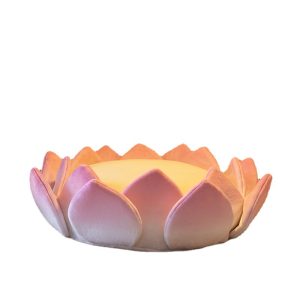
A thickened cloth bed is stepped into rather than climbed over. Try it near the window first, then…
Are tunnel beds safe?
Most are safe with a few checks. Supervise the first sessions so you can see whether your cat is a chewer who might ingest fabric or wire, and remove the tunnel if she is. Inspect it regularly for tears, exposed wire, and loose stitching, since a cat who plays hard can rip seams and expose sharp frame ends. Make sure the tunnel does not block a doorway or a walkway where someone could trip, and avoid placing it near stairs or anywhere a sudden launch could cause a fall. If the tunnel has hanging toys, check that the cords cannot wrap around a limb or neck. Finally, choose a tunnel made from non-toxic materials with no strong chemical smell, and wash it regularly to keep it hygienic. With those precautions, a tunnel bed is a safe and enriching addition to most homes.
How do I clean and maintain a tunnel bed?
Cleaning depends on the design, so read the care label first. Tunnels with a removable liner are the easiest: unzip or detach the liner, wash it on a gentle cycle in a mild, unscented detergent, and air-dry it fully before reassembly. If the whole tunnel is machine-washable, put it in a laundry bag to protect the frame, use a gentle cycle, and reshape it while damp. For tunnels that cannot be washed, vacuum the interior and wipe it down with a damp cloth, and spot clean accidents immediately. Check the wire frame for bends and the fabric for tears after every wash. In between, shake out loose fur and debris, and air the tunnel outside occasionally. A clean tunnel is not just more hygienic; it is also more appealing, because cats avoid enclosed spaces that smell stale.
Frequently asked questions
- Do cats actually sleep in tunnel beds? Many do, especially cats who like enclosed, den-like spaces. Add a soft pad to make it more inviting.
- What size tunnel is best for a cat? Wide enough to turn around in, usually around twenty-five centimetres in diameter, and long enough to feel like a burrow.
- How do I stop a tunnel from rolling? Choose one with a non-slip base or a weighted floor, or place it against a wall or furniture.
- Are crinkle tunnels safe? Yes, but check the noise level, since some cats dislike loud crinkle, and inspect for exposed wire.
- Can I wash a cat tunnel? Only if the label allows it. Use a removable liner where possible and air-dry fully before use.