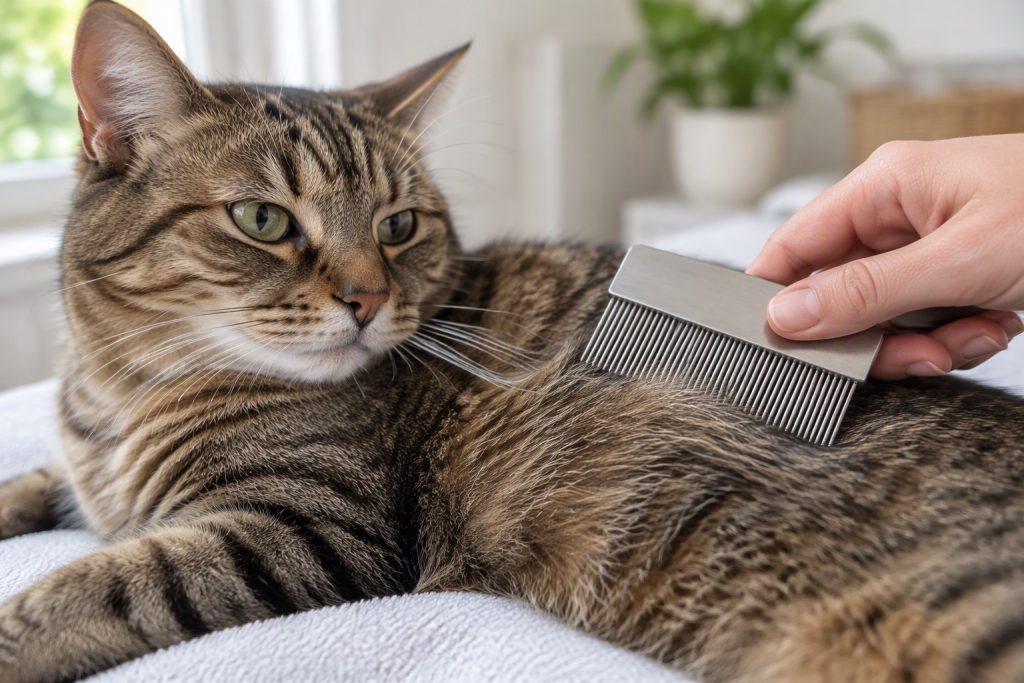
The best flea comb for cats is one with fine, closely spaced metal teeth that reach through the coat to the skin, a comfortable handle you can grip during a wriggly combing session, and teeth strong enough not to bend. A flea comb does not cure a flea problem on its own, but it is the most reliable way to check whether fleas or flea dirt are present, and it is a useful part of a wider flea-control plan. Look for a comb with a rounded tip so it does not scratch your cat’s skin.
- Fine, closely spaced metal teeth work best.
- Rounded tips protect the skin.
- Comb to check for fleas and flea dirt.
- Use alongside proper flea treatment, not instead.
Why use a flea comb instead of just looking?
Fleas are fast, small, and often hidden in dense fur, and many cats groom away the evidence before you see it. A flea comb does two useful things. First, it catches adult fleas, which you can then drown in soapy water. Second, and more importantly, it collects flea dirt, the dark specks of digested blood that fleas leave behind. Flea dirt is the most reliable sign of an infestation, because a cat may groom away the fleas themselves but leave the dirt behind. To check, comb over a white surface, such as a damp paper towel, and if the dark specks turn reddish-brown when wet, that is flea dirt and confirms fleas. Combing also gives you a chance to inspect the skin for redness, scabs, and signs of flea allergy, and it removes some of the fleas mechanically. Our article on cat flea treatment explains the full approach to clearing an infestation.
Nail scissors, bath brush, de-shedding glove and a drying towel — the full groom in one box. Cuts…
What should I look for in a flea comb?
The teeth matter most. They should be made of metal rather than plastic, because plastic teeth bend and do not reach through the coat effectively. The teeth should be closely spaced, fine enough to trap a flea and its dirt, and long enough to get down to the skin without scraping. A rounded or polished tip is important, because sharp tips can scratch your cat’s skin, especially in sensitive areas. The handle should be comfortable and offer a good grip, since combing a cat who would rather not be combed requires a steady hand. Some combs have a double row of teeth, which can catch more, and some have a small button or lever to help release caught debris. Avoid combs with very widely spaced teeth, which let fleas slip through, and check the teeth for bending or rust, replacing the comb if it is damaged.
How do I use a flea comb properly?
Work methodically and make it pleasant. Choose a calm moment, and start by petting your cat so she is relaxed. Comb in the direction the fur grows, working in small sections, and pay particular attention to the base of the tail, the lower back, the neck, and behind the ears, which are flea hot spots. After each stroke, dip the comb in a bowl of soapy water to drown any fleas and release the debris, then wipe the comb on a paper towel. Do not press hard, and never drag the comb through tangles, because that hurts. Keep sessions short, especially at first, and reward your cat with a treat so she associates the comb with something good. For a cat who hates being combed, do a little at a time over several days rather than forcing a long session. Check the paper towel for flea dirt each time, which tells you whether the problem is ongoing.
Does a flea comb actually remove an infestation?
No, and this is the key point to understand. A flea comb can catch adult fleas and give you a clear picture of the problem, but it cannot remove the eggs, larvae, and pupae that live in your home, and those make up the vast majority of an infestation. Adult fleas on your cat are only a small fraction of the total. To clear fleas properly, you need a vet-recommended flea treatment for your cat, applied consistently all year, plus environmental control such as regular vacuuming, washing bedding, and treating the home where necessary. Combing is a monitoring and support tool, not a cure. It is especially valuable in the early stages, when you want to know whether fleas are present, and for cats who cannot use certain medications. Our guide on the best cat flea treatment covers the options for cats.
Brush designed to lift loose hair out of a cat's coat — the hair has to go somewhere…
Which cats benefit most from a flea comb?
Several groups benefit. Cats with flea allergy dermatitis need frequent combing to reduce the flea burden, because even a few bites cause intense itching. Kittens and very young cats may be too small for some flea medications, so combing becomes a more important part of management, though you should always ask your vet about safe products for their age and weight. Cats who react badly to flea treatments, or who cannot tolerate them, rely on combing plus environmental control. Indoor cats benefit because combing is how you catch a problem early, before it spreads through the home. Long-haired cats benefit because fleas hide easily in dense coats, and combing lets you check the skin. Finally, any cat who scratches a lot should be combed, because it is the fastest way to confirm or rule out fleas before assuming another cause such as an allergy.
How does combing fit into a flea-control plan?
Think of it as the detection layer of a three-part plan. The first part is treating your cat with a vet-recommended product, applied on schedule every month, all year round, because fleas survive indoors in winter. The second is controlling the environment: vacuum frequently, paying attention to carpets, crevices, and your cat’s favourite spots, wash bedding in hot water, and treat the home if the infestation is established. The third is monitoring with a flea comb, which tells you whether the plan is working and lets you catch a reinfestation early. If you have multiple pets, treat them all, because untreated pets keep the cycle going. Keep a record of when you treat and when you comb, and if you keep finding fleas or dirt despite consistent treatment, talk to your vet, because there may be a resistance or an application problem to solve.
Frequently asked questions
- Can a flea comb get rid of fleas completely? No. It catches adult fleas but cannot remove eggs, larvae, and pupae in the home. Use it alongside treatment.
- How do I know if it is flea dirt? Dark specks that turn reddish-brown when dampened on a paper towel are flea dirt, which confirms fleas.
- What kind of flea comb is best? Fine, closely spaced metal teeth with rounded tips and a comfortable handle.
- How often should I comb my cat for fleas? Weekly for routine checks, and daily during an active infestation or for a cat with flea allergy.
- My indoor cat has fleas. How? Fleas arrive on clothing, shoes, or other pets. Indoor cats still need year-round flea prevention.