

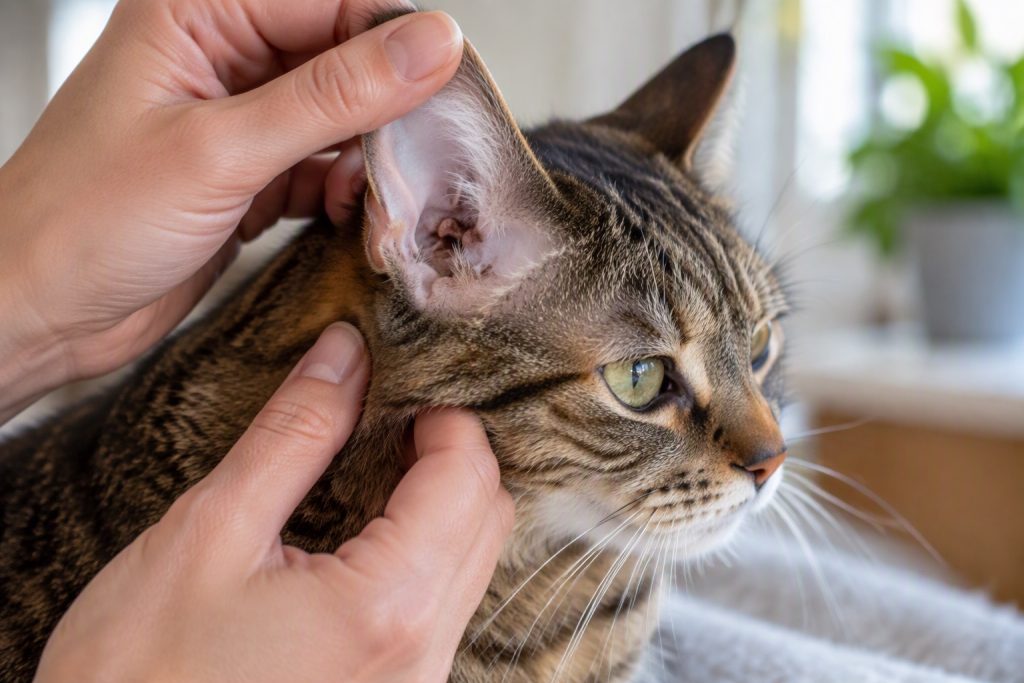
Cat ear wax is normally a light brown to pale amber colour, with a small amount visible in a healthy ear. Dark brown or black wax often points to ear mites, while yellow or green discharge suggests a bacterial infection, and grey or yeasty wax with a musty smell can indicate a yeast infection. Redness, swelling, pain, a bad odour, or head shaking alongside a change in wax colour all warrant a vet visit. Colour is a useful clue, but it is the combination of colour, smell, and symptoms that matters.
- Normal wax is light brown or pale amber.
- Dark brown or black often means ear mites.
- Yellow or green suggests infection.
- Redness, odour, or pain needs a vet.
What does normal cat ear wax look like?
A healthy cat ear should look clean and pale pink inside, with a small amount of light brown or pale amber wax that is soft and not smelly. Wax is produced naturally to protect the ear canal, so finding a little on a cotton pad after cleaning is normal. The amount varies between cats, and some cats produce more than others, just as people do. What matters is a change from your cat’s normal. An ear that is suddenly producing a lot of wax, or wax that has changed colour or developed an odour, is a signal to look closer. Healthy ears also should not be red, swollen, painful to touch, or itchy. If your cat is shaking her head, scratching at her ears, or holding one ear lower than the other, that is a symptom regardless of what the wax looks like. Our guide on how to clean cat ears explains routine care.

A stainless ABS plastic and metal comb clears the loose hair before it lands on the furniture. Keep…
What does dark brown or black ear wax mean?
Dark brown to black, crumbly wax that looks a little like coffee grounds is the classic sign of ear mites, especially in cats who go outdoors or have contact with other cats. Ear mites are tiny parasites that live in the ear canal, and they cause intense itching, head shaking, and scratching. The debris you see is a mix of wax, mite waste, and skin. It is very common in kittens and in cats from multi-cat environments. Mites are contagious between cats, so if one cat has them, others may too, and the environment needs attention. Dark wax can also be caused by a bacterial or yeast infection, so the colour alone is not a diagnosis. A vet can confirm mites by examining a sample under the microscope, which matters because the treatment for mites differs from the treatment for an infection. Our article on cat ear mites treatment covers what to do next.
What do yellow, green, or grey wax colours indicate?
Yellow or green discharge is usually a sign of a bacterial infection. It may be accompanied by redness, swelling, pain when the ear is touched, a foul smell, and a cat who tilts her head or resists having the ear examined. Green discharge in particular often suggests a significant infection that needs veterinary treatment. Grey, greasy wax with a musty or yeasty smell is more typical of a yeast infection, which is common in cats with allergies, in humid conditions, or after antibiotic treatment. A dark, waxy ear with a strong odour can be a mixed infection with both bacteria and yeast. In all of these cases, the ear canal is inflamed, and cleaning alone will not fix it, because the underlying infection needs proper treatment. Never pour home remedies or olive oil into an infected ear, and never use cotton buds deep in the canal, which can push debris further in and damage the eardrum.
When should I see a vet about ear wax?
Book a vet visit if the wax has changed colour, if there is a bad smell, if the ear is red, swollen, or painful, or if your cat is shaking her head, scratching, or tilting her head. Also see a vet if she is losing balance, walking in circles, or seems disoriented, because these can indicate a deeper ear problem or an infection that has spread to the middle ear. Any discharge, especially yellow or green, should be assessed rather than treated at home. If your cat has a known history of ear problems or allergies, recurrent wax changes are worth investigating to find the underlying cause. A vet will examine the ear canal, often with an otoscope, take a sample to identify mites, bacteria, or yeast, and prescribe the right treatment. Treating the wrong cause wastes time and can make the problem worse.

A plastic dematting comb clears the loose hair before it lands on the furniture. Use it before the…
How do I check my cat’s ears at home?
Do it gently and only as far as you can see. Sit with your cat in a calm moment, lift the ear flap, and look at the visible part of the canal with a torch or in good light. Note the colour of the skin, the amount and colour of any wax, and whether there is redness, swelling, or discharge. Smell the ear, since a bad odour is a useful clue, though do it discreetly. Do not push anything into the canal, and do not use cotton buds beyond the visible area, because you can damage the eardrum or pack debris deeper. If your cat flinches, cries, or scratches when you touch the ear, stop, because that suggests pain and warrants a vet visit. For routine cleaning of a healthy ear, use a cat-specific ear cleaner on a cotton pad and wipe only the visible folds, never the canal itself. Keep a note of what you see so you can spot changes over time.
How can I prevent ear problems?
Not all ear problems are preventable, but good care reduces the risk. Keep your cat’s ears dry, especially after swimming or bathing, since moisture encourages yeast and bacteria. If your cat is prone to wax build-up, clean her ears gently on a schedule your vet recommends, rather than frequently, because over-cleaning irritates the canal and can make things worse. Control fleas and other parasites, and treat allergies, because both can predispose a cat to ear infections. Check her ears weekly so you notice changes early, and keep her out of situations where mites spread, or treat all cats in the home if one is affected. If she has recurring infections, work with your vet to find the underlying cause, which is often an allergy or an anatomical issue. Managing the root cause is far more effective than repeatedly treating symptoms.
Frequently asked questions
- What colour should cat ear wax be? Normal wax is light brown or pale amber and not smelly. Any change in colour or odour is worth checking.
- Does dark ear wax always mean ear mites? No. It often does, but infections can look similar, so a vet sample is needed to confirm.
- Can I treat an ear infection at home? No. Infections need the right medication, and using the wrong product can worsen the problem.
- How often should I clean my cat’s ears? Only when needed. Over-cleaning irritates the canal, so follow your vet’s advice.
- Why does my cat shake her head and scratch her ear? It usually indicates itch or pain from mites, infection, or another ear problem. See a vet.





