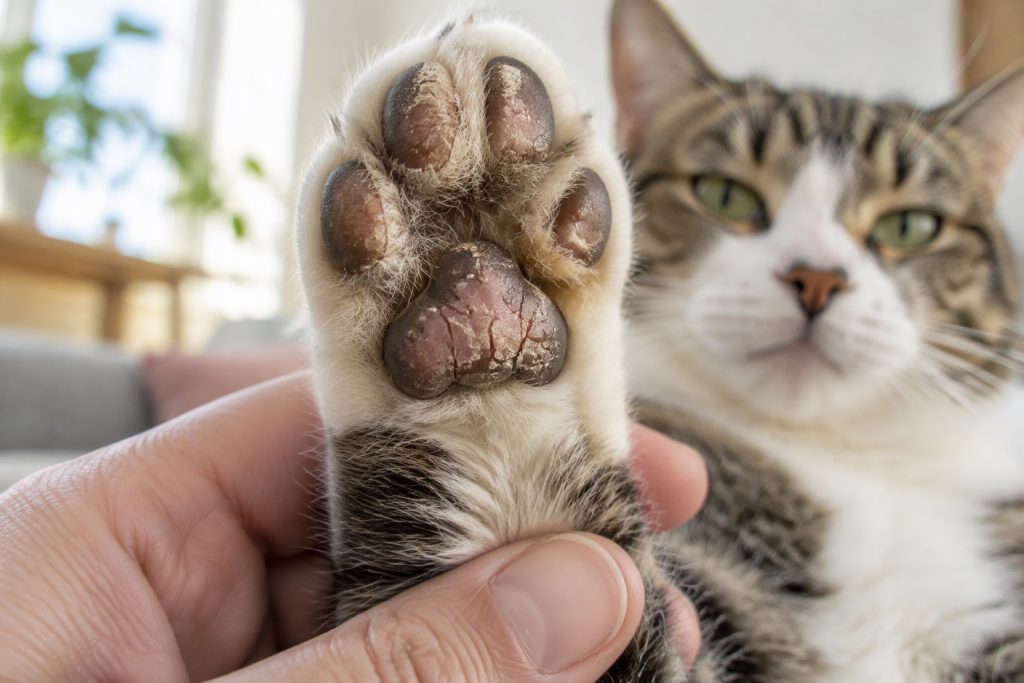
Cracked paw pads in cats are usually caused by dryness, rough or hot surfaces, cold weather, or contact with chemicals such as de-icer, cleaning products, or strong detergents. Mild cracks look like dry, flaky skin and often improve with moisture and a cat-safe balm. Deeper cracks that bleed, are painful, or show signs of infection need a vet. Because cracked pads can also be a sign of an underlying skin condition or a nutritional problem, persistent or recurring cracks should be checked rather than treated at home indefinitely.
- Dryness and rough surfaces are common causes.
- Hot pavement and de-icer can damage pads.
- Mild cracks often improve with moisture.
- Bleeding, painful, or infected cracks need a vet.
What causes cracked paw pads in cats?
Paw pads are tough but not indestructible. The most common cause is dryness, which can come from low humidity indoors, cold weather, or a cat who spends time on hot radiators or dry surfaces. Rough or abrasive flooring, such as concrete or coarse carpet, wears the pads down over time. Heat is a major factor: pavement or metal surfaces that are hot enough to burn will dry and crack the pads, and cats who walk on them can suffer burns. Chemical exposure is another cause, including de-icer, road salt, cleaning sprays, bleach, and laundry detergent residue on floors. Cold weather dries and hardens the pads, and a cat who walks on ice or salted paths is at higher risk. Less commonly, cracked pads are a symptom of an underlying condition such as a nutritional deficiency, an autoimmune skin disease, or a fungal infection, which is why persistent cases need a vet’s eye.
Nail scissors, bath brush, de-shedding glove and a drying towel — the full groom in one box. Cuts…
How can I tell a mild crack from a serious one?
Look at depth, bleeding, and pain. A mild crack is a superficial split or flaky dryness on the surface of the pad, with no bleeding and no sign that your cat is uncomfortable. She will walk normally and let you handle her paws. A more serious crack is deep, may bleed, and causes limping, licking, or flinching when the paw is touched. Signs of infection include redness, swelling, warmth, discharge, a bad smell, or a pad that looks ulcerated or has a dark, crusted area. If the pad is peeling or there is a visible wound, treat it as more serious. Cats often hide paw pain, so watch her gait: if she is favouring a paw, or refusing to jump, the crack may be deeper than it looks. When in doubt, have a vet examine it, because pad injuries can take a long time to heal and can become infected.
What home care is safe for cracked pads?
For mild, dry cracks, gentle care helps. Keep the paws clean and dry, and rinse off any salt, de-icer, or chemical residue with plain warm water after your cat has been outside. A small amount of a cat-safe paw balm or a thin layer of food-grade coconut oil can help soften and protect the pads, but apply it sparingly and distract your cat afterwards so she does not lick it all off, and check with your vet before using any product. Keep indoor humidity reasonable, especially in winter, and avoid harsh floor cleaners, using pet-safe products instead. Trim any fur between the toes that traps moisture and debris, and check the pads regularly. Do not use human hand creams, which contain ingredients that can be toxic if licked, and do not try to cut or peel the cracks yourself, which can cause injury and infection. Our article on cat dry skin treatment has more on general skin care.
When should a vet see cracked paw pads?
See a vet if the cracks are deep, bleed, or cause limping, or if the pad looks infected, swollen, or ulcerated. Also seek care if the cracks keep coming back despite good care, if multiple pads are affected, or if there are other skin problems elsewhere on the body, since that can point to a systemic issue. If your cat is licking or chewing at her paws obsessively, that needs investigation too, because it can indicate pain, allergies, or a foreign object. Burns from hot surfaces are a veterinary matter, since they can be more serious than they look. Finally, if your cat is off her food, lethargic, or has a fever alongside paw problems, treat it as urgent. Paw pad injuries that are not treated can become infected and can be very painful, so it is better to have them checked early.
Brush designed to lift loose hair out of a cat's coat — the hair has to go somewhere…
How do I prevent cracked pads?
Prevention is mostly about managing surfaces and moisture. In hot weather, walk your cat only on cool surfaces, and check pavement with the back of your hand before letting her walk on it, since if it is too hot for your hand it is too hot for her paws. In winter, rinse salt and de-icer off her paws after any outdoor time, and use pet-safe de-icer around your home. Keep indoor air from becoming too dry by using a humidifier, and choose gentle, pet-safe floor cleaners. Provide soft, varied surfaces for her to walk on, and make sure she has scratching posts so she does not wear her pads on rough flooring. Support her overall skin health with a good diet, and keep her hydrated, since skin condition reflects general health. Finally, check her pads weekly as part of routine grooming, so you catch dryness or small cracks before they become painful problems. If you notice her chewing her paws, our article on why cats chew their paws explains possible reasons.
Can cracked pads be a sign of something more serious?
Sometimes. While most cracked pads are simple dryness or surface damage, recurring or severe cracking can be a sign of an underlying condition. Nutritional deficiencies, particularly of certain vitamins and fatty acids, can affect skin and pad health. Autoimmune diseases can cause the pads to crack, crust, or slough, and these need veterinary diagnosis and treatment. Fungal infections can also affect the pads, especially in damp conditions. In older cats, pad problems can accompany other age-related conditions. If the cracks are accompanied by weight loss, poor coat condition, lethargy, or problems elsewhere on the skin, that combination points to a systemic issue rather than a local one. Do not assume a recurring pad problem is just the weather; if it keeps coming back, ask your vet to look into the cause so you can treat it properly rather than repeatedly managing the symptom.
Frequently asked questions
- Why are my cat’s paw pads cracked? Usually dryness, rough or hot surfaces, cold weather, or chemical exposure. Persistent cases need a vet.
- Can I put coconut oil on my cat’s paw pads? A small amount of food-grade coconut oil may help, but check with your vet and expect her to lick it off.
- Are cracked pads painful for cats? Mild cracks are not, but deep or bleeding cracks are painful and can cause limping.
- Should I walk my cat on hot pavement? No. If the surface is too hot for your hand, it is too hot for her paws and can cause burns.
- What if the cracks keep coming back? Recurring cracks can indicate a skin condition or nutritional problem. Have your vet investigate.