Unexplained weight loss in a cat means she is losing body condition without a deliberate diet change, and it should always be investigated. Common causes include hyperthyroidism, kidney disease, diabetes, dental disease, cancer, chronic gastrointestinal problems, and parasites. A cat can lose weight even while eating normally or more than usual, which is a key clue that something is wrong. Weigh her regularly, note any other changes, and book a vet visit promptly, because early diagnosis makes many of these conditions far easier to manage.
- Weight loss without a diet change is always a concern.
- Hyperthyroidism, kidney disease, and diabetes are common causes.
- Eating more while losing weight points to a medical cause.
- Weigh regularly and see a vet promptly.
What are the most common causes of weight loss?
In middle-aged and older cats, hyperthyroidism is one of the most common causes. An overactive thyroid speeds up metabolism, so the cat burns calories faster than she takes them in, and she often eats ravenously while losing weight. Kidney disease is another leading cause, and it usually comes with increased thirst and urination. Diabetes causes weight loss despite a good or increased appetite, often alongside increased drinking and urination. Dental disease is frequently overlooked: a cat with painful teeth or gums may eat less, drop food, or chew on one side, and gradually lose weight. Chronic gastrointestinal conditions, including inflammatory bowel disease and food intolerance, cause poor absorption of nutrients. Cancer, especially lymphoma, is a serious cause in older cats, and parasites can cause weight loss, particularly in cats who hunt or go outdoors. Because these conditions need different treatments, a proper diagnosis matters.

Round bowl with a removable flower insert. Made from PP. Made for daily feeding and fresh water. Keeps…
How do I know if my cat is losing weight?
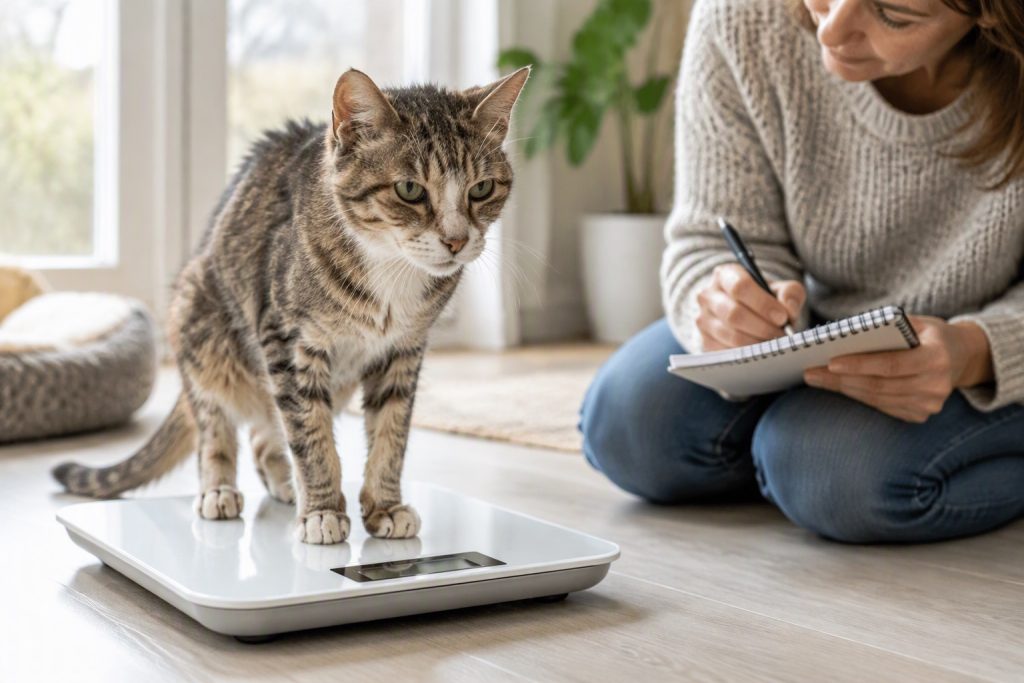
Cats are small, so a small change in weight is significant, and it is easy to miss under a fluffy coat. The most reliable method is to weigh her regularly on a scale, ideally the same scale at the same time of day, and record the numbers so you can see a trend. As well as the number, use your hands: run them along her spine and ribs. A healthy cat has a thin layer of fat over the ribs, which you can feel but not see, and a slight waist when viewed from above. A cat who is losing weight may have ribs and spine that feel more prominent, a sunken waist, and less muscle over the hips. Muscle loss along the spine is a particularly important sign, because it can indicate a serious underlying condition. Our article on checking your cat’s weight at home explains how to do this simply and consistently.
Why would a cat lose weight while eating more?
If a cat is eating more than usual and still losing weight, that is a strong signal of a medical cause rather than a diet problem. It usually means the body is either burning more energy than it takes in or failing to absorb nutrients properly. Hyperthyroidism speeds up metabolism, so the cat needs far more calories just to maintain her weight, and she often becomes ravenous. Diabetes means glucose cannot be used properly by the cells, so the body breaks down fat and muscle for energy, causing weight loss despite a good appetite. Intestinal conditions can cause poor absorption, so food passes through without being fully used. In some cases, the cat may eat more to compensate for the loss and still fall behind. Whatever the cause, this pattern should never be treated with more food alone, because the underlying condition needs diagnosis and treatment.
When should I see a vet about weight loss?
See a vet as soon as you notice a meaningful or unexplained change, rather than waiting to see if it resolves. A good rule is that any weight loss of around five to ten percent of body weight, or any steady loss over weeks, deserves an appointment. Seek prompt care if the weight loss comes with any of the following: increased thirst or urination, vomiting, diarrhoea, a change in appetite, lethargy, bad breath, drooling, difficulty eating, a dull coat, or behavioural changes. Older cats should be seen sooner, because they have less reserve and because conditions such as hyperthyroidism, kidney disease, and cancer become more common with age. If your cat is losing muscle along her spine, or if she seems weak, treat it as urgent. Early diagnosis gives you far more options, and many of these conditions can be managed well for a long time.

Clear glass bowl holding dry food. Made from plastic. Made for daily feeding and fresh water. Keeps food…
What will the vet do to find the cause?
The vet will start with a full history and a physical examination, including weighing your cat and assessing her body and muscle condition. They will then usually recommend blood tests, which can identify hyperthyroidism, kidney disease, diabetes, liver problems, and other conditions. A urine test is often included, and it is important for confirming kidney disease and diabetes. Depending on the findings, they may recommend imaging such as X-rays or ultrasound to look at the organs and check for masses, and they may test for parasites or specific infections. If dental disease is suspected, they will examine the mouth closely. In some cases, they may take a biopsy or refer you to a specialist. Because weight loss has so many possible causes, a systematic approach is the only reliable way to find the answer, and it usually involves more than one test. Our article on cat hyperthyroidism signs covers one of the most common diagnoses.
How can I support my cat during investigation?
While the cause is being investigated, keep her comfortable and well nourished. Offer highly palatable, energy-dense food, and warm it slightly to increase the aroma, which encourages eating. Feed smaller, more frequent meals if she prefers, and keep the routine calm and predictable. Keep a record of what she eats and how much, along with any other signs you notice, because this information is valuable for your vet. Weigh her regularly and write the numbers down so the trend is clear. Keep her hydrated, and if she is reluctant to drink, offer wet food and fresh water in several places. Do not start any supplements or special diets without veterinary advice, because some can interfere with tests or worsen certain conditions. Above all, do not delay the vet visit while trying home remedies, because with weight loss, time matters and early diagnosis makes the biggest difference.
Frequently asked questions
- My cat is eating well but losing weight. Why? It usually indicates a medical cause such as hyperthyroidism, diabetes, or a digestive problem. See your vet.
- What are the most common causes of weight loss in older cats? Hyperthyroidism, kidney disease, diabetes, dental disease, and cancer are the most common.
- How much weight loss is a concern? Around five to ten percent of body weight, or any steady loss over weeks, warrants a vet visit.
- How do I check my cat’s weight at home? Weigh her regularly on the same scale and feel her ribs and spine for changes in fat and muscle.
- Can stress cause weight loss in cats? Stress can reduce appetite, but unexplained weight loss should still be checked, because medical causes are common.