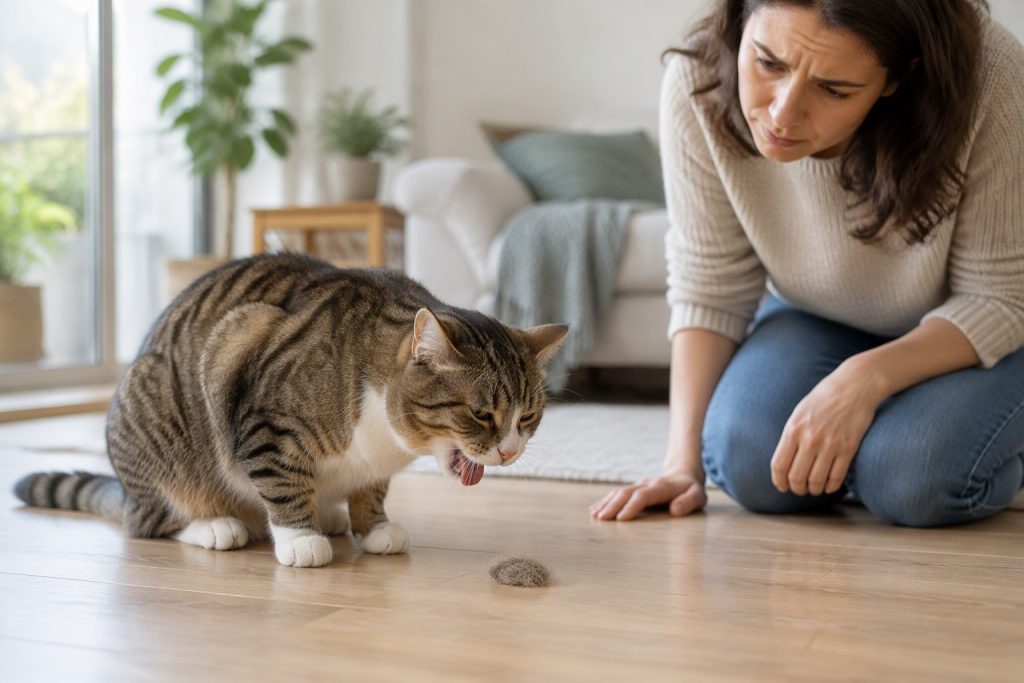
An occasional hairball in an otherwise healthy cat is usually not a medical emergency, but it is not normal either. Frequent hairballs, a hairball that your cat strains to bring up, repeated unproductive retching, or a hairball accompanied by lethargy, appetite loss, or weight change all need a vet. Hairballs can occasionally cause a blockage, especially in long-haired cats, and repeated vomiting that looks like hairballs can actually be a sign of an underlying digestive problem.
- Occasional hairballs are common but not normal.
- Frequent or strained hairballs need a vet.
- Hairballs can rarely cause a blockage.
- Repeated “hairball” vomiting may be another problem.
How often is a hairball normal?
A healthy cat should not be producing hairballs regularly. The occasional one, especially in a long-haired breed during a heavy shed, is common enough that many owners accept it, but frequent hairballs are a sign that something needs adjusting. Hair normally passes through the digestive tract and out in the stool, so a cat who regularly vomits hair is either swallowing too much of it, has a coat that sheds heavily, or has a digestive system that is not moving hair through efficiently. If your cat brings up a hairball more than about once a month, or if it happens in clusters, that is worth a conversation with your vet. For a cat who has never had hairballs and suddenly starts, the change itself is the signal. Our article on hairballs in cats covers the basics of why they form and how to reduce them.
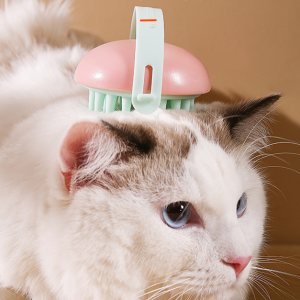
Nail scissors, bath brush, de-shedding glove and a drying towel — the full groom in one box. Cuts…
What is the difference between a hairball and vomiting?
A true hairball is a cylindrical wad of hair, usually with some bile or food mixed in, that a cat brings up after a period of retching. Vomiting is different: it can contain food, bile, foam, or foreign material, and it may be a one-off from eating too fast or a sign of a digestive problem. The distinction matters because owners often dismiss repeated vomiting as “just hairballs” when it is actually something else. If the material is mostly food or yellow fluid with little or no hair, it is vomiting, not a hairball. If your cat is retching repeatedly without producing anything, that is a red flag, because it can indicate a blockage. Our guide on cat coughing versus hairballs helps you tell those apart too, since coughing is often mistaken for a hairball problem.
When does a hairball become an emergency?
Seek urgent veterinary care if your cat is repeatedly retching or gagging without bringing anything up, if she is straining as if trying to pass something, or if she is vomiting frequently. A hairball that cannot pass can cause an obstruction, and the signs include persistent vomiting, a loss of appetite, lethargy, abdominal discomfort, and either no stool or diarrhoea. Other emergency signs include a bloated or painful abdomen, drooling, and a cat who is hiding or unusually quiet. If she brings up a hairball and then returns to normal, that is usually fine, but if she seems unwell afterward, do not wait. Long-haired cats, cats who over-groom, and cats with a history of digestive problems are at higher risk, so their threshold for a vet visit should be lower.
What causes frequent hairballs?
Over-grooming is the most common cause, and it can be behavioural, such as from stress, or medical, such as from a skin condition or allergies that make her itch. Heavy shedding, which is normal in long-haired cats and in seasonal changes, increases the amount of hair swallowed. Digestive problems, including inflammatory bowel disease, can reduce how well hair moves through the gut. Dehydration makes the digestive contents drier and harder to pass, so a cat who drinks little is more prone to hairballs. A poor or unsuitable diet, and a lack of fibre, also contribute, because fibre helps carry swallowed hair through the digestive tract instead of letting it collect. Some cats also develop a habit of over-grooming after a stressful change, such as a move or a new pet, and the hairballs are a symptom of the stress rather than a digestive fault. Sometimes the cause is simply that a cat is a fastidious groomer with a dense coat, in which case the answer is management rather than treatment. Because the causes vary so widely, and because the right response depends entirely on which one applies, a cat with frequent hairballs deserves a proper check rather than endless home remedies.
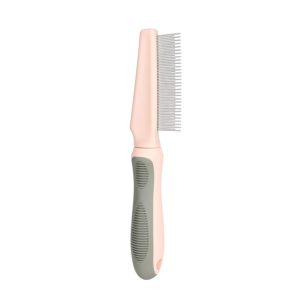
Brush designed to lift loose hair out of a cat's coat — the hair has to go somewhere…
How can I reduce hairballs at home?
You can reduce them by tackling the hair before it is swallowed and by helping it pass. Daily brushing is the single most effective measure, especially for long-haired cats and during shedding season, because it removes loose hair that would otherwise end up in her stomach. Keep her well hydrated with wet food and easy access to fresh water, since moisture helps hair move through. Increase fibre gradually, either with a vet-approved hairball diet or a small amount of plain cooked pumpkin, because fibre helps carry hair through the gut. If your cat over-grooms, address the cause, which may be stress, fleas, or a skin problem, and add more play and enrichment. Never give human hairball remedies or petroleum-based products without veterinary advice, because some can be harmful if inhaled. Ask your vet before adding any supplement.
What will the vet do about recurring hairballs?
Your vet will start by confirming that the problem is genuinely hairballs rather than another cause of vomiting. They will take a history, including diet, grooming habits, and how often the vomiting happens, and examine your cat, feeling the abdomen and checking for dehydration. Depending on what they find, they may recommend blood tests, imaging such as X-rays or ultrasound, or a change in diet. If a blockage is suspected, they may use imaging to confirm it and treat accordingly, which can involve fluids, medication, or in some cases surgery. If over-grooming is the root cause, they will look for skin problems, parasites, or stress. The treatment plan usually combines a hairball-control diet, regular grooming, hydration, and management of any underlying condition. Recurring hairballs are usually manageable, but they are best addressed with veterinary guidance rather than guesswork.
Frequently asked questions
- Are hairballs normal in cats? An occasional one is common, but frequent hairballs are not normal and should be checked.
- How do I know if it is a hairball or vomiting? A hairball is a wad of hair; vomiting is mostly food, bile, or foam with little hair.
- Can a hairball kill a cat? Rarely, but a hairball can cause a blockage, which is serious. Repeated retching without producing anything is an emergency.
- Does brushing really help? Yes. Daily brushing is the most effective way to reduce the hair a cat swallows.
- Should I give my cat a hairball remedy? Only a vet-approved one. Some products can be harmful, so ask your vet first.