

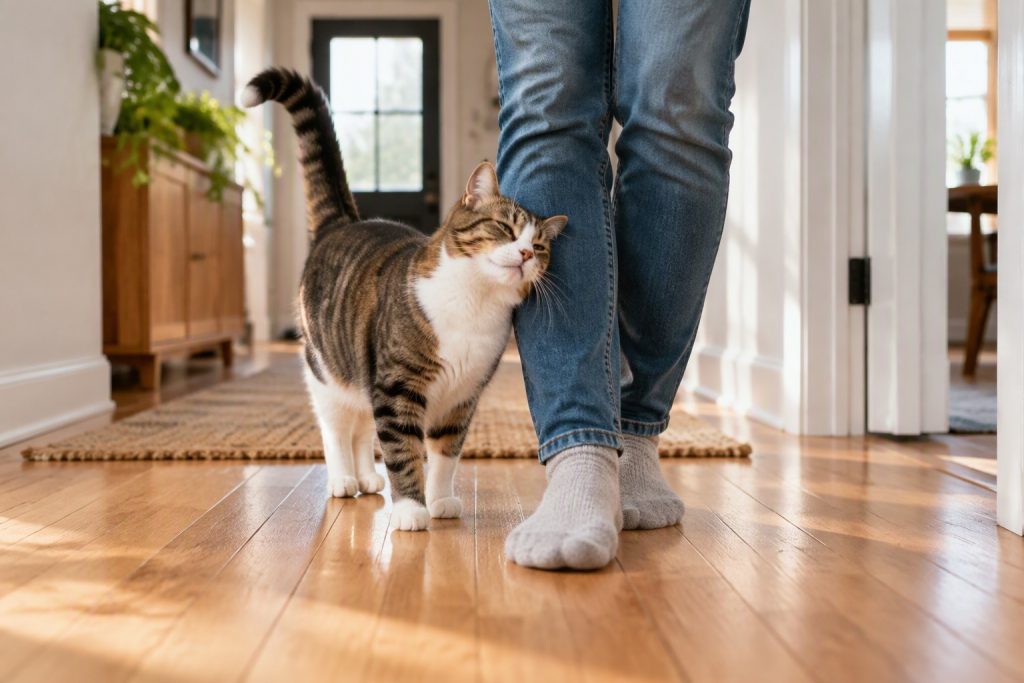
A cat rubs against your legs to greet you, to mark you with her scent, and to ask for attention or food. Cats have scent glands on their cheeks, chin, and forehead, and rubbing deposits a familiar smell that says “this is mine and this is safe.” It is usually a friendly, affectionate behaviour, and it often intensifies around mealtimes or when you come home. If the rubbing suddenly becomes constant, or comes with drooling, head pressing, or changes in appetite, it is worth a vet check.
- It is a friendly greeting and scent-marking.
- Scent glands on the face claim you as safe.
- It often means she wants food or attention.
- Sudden constant rubbing with other signs needs a vet.
Why does my cat rub against my legs?
Leg rubbing is a social behaviour that does several jobs at once. Cats have scent glands in the cheeks, chin, and around the mouth, and rubbing against you transfers her personal scent onto your clothing, which is how she marks you as part of her territory and her social group. It is also a greeting: when you come home, she may run to you and rub, which is her version of saying hello. Rubbing is often a request, too, because it is a reliable way to get attention, and cats quickly learn that rubbing your legs produces petting or food. Many cats rub more at mealtimes, which confirms the request element. Finally, it can be self-soothing and affectionate, especially when paired with purring, a raised tail, and a relaxed body. In short, it is usually a good sign, meaning she feels comfortable and connected to you. For a related gesture, see our article on why cats headbutt.
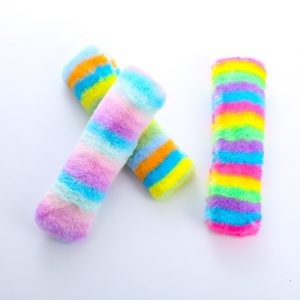
Rainbow-striped plush cylinder. Keeps a bored indoor cat busy and burns off restless energy. Made from fleece and…
Is leg rubbing always affectionate?
Mostly, but context matters. Rubbing with a soft body, upright tail, purring, and slow blinks is clearly affectionate. Rubbing that is frantic, or that comes with a tense body, flattened ears, or a lashing tail, can be a sign of stress or overstimulation, and it may precede a swat if you try to pick her up. Some cats rub as a displacement behaviour when they are anxious or in conflict, so watch the whole picture rather than the rubbing alone. Rubbing that happens constantly, to the point where she will not settle, can also be a sign of discomfort or a medical issue, especially in older cats. In most cases, though, leg rubbing is exactly what it looks like: a warm, social cat telling you that you belong to her. Respond by offering a hand for her to rub against, which many cats prefer to being stroked.
What does it mean when she rubs and then walks away?
This is a classic cat greeting: she comes to you, rubs, marks you, and then goes about her business. It is not rejection. Cats are socially flexible, and a brief, intense greeting followed by independence is normal. It often means she wanted to check in, renew the scent bond, and confirm that all is well, and now she is satisfied. If she rubs and then leads you somewhere, such as toward the kitchen or the door, she is likely asking for food or for you to open something, because cats learn that rubbing plus leading gets results. Some cats also do a quick rub-and-go as a way of greeting without committing to a cuddle, especially cats who are affectionate on their own terms. Respect that rhythm, and she will keep coming back.
Can leg rubbing be a health problem?
Occasionally. Head pressing, where a cat pushes her head firmly against walls or furniture, is different from affectionate rubbing and can indicate neurological or liver disease, so learn the difference. Rubbing that becomes excessive and constant, especially with drooling, a change in appetite, weight loss, or unusual vocalising, is worth a vet visit. Older cats with hyperthyroidism or dental pain may rub and drool more than usual. Skin problems, allergies, or parasites can also cause a cat to rub her face against surfaces to scratch an itch. If the rubbing is directed at hard objects with force, rather than at you with a soft body, treat it as a potential symptom. When in doubt, a vet can rule out the medical causes quickly.
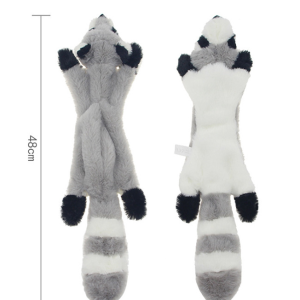
Made from cloth Key features 【Name】 : cat simulation animal sound shell toy[Fill]: No fill, 2 built-in BB…
How should I respond to leg rubbing?
Match her energy. If she rubs gently with a raised tail, offer your hand or a gentle stroke along her cheek and back, and let her lean into it. Many cats prefer being petted on the head and cheeks rather than the body, so follow her lead and stop when she pulls away. If she is rubbing at mealtimes, feed her on a predictable schedule so the behaviour does not become a constant demand, and avoid rewarding frantic rubbing with food, which teaches her to escalate. If she is rubbing to greet you, greet her back with a calm voice and a slow blink, which is a friendly signal in cat language. And if she rubs then walks away, let her go rather than following, which respects her independence. Responding to her on her terms strengthens the bond and keeps the behaviour pleasant for both of you.
Why does my cat rub against other things too?
Cats rub against doorways, furniture, table legs, and other cats for the same reason they rub against you: to deposit scent and claim territory. A cat’s world is full of scent marks, and rubbing is how she creates a familiar map of home, which helps her feel secure. You may notice her rubbing a new object after it arrives, which is her way of making it “hers,” and she may rub a spot more after you clean it, because cleaning removes her scent. In a multi-cat home, cats often rub the same objects, which creates a shared group scent that reduces tension. This is one reason you should be thoughtful about removing all scent from her environment at once, since it can make her feel unsettled. Providing scratching posts and cat trees gives her more legitimate places to mark, which supports her sense of security. Our article on why cats follow you around covers another common bonding behaviour.
Frequently asked questions
- Why does my cat rub against my legs then bite? She may be overstimulated or asking for play. Offer a toy instead of your hand.
- Does leg rubbing mean my cat loves me? It is a social, friendly behaviour that marks you as safe and familiar, so yes, it is a good sign.
- Why does my cat rub my legs at mealtimes? It is a learned request for food. Keep a predictable feeding schedule to reduce the demand.
- Is head pressing the same as rubbing? No. Head pressing is forceful pushing against hard surfaces and can indicate illness. See a vet.
- Should I let my cat rub my legs? Yes, it is harmless and affectionate. Offer a hand to rub against if she enjoys contact.





