

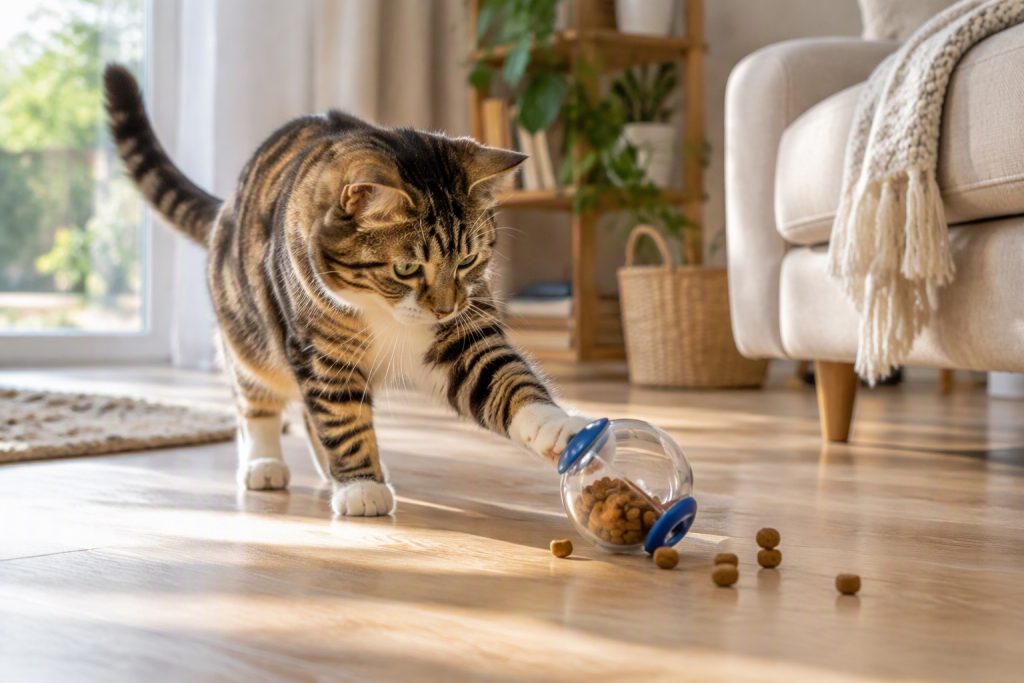
The best treat ball for cats is a small, lightweight, easy-to-roll ball with an adjustable opening that releases a few treats at a time, sized so a cat can bat and chase it easily without it rolling under the sofa. Adjustable difficulty matters most, because a ball that is too hard frustrates a beginner and one that is too easy is finished in a minute. Start with a wide opening and close it down as your cat gets better at it.
- Adjustable opening suits beginners and experts.
- Small and light is easier for a cat to bat around.
- Easy to fill and wash matters daily.
- Use part of her daily food, not extra treats.
What should I look for in a treat ball for cats?
Four features decide whether a treat ball gets used or abandoned. First, adjustable difficulty: a sliding or twisting opening lets you control how many treats fall out, which is what makes the toy work for a beginner and stay interesting for an expert. Second, size and weight: it should be small enough for a cat to bat with a paw and light enough to move easily, since a heavy ball that barely rolls will be ignored. Third, treat compatibility: the treats need to be small enough to fall through the opening without jamming, so dry treats or kibble work far better than soft or sticky ones. Fourth, cleanability: the ball needs to open fully so you can rinse out crumbs and residue, because a ball that smells of old food will be rejected. Our article on puzzle feeders for cats covers the wider category and how a treat ball fits into a feeding routine.
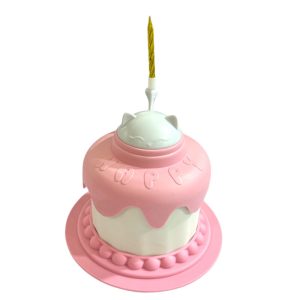
A cake-shaped silicone and TPE bowl lifts the eating surface off the floor. Measure the day's portion once…
How is a treat ball different from a puzzle feeder?
A treat ball is the simplest form of food puzzle. It usually has no compartments, no drawers, and no lids to lift: the food simply falls out through a hole as the ball rolls, so the cat learns by batting and chasing. That makes it ideal as a first puzzle, particularly for a cat who has never used one, because the reward is immediate and the effort is low. A puzzle feeder involves more problem-solving, with flaps, wells, or sliding pieces the cat has to manipulate. Puzzle feeders tend to be better for cats who are already confident with food toys, and they offer more mental challenge and slower eating. Many owners use both: a treat ball for active play and a puzzle feeder for meals. If your cat ignores the ball entirely, the opening may be too small or the treats too large, so adjust those first before concluding she is not interested.
What treats work best in a treat ball?
Dry, small, and firm is the rule. Freeze-dried meat treats, small kibble, and dry training treats all work well because they roll freely and do not clump. Soft, moist treats, cheese, and cooked meat tend to stick and clog the opening, which is frustrating for the cat and messy for you. Size matters too: a treat should be small enough to fall through comfortably but large enough that a few come out rather than a flood. If your treats are too big, break them into smaller pieces. For cats on a specific diet, use a portion of her regular kibble rather than adding extra treats, since a treat ball should replace part of the daily ration rather than supplement it. If you are using the ball to slow down a fast eater, weigh the daily portion and put a portion of it in the ball rather than feeding the full meal in a bowl.
How do I introduce a treat ball to a cat who has never used one?
Start by making the ball obviously rewarding. Load it with a few high-value treats and set the opening wide, so food falls out at the slightest nudge. Then demonstrate: roll it gently across the floor in front of your cat and let the treats scatter, so she learns the connection between the ball and the reward. You can also place a few treats beside the ball and on top of it, so she investigates. Once she is batting it herself, close the opening a little and increase the difficulty gradually over several days. Do not rush this step, because a cat who fails repeatedly will walk away. Run the first sessions when she is hungry, in a quiet room, and keep them short. If she loses interest, put the ball away and try again later rather than pushing. Most cats work it out within a few sessions.
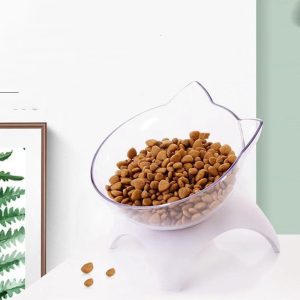
Clear glass bowl holding dry food. Made from plastic. Made for daily feeding and fresh water. Keeps food…
How much should I feed in a treat ball?
Treat balls are a feeding tool, so the food inside should come out of her daily ration, not be added on top. Weigh or measure her normal daily portion, then put a third to a half of it in the ball and feed the rest in her bowl, or use two balls to cover a full meal. This matters for weight control, because a cat who is fed a full meal plus a full ball of treats will gain weight quickly. It also matters for cats on prescription diets, since the ball must contain only food your vet has approved. Monitor her weight monthly, since treat-ball feeding can be less precise than bowl feeding and it is easy to overfill. If your cat is a fast eater, a ball is genuinely useful for slowing her down, and you can split the meal across a ball and a puzzle feeder for a longer, more natural feeding session.
How do I keep a treat ball clean and safe?
Empty and rinse it after every use, because crumbs and oils collect inside and go stale, and a ball that smells of old food will put your cat off. Most treat balls come apart into two halves, so open it fully and wash with warm water and mild soap, then let it dry completely before refilling. Check it weekly for cracks, sharp edges, and loose parts, and throw it away if the plastic is splitting or if any small piece has come loose. Avoid balls with bells, rattles, or glued inserts that a determined cat could prise out and swallow. Supervise the first few sessions so you can see how your cat plays with it, and if she is a chewer who bites at the plastic rather than batting it, choose a firmer design or supervise closely. Our guide to the best cat puzzle feeder covers sturdier options for determined chewers.
Frequently asked questions
- Do cats actually use treat balls? Many do once the opening is wide enough and the treats are the right size. Start easy.
- What treats should I put in a treat ball? Small, dry, firm treats or kibble. Soft treats clog the opening.
- Should I count treat ball food as part of her meal? Yes. It should come out of her daily ration, not be fed on top of it.
- How do I make a treat ball harder? Narrow the opening gradually over several days as your cat gets better at it.
- Is a treat ball safe to leave with my cat? Yes, if it is intact and has no small parts. Check it weekly for cracks.





