

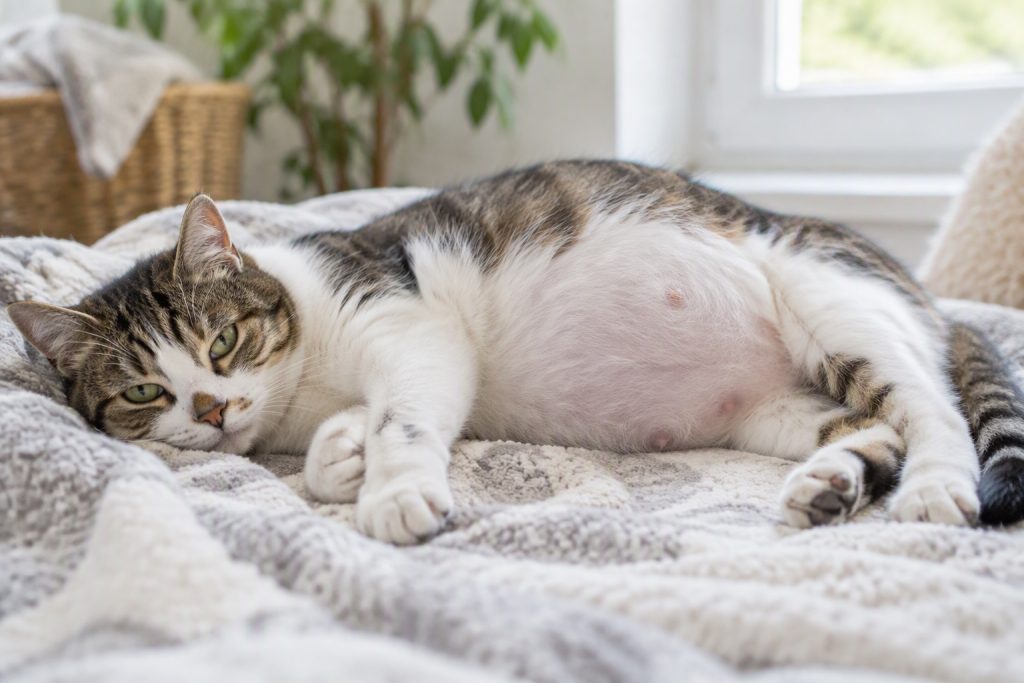
A bloated stomach in a cat is usually one of three things: a full belly after a large meal, gas and digestive upset, or fluid, a mass, or an obstruction in the abdomen. A soft, comfortable, mildly rounded belly in a cat who is eating and behaving normally is rarely serious. A hard, painful, rapidly distending abdomen, especially with unproductive retching, is an emergency and needs immediate veterinary care.
- A soft belly after a big meal is usually normal.
- A hard, painful, swollen belly is urgent.
- Roundworms cause a pot belly in kittens.
- Unproductive retching with swelling is an emergency.
What causes a bloated stomach in cats?
Common and benign causes come first. A cat who has just eaten a large meal, eaten very fast and swallowed air, or switched food recently may have a visibly rounder belly that settles within hours. Gas from a diet change, a food intolerance, or eating something unusual is another frequent cause, often with flatulence or soft stool. Constipation can make the abdomen look and feel full. Worms, especially roundworms in kittens, produce a classic pot-bellied appearance alongside a dull coat and poor growth. More seriously, bloating can be caused by fluid in the abdomen from heart, liver, or kidney disease; by a mass or tumour; by an obstruction from a swallowed object or a hairball; or by a serious condition called bloat with gastric dilation, which is rare in cats but life-threatening. Because the range is so wide, the key question is not whether the belly looks big but whether your cat is comfortable and behaving normally.
Round bowl with a removable flower insert. Made from PP. Made for daily feeding and fresh water. Keeps…
When is a bloated stomach an emergency?
Treat it as an emergency if the abdomen is hard, tense, and clearly painful to touch; if it has become visibly larger over a short period; if your cat is retching or heaving with nothing coming up; if she is restless, pacing, and unable to settle; if she is drooling heavily; or if she is collapsing or breathing rapidly and shallowly. That combination can indicate gastric dilation and volvulus, a condition where the stomach twists, cutting off blood supply. It is uncommon in cats but it kills quickly, and there is no home remedy. Also act urgently if the swelling comes with vomiting, diarrhoea, refusal to eat, lethargy, pale gums, or a fever. In an older cat, a new abdominal swelling should always be assessed promptly, because fluid and masses are more common with age. When in doubt, call your vet or an emergency clinic immediately rather than waiting to see whether it improves.
How do I tell a full belly from a swollen one?
Look at the whole picture rather than the shape. A normal full belly is soft, comfortable, and appears after a meal, then reduces over a few hours. Your cat will behave normally, eat, play, and use the litter box. A swollen abdomen that is not from a meal tends to persist or grow, feels firm or taut rather than soft, and may be uncomfortable when touched, which you can detect by a twitch, a flinch, or a change in breathing when your hand rests lightly on it. Watch her posture too: a cat in abdominal pain often stands with a hunched back, tucks her belly, and is reluctant to lie down or be picked up. Breathing matters as well, since a distended abdomen can press on the diaphragm and make breathing shallow and fast. Compare her abdomen to how it looked a week ago, since gradual change is easy to miss.
What should I do if I notice bloating?
Do not press on the abdomen to test it, and do not give any medication, including human remedies for gas or constipation, because the cause is unknown and some medicines are harmful to cats. Withhold food for a short period only if your vet advises it, since cats should not go without food for long. Remove any string, thread, toys, or small objects your cat might have swallowed, and check whether anything is missing. Note when the swelling appeared, whether it is getting bigger, whether your cat is eating, drinking, passing stool and urine normally, and whether she has vomited. Take a photograph of her from the side and from above, because a picture taken over time is genuinely useful to a vet. Then contact your clinic for advice rather than waiting for it to resolve on its own, especially if the abdomen feels firm or your cat seems uncomfortable.
Clear glass bowl holding dry food. Made from plastic. Made for daily feeding and fresh water. Keeps food…
How is a bloated stomach diagnosed and treated?
A vet will begin with a physical examination, feeling the abdomen gently and checking for pain, fluid, and the size of internal organs. They will likely listen to the heart and lungs, take your cat’s temperature, and weigh her. Depending on what they find, they may recommend blood tests, an ultrasound, or X-rays, since these distinguish gas from fluid, a mass, or an obstruction. Treatment follows the cause. Gas and mild digestive upset are usually managed with a diet adjustment, probiotics, or a short course of medication. Worms are treated with an appropriate wormer. Constipation is managed with hydration, fibre, or a prescribed laxative. Fluid in the abdomen requires treating the underlying disease, which may mean heart or liver medication and a change in diet. An obstruction or a twisted stomach requires surgery. Our guide to cat vomiting covers the signs that accompany abdominal problems and indicate that something more serious is happening.
How can I prevent digestive bloating?
Several simple habits help. Feed smaller, more frequent meals rather than one large one, and use a slow feeder or a wide, flat dish if your cat eats fast, since gulping air is a common cause of gas. Change food gradually over seven to ten days rather than switching overnight. Keep human food, especially rich or fatty items, out of reach, and make sure bins and cupboards are secure so she cannot raid them. Keep cords, string, hair ties, and small toys out of reach, since these are common swallowed objects. Worm your cat on the schedule your vet recommends, especially if she goes outside or hunts. Keep her litter box clean and monitor her stool, because constipation contributes to abdominal fullness. And weigh your cat regularly, since gradual weight change is one of the earliest signs that something has shifted. Our article on cat diarrhoea covers the related warning signs to watch for.
Frequently asked questions
- Is a bloated stomach in cats always serious? No. A full belly after a meal is normal, but a hard, painful, growing abdomen needs urgent care.
- Can worms cause a bloated belly in cats? Yes, roundworms classically cause a pot belly, especially in kittens.
- Should I press on my cat’s swollen abdomen? No. Pressing can cause harm if there is an obstruction, so let a vet examine it.
- What does a painful cat abdomen look like? A hunched posture, tucked belly, reluctance to lie down, and flinching when touched.
- When should I go to an emergency vet? Unproductive retching with a hard, swelling abdomen, collapse, or rapid breathing needs immediate care.





