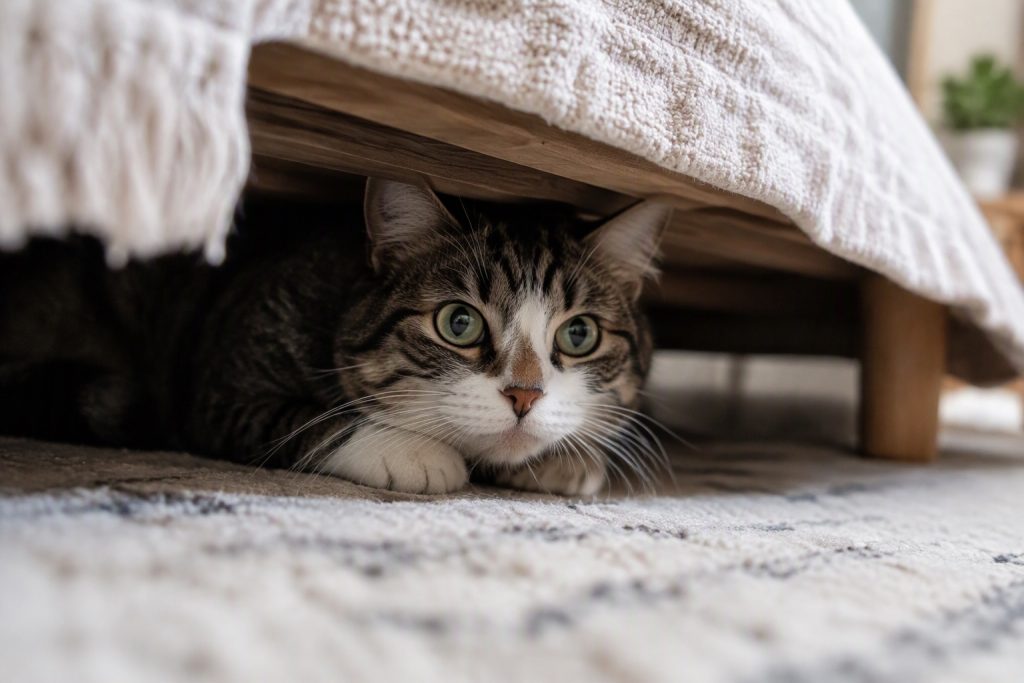
Cats hide under beds because the space is dark, enclosed, and out of the traffic, which makes it one of the safest places in the house from a cat’s point of view. A cat who hides there occasionally is behaving normally. A cat who hides there persistently, stops eating, or comes out only at night is telling you something is wrong, and that is when the hiding deserves attention rather than patience.
- Under-bed hiding is normal for a scared or new cat.
- Persistent hiding plus appetite loss needs a vet.
- Give a hiding cat space and a safe room.
- Provide hiding spots that are not under the bed.
Why do cats choose under the bed?
Under a bed is close to the perfect cat refuge. It is dark, which reduces the chance of being seen. It is low and enclosed on three sides, with the fourth side controlled by the cat. It is usually quiet, because the bedroom is often the least trafficked room. It smells familiar. And crucially, it is hard for anything larger, including a human, to follow a cat into, which makes it genuinely defensible rather than merely concealed. Cats who feel vulnerable do not run to open, high places; they retreat to tight, dark, low ones where they can watch without being watched. That is why a frightened cat chooses under the bed rather than on top of it. This instinct is entirely healthy, and it is also the reason a new cat, a cat after a move, or a cat after a fright will find that spot within hours.

Cervical pillow, plush hammock, floor mat and paw cushion — four places to nap. Gives a cat a…
When is hiding under the bed normal?
Hiding is normal in a range of situations that are all temporary. A new cat or kitten in a new home will hide for the first few days while she maps the territory and works out that nothing here is trying to eat her. A cat who has just been to the vet, or who has had visitors, building work, or a loud delivery, may hide for a few hours. A cat with a minor scare, such as a dropped pan or a barking dog outside, will retreat and then re-emerge. A cat in a multi-cat household who has had a tense encounter may hide to decompress. In all these cases, the pattern is the same: the hiding is time-limited, and she still eats, uses the litter box, and comes out when the house is quiet. If she returns to normal within a day or so, nothing needs fixing.
When does hiding under the bed signal a problem?
Hiding becomes a concern when it is persistent, when it is new, or when it comes with other changes. The most important signal is appetite: a cat who hides and stops eating is a cat who needs veterinary attention, because cats can become seriously unwell after only a day or two without food. Other warning signs include hiding in a cat who has never hidden before, hiding that lasts more than a couple of days without improvement, hiding combined with vomiting, diarrhoea, weight loss, or a change in grooming, and hiding with a change in how she moves or jumps. Pain is a common driver: a cat with a sore tooth, an injured limb, or arthritic joints will often withdraw. Stress is another: ongoing conflict with another cat, a litter box she cannot reach safely, or a house that has become unpredictable will push a cat into hiding as a coping strategy rather than a temporary retreat.
Should I pull my cat out from under the bed?
Generally no, and certainly not by force. A hiding cat has chosen that spot because she feels safe there, and dragging her out removes her only refuge and teaches her that the one place she trusted is not reliable. That usually increases fear and makes the next hiding episode longer. The better approach is to make the area around the bed comfortable and let her come out on her own schedule. Sit quietly in the same room, at floor level, and talk softly or read aloud, so your presence becomes ordinary rather than threatening. Offer food and treats nearby, then progressively closer to you. Give her a litter box, water, and food in the room so she does not have to leave to meet basic needs while she is frightened. Only intervene physically if she is in danger, injured, or has not eaten for more than a day, and even then, do it gently and with help.

A thickened cloth bed is stepped into rather than climbed over. Try it near the window first, then…
How do I make my cat feel safe without the bed?
Give her better options. A covered cat house, a box with a hole cut in the side, or a small carrier with the door removed and a blanket inside all provide the same dark, enclosed feeling with more control. Place several around the house, especially in the rooms she uses most, so she always has a refuge nearby. Add height: a shelf or a tree near a wall gives a nervous cat a place to watch from above, which many cats prefer once they feel safer. Use pheromone diffusers in the rooms she avoids, and keep routines predictable, with meals, play, and quiet time at consistent times. Limit loud noise where possible, and give her a room she can retreat to when visitors arrive. If another cat in the house is the source of tension, add resources: more litter boxes, more feeding stations, and separate resting places. Our guide to cat hiding houses covers the options in detail.
What if noise or fireworks are the trigger?
Noise is one of the most common reasons a cat dives under a bed, and it is entirely understandable: cats hear a wider range of frequencies than we do, and sudden loud sounds feel genuinely dangerous. Prepare before the event rather than during it. Set up a quiet room in advance, with the bed or hiding house, a litter box, water, and something that smells of you. Close the curtains, put on a steady background sound such as a radio or a fan, and let her choose where to settle. Do not pick her up or hold her during the noise, because restraint increases fear. Pheromone sprays or diffusers can help some cats. If your cat is severely distressed by noise, shakes, pants, or hides for hours afterwards, speak to your vet about longer-term options well before the next event. Our article on how to calm a cat during fireworks walks through a full plan.
Frequently asked questions
- Why does my cat hide under the bed all day? It is a safe, dark, enclosed spot. If it is new and persistent, a vet check is sensible.
- Should I block off under the bed? Blocking it can increase anxiety. Provide a better hiding spot first, then close it off gradually.
- My cat hides under the bed but comes out to eat. Is that okay? Yes, that usually means she is coping and just needs time and quiet.
- Can pain make a cat hide? Yes. Cats in discomfort often withdraw to dark, quiet places, so watch for other signs.
- How long should I wait before calling the vet? If she is not eating or the hiding lasts more than two days, call your vet.