Most cat bad breath comes from dental disease, not from something a home remedy can fix, so the honest answer is that brushing, dental chews, and a vet check do far more than kitchen cures. That said, fresh water, a complete diet, and gentle oral care can genuinely help mild odour. Never use human mouthwash, essential oils, or human toothpaste on a cat, because several are toxic. Persistent bad breath needs a vet to rule out gum disease or another condition.
- Dental disease causes most cat bad breath.
- Brushing helps more than any home remedy.
- Never use human toothpaste or mouthwash.
- Persistent odour needs a vet check.
What actually causes cat bad breath?
By far the most common cause is dental disease. Plaque and tartar build up along the gum line, bacteria multiply, and the result is a persistent smell. Gingivitis, periodontal disease, and tooth resorption are all common in cats, and they are painful as well as smelly. Other causes include a foreign object trapped between teeth, an oral infection or ulcer, and problems further down the line such as kidney disease, which gives breath a distinct ammonia-like odour, or diabetes, which can produce a sweet or fruity smell. Cats with hyperthyroidism or liver disease may also have changed breath. Occasionally, bad breath is linked to the diet itself, especially strong-smelling fish-based foods. Because the causes range from a minor dental issue to serious illness, the pattern matters: odour that comes on suddenly, or that persists despite good oral care, deserves professional attention. Our article on cat bad breath covers the causes in detail.
Nail scissors, bath brush, de-shedding glove and a drying towel — the full groom in one box. Cuts…
Which home remedies are safe?
A few simple measures are genuinely safe and useful. Fresh, clean water helps rinse the mouth and supports general health, so offer water in several places or use a fountain, and change it daily. Feeding a complete, balanced diet supports oral and overall health, and some cats do better on a mix that includes wet food for hydration. Gentle oral care is the most effective home measure: wiping the outside of the teeth with a soft finger brush or a piece of gauze, using cat-specific toothpaste, removes plaque before it hardens. Dental chews or a vet-approved dental treat can help reduce plaque on the teeth your cat chews with. Some owners add a pet-specific dental water additive, which is safe if formulated for cats. Plain, unsweetened yogurt or parsley are sometimes suggested, but there is little evidence they help, and dairy can upset a cat’s stomach, so treat them as optional at best.
Which home remedies should I avoid?
Several popular suggestions are genuinely dangerous. Never use human toothpaste, which often contains xylitol, fluoride, and detergents that are toxic or irritating to cats. Never use human mouthwash, which contains alcohol and other ingredients a cat should not swallow. Essential oils, including tea tree, eucalyptus, peppermint, and citrus, are toxic to cats even in small amounts, and should never go near the mouth. Do not use hydrogen peroxide, baking soda, or salt rinses, all of which can harm the mouth or upset the stomach. Coconut oil is sometimes recommended, but it adds fat and can cause diarrhoea, so ask your vet first. Antibiotics or human medications should never be given without veterinary direction. And do not rely on treats or sprays to mask odour: if the breath smells bad, the cause is still there. Anything you put in a cat’s mouth should be specifically formulated for cats.
Does diet help bad breath?
Diet plays a supporting role rather than a leading one. A complete, balanced diet keeps the mouth and body healthier, and good hydration supports saliva flow, which naturally rinses the mouth. Some commercial dental diets are designed with a kibble shape and texture that mechanically scrubs the tooth surface as the cat chews, and they have a recognised oral health claim, so they can genuinely reduce plaque. If your cat eats only soft food, there is less abrasive action, though wet food supports hydration, which matters too. Strong-smelling fish or offal-based foods can leave a lingering odour, so if your cat’s breath seems worse after a diet change, that is worth noting. The most important point is that no diet removes established tartar. If your cat has significant build-up, only a professional dental clean will fix it, and diet then helps maintain the result.

A plastic dematting comb clears the loose hair before it lands on the furniture. Use it before the…
How do I clean my cat’s teeth at home?
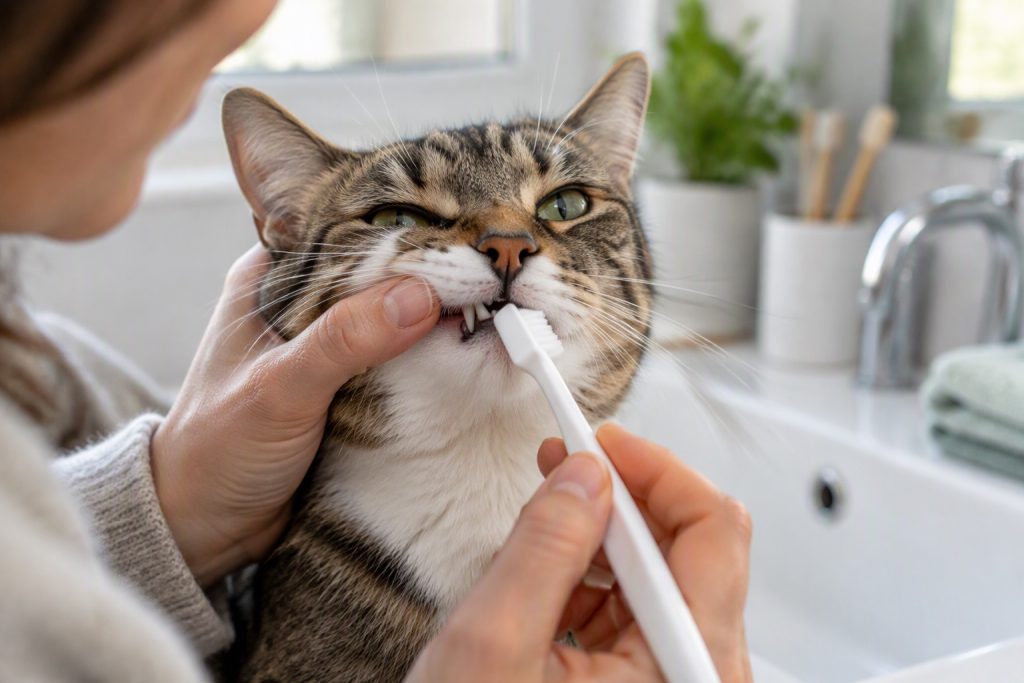
Build the habit slowly, starting with a finger and cat toothpaste, which comes in flavours cats usually accept. Let her lick a little from your finger first, then rub it gently along the outer surface of the teeth and gums. Once she tolerates that, move to a small cat toothbrush or a finger brush, and work along the upper teeth where plaque collects fastest. Aim for the outside surfaces, since the tongue keeps the inside relatively clean. Brush for a few seconds at a time and build up gradually, always finishing with praise and a treat. Daily brushing is ideal, but even two or three sessions a week makes a real difference. Never force it, and never use human toothpaste. Our guide on cat teeth cleaning walks through the full routine, including what to do if your cat will not tolerate a brush.
When does bad breath need a vet?
Book a vet visit if the odour is persistent, strong, or getting worse, or if it comes with red or bleeding gums, drooling, difficulty eating, pawing at the mouth, dropping food, or visible brown tartar. These signs suggest dental disease, which is painful and progressive, and it needs professional treatment, usually a scale and polish under anaesthesia. See a vet urgently if the breath has a sweet, fruity, or ammonia-like smell, since that can indicate diabetes or kidney disease, or if your cat is off her food, vomiting, or losing weight. Sudden bad breath in a cat who previously had none is also worth checking. Do not wait for the smell to become severe, because by then the underlying disease is often advanced. A vet can examine the mouth, take dental X-rays if needed, and clean or extract teeth as required. Health topics that persist are always best discussed with your vet. Keep a note of when the odour started and whether it changed suddenly or built up gradually, since that timing is one of the most useful clues your vet has.
Frequently asked questions
- What is the best home remedy for cat bad breath? Brushing with cat toothpaste, plus fresh water and a good diet. There is no safe magic cure.
- Can I use human toothpaste on my cat? No. It often contains xylitol and fluoride, which are toxic to cats.
- Does coconut oil help cat bad breath? There is little evidence for it, and the extra fat can cause diarrhoea, so ask your vet first.
- Why does my cat’s breath smell like fish? Often the diet, but persistent strong odour usually means dental disease.
- Can bad breath mean something serious? Yes. Fruity or ammonia-like breath can indicate diabetes or kidney disease and needs prompt attention.