


Cats bite noses most often as an affectionate greeting or a request for attention, especially first thing in the morning. Some do it as a gentle “wake up” nudge, and some do it because they are overstimulated during close contact. The intent is usually friendly rather than aggressive, but the behaviour is worth managing if it hurts or if your cat is escalating, because teeth near a face can cause real damage.
- Nose biting is usually affectionate or attention-seeking.
- It often happens as a wake-up nudge.
- It can also mean overstimulation during cuddling.
- Never punish; redirect and set limits instead.
Why does my cat bite my nose?
Cats use their mouths to communicate, and a nose is right at their level when you are lying down or leaning in close. The most common reason is affection: a gentle bite is part of the grooming and bonding repertoire cats share with each other, and a cat who nibbles your nose may be treating you like family. The second common reason is attention-seeking, especially when you are asleep or looking at a screen, since a bite is a very effective way to get a reaction. A third is overstimulation: if you are petting her and she has had enough, a nip is a clear signal to stop. Some cats also bite noses out of curiosity, since a nose moves and smells interesting. The context tells you which: a soft bite during relaxed cuddling is affectionate, while a bite after a period of petting usually means she has had enough.
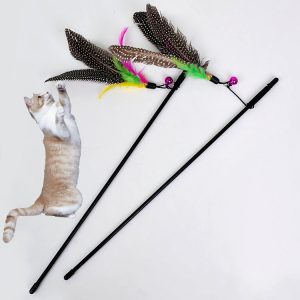
A teaser wand built to turn a few minutes into a full hunt — a cat needs to…
Is nose biting affectionate or aggressive?
It is affectionate far more often than it is aggressive. A friendly bite is usually soft, brief, and not accompanied by other threat signals. Aggressive biting looks very different: the ears flatten or rotate back, the pupils dilate, the tail lashes, the body stiffens, and the cat may hiss, growl, or swat. A bite that breaks the skin or that follows a warning signal such as a twitching tail is not affection, it is a correction or a defence. Cats rarely attack a person’s face unprovoked, so if the behaviour seems aggressive, look for a trigger: pain, overstimulation, a recent change in the household, or a cat who is feeling unwell. Our article on why a cat bites your hand covers the same signals in a different context, and the body language is the same. Learning to read it is the key skill.
Why does my cat bite my nose in the morning?
Morning nose biting is usually about hunger and routine. Cats are naturally most active around dawn, and by morning she is both energetic and hungry. If you have ever got up, fed her, or even stirred in response to a nose bite, she has learned that it works, which makes it a reliable alarm clock. A cat who sleeps on your bed also has easy access to your face, and your breathing and movement tell her you are beginning to wake, which is exactly the moment to act. The behaviour is reinforced every time it succeeds. The fix is to remove the reward: do not get up, feed, or engage, and instead use an automatic feeder set for early morning so she stops associating waking you with food. It takes consistency, and the first few mornings are the noisiest, but the habit does fade.
What does it mean when a cat bites and then licks?
A bite followed by licking is a mixed signal, and it usually means your cat is conflicted or is softening a message. Cats often lick immediately after a bite as a form of appeasement, almost like an apology, especially if the bite was a correction for over-petting. It can also be part of a grooming sequence, where the bite is a nibble and the lick is the grooming that follows. In some cats it is simple overstimulation: they want contact but the touch has become too much, so they bite to stop it and then lick to restore the bond. Either way, the message is that you should pause and give her space. Watch her ears and tail for clues, and if she is signalling that she has had enough, respect it. Never punish the bite, because that adds stress and can make the next one harder. Our article on why cats headbutt looks at the affectionate side of feline face contact.

A rotating ABS plastic and feather wand fits a cat that needs a target more than another thing…
How do I stop my cat biting my nose?
Start by removing the payoff. If the bite happens in the morning for food, use an automatic feeder and do not respond to the bite with movement or attention. If it happens during cuddling, watch for the early warning signs, such as a twitching tail, dilated pupils, or a change in breathing, and stop petting before she reaches her limit. Keep sessions short and let her initiate contact. If she bites during play, redirect her to a toy immediately, since hands and faces should never be the target. Never use your hands as toys, even as a kitten, because it teaches the behaviour. If the bite is affectionate, you can gently redirect by offering your hand or a toy instead of your face, and reward her when she chooses the alternative. Never punish, tap, or spray her, because that damages trust and often makes biting worse.
When is biting a concern?
Biting becomes a concern when it is hard, breaks the skin, happens without warning, or is directed at people in a way that seems out of character. A sudden change in a previously gentle cat can signal pain, illness, or stress, so a vet check is sensible, especially in an older cat. Cats in pain often become less tolerant of handling, and a bite may be the first sign. If the biting comes with other changes such as hiding, appetite loss, over-grooming, or irritability, get it checked. Also take any bite that breaks the skin seriously for your own health: wash it thoroughly and seek medical advice, because cat bites can become infected quickly. If the behaviour is escalating and you cannot identify a trigger, a veterinary behaviourist can help. With a clear plan and consistent responses, most nose biting settles into something gentler or stops entirely. The key is to stay calm and consistent, because a cat learns far more from what reliably works than from what you say in the moment.
Frequently asked questions
- Why does my cat bite my nose gently? A soft bite is usually affectionate grooming or a request for attention, not aggression.
- Is it bad if my cat bites my nose? It is fine if it is gentle, but a hard bite or a bite without warning needs addressing.
- Why does my cat bite my nose in the morning? Hunger and dawn activity, reinforced every time the bite makes you get up.
- Should I punish my cat for biting my nose? No. Punishment damages trust and usually makes biting worse, so redirect instead.
- Can a cat bite become infected? Yes. Cat bites can infect quickly, so wash any broken skin and seek medical advice.





