

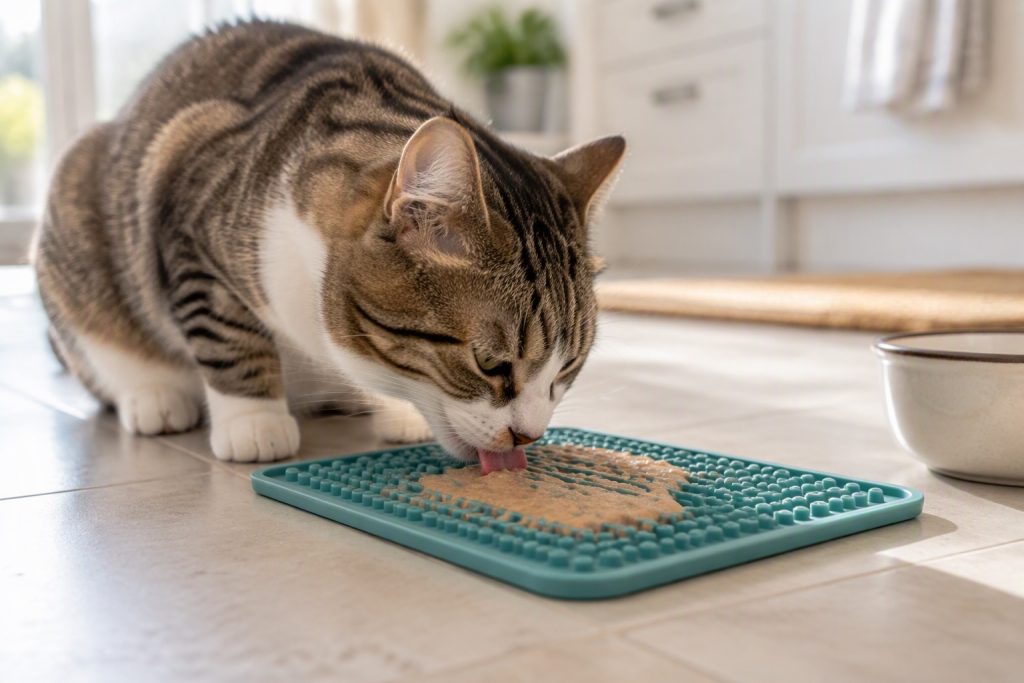
A lick mat is a textured, food-safe mat with ridges, grooves, or bumps that you spread soft food or paste onto, so your cat has to lick it out slowly. It works because licking is naturally soothing for cats, and the slow feeding engages the brain and stretches out a meal. Lick mats are especially useful for anxious cats, cats who eat too fast, and cats who need calming enrichment.
- Lick mats slow eating and soothe cats.
- Choose food-safe, dishwasher-safe material.
- Use wet food, paste, or plain purée.
- Supervise and clean after every use.
What is a lick mat and how does it work?
A lick mat is a flat mat, usually made from food-grade silicone, with a pattern of ridges, nubs, or grooves moulded into the surface. You spread something soft and spreadable into the pattern, such as wet food, plain cooked purée, or a cat-safe paste, and your cat has to work at it with her tongue to get the food out. The design slows eating dramatically compared with a bowl, which helps cats who bolt their food and may reduce vomiting after fast meals. More importantly, the act of licking is calming for cats. Repetitive licking releases a soothing effect and mimics the comfort of grooming, which is why lick mats are often used to settle anxious cats or to distract them during stressful events. The mat also provides mental enrichment, turning a meal into an activity rather than something over in seconds. Our article on puzzle feeders for cats covers a related way to slow eating.
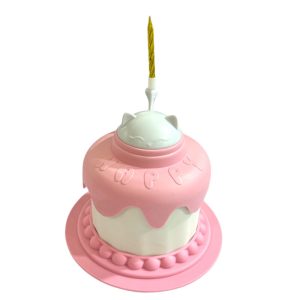
A cake-shaped silicone and TPE bowl lifts the eating surface off the floor. Measure the day's portion once…
What should I look for in a cat lick mat?
Material and design matter most. Choose food-grade silicone, which is flexible, durable, and free from harmful chemicals, and check that it is dishwasher-safe or easy to hand wash, because hygiene is essential. The pattern should suit your cat: shallow grooves and gentle bumps are easy for most cats and for older cats with sensitive mouths, while deep, tight patterns are harder and better for cats who need more of a challenge. A mat with suction cups on the base stays put, which prevents your cat from dragging it around, though suction works best on smooth surfaces. Size should match your cat and the portion you plan to serve; a small mat is fine for a treat, while a larger one suits a full wet meal. Avoid mats with sharp edges or thin, flimsy construction that could tear. Finally, consider how easy it is to clean thoroughly, since dried food in deep grooves is a chore.
Are lick mats safe for cats?
Yes, when used sensibly. The main risks are choking or blockages from the mat itself if a cat chews and swallows pieces, and hygiene problems from food left to spoil. Choose a sturdy, food-grade mat, inspect it regularly for tears or loose fragments, and replace it if it becomes damaged. Supervise your cat, especially the first few times and with kittens or enthusiastic chewers, and take the mat away once the food is gone. Never leave food sitting out for hours, particularly in warm weather, since bacteria grow quickly and can cause stomach upset. Wash the mat thoroughly after each use with hot water and mild soap, and let it dry completely before storing. If your cat has a medical condition that affects swallowing or digestion, ask your vet before introducing one. Used correctly, lick mats are a safe and enjoyable tool.
What should I put on a lick mat?
Anything soft, spreadable, and cat-safe works. Wet cat food is the most practical choice for a full meal, and you can mash it into the grooves with a spoon or spatula. Plain cooked and puréed meat, such as chicken or turkey with no seasoning, onion, or garlic, is another good option. Some owners use a small amount of plain, unsweetened yoghurt or a cat-specific paste, but check with your vet first, since many cats are lactose intolerant. Plain pumpkin purée, in a small amount, can be useful for digestion. Avoid anything toxic to cats, including chocolate, grapes, raisins, onion, garlic, xylitol, and alcohol, and skip human foods with added salt, sugar, or spices. Treats like lickable pastes can be spread thinly for a lower-calorie option. Keep portions appropriate for your cat’s daily intake, since lick mats are a feeding method, not an extra meal, and account for the calories in her overall diet.
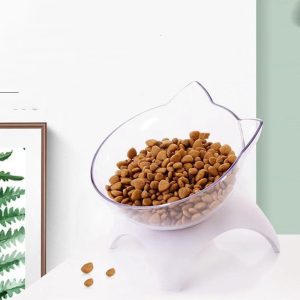
Clear glass bowl holding dry food. Made from plastic. Made for daily feeding and fresh water. Keeps food…
How do I clean and store a lick mat?
Clean it immediately after each use, because dried food is much harder to remove and becomes a hygiene risk. Rinse off the bulk of the food, then wash with hot water and a mild, pet-safe soap, using a small brush to reach into the grooves. Most silicone mats are dishwasher-safe, which makes the job easier; place them on the top rack if the manufacturer recommends it. Rinse thoroughly to remove all soap residue, then let the mat air-dry completely before storing, as trapped moisture encourages mould. Store it flat or rolled loosely, away from strong-smelling products that silicone can absorb. Inspect the mat regularly for cracks, tears, or worn areas where bacteria can hide, and replace it when it shows signs of wear. If you feed raw or highly perishable food, wash with extra care. A simple routine of wash, rinse, and dry keeps the mat safe and usable for a long time.
Do lick mats really help anxious cats?
Many owners find they do, though they are a support tool rather than a cure. Licking is a self-soothing behaviour, and giving an anxious cat something to lick can help her settle during stressful events such as fireworks, a vet visit, a move, or a thunderstorm. The slow, repetitive action can lower arousal and distract from a frightening stimulus. Lick mats are also useful for cats on crate rest, during carrier training, and as part of a calm-down routine. That said, they work best alongside other measures: safe hiding places, predictable routines, and pheromone support. They are not a substitute for addressing the cause of anxiety or for veterinary help with severe cases. If your cat is very anxious, or if the behaviour is persistent, speak to your vet. For more ideas on engaging a bored or worried cat, see our guide to toys for bored cats.
Frequently asked questions
- Are lick mats good for cats? Yes, they slow eating and provide calming enrichment for most cats.
- Can I put dry food on a lick mat? No, it needs something spreadable; use wet food, purée, or paste.
- How often can I use a lick mat? Daily is fine, as part of meals or as a treat, as long as you clean it each time.
- My cat chews the mat. Is that safe? Not if she swallows pieces; supervise her and replace damaged mats immediately.
- Do lick mats help with fast eating? Yes, they significantly slow how quickly a cat takes in food.





